


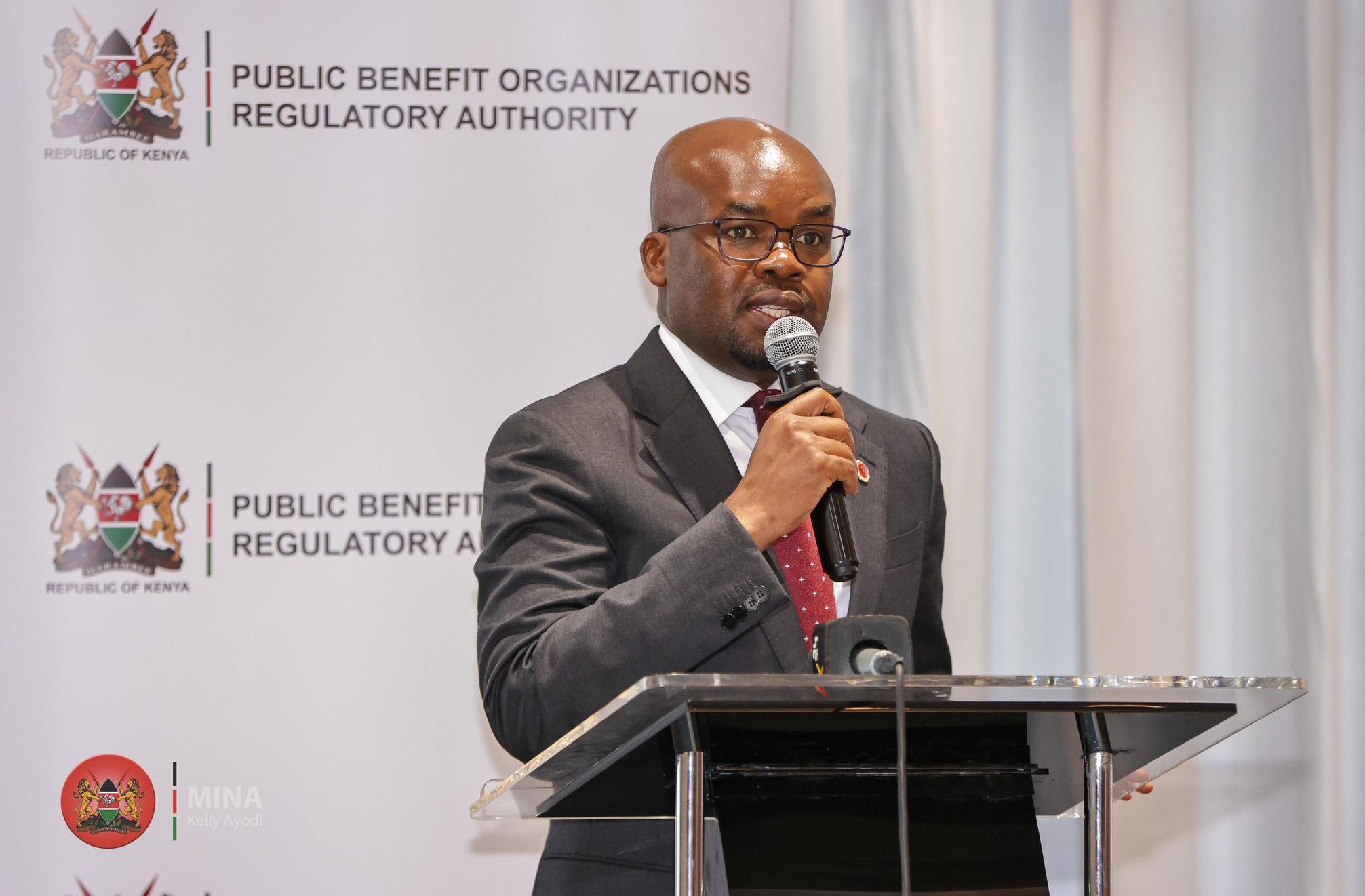
Dr. Raymond Omollo, PS State Department for Interior and National Administration during the launching of Operationalisation of PBO Act 2013 on Thursday 19th in Nairobi.
Public Benefit Organizations (PBO) Regulatory Authority has launched the Operationalisation of the PBO Act 2013. The event, held in Nairobi, was presided over by Dr. Raymond Omollo, Principal Secretary for Internal Security and National Administration.
The report, developed collaboratively with non-profit sector players and international partners such as the Global Center for Operative Security, highlights vulnerabilities in Kenya’s non-profit sector that could be exploited for terrorist financing. The assessment underscores the government’s commitment to addressing concerns raised by international financial watchdogs, particularly the Financial Action Task Force (FATF).
Dr. Omollo emphasized the importance of the report as part of Kenya’s broader efforts to improve anti-money laundering and counter-terrorism financing frameworks. “Two years ago, our financial systems faced scrutiny that led Kenya to be placed under enhanced monitoring,” he noted. “Today’s launch signifies our commitment to tackling these challenges head-on and building a more resilient non-profit sector.”
The Principal Secretary highlighted that the report identifies low to medium levels of risk but stresses the need for proactive measures. Specific vulnerabilities include:
- Non-profit organizations operating near areas with active terrorist activity, particularly along Kenya’s borders.
- Inadequate financial controls within some organizations.
- Lack of transparency in funding sources and expenditure reporting.
- Potential risks associated with faith-based organizations receiving unverified international funds.
The report sets forth key recommendations aimed at mitigating these risks, including strengthening regulatory frameworks, fostering inter-agency collaboration, and building capacity within both government agencies and non-profits.
“The government will ensure targeted, proportionate, and risk-based measures are adopted, in compliance with FATF recommendations,” said Dr. Omollo. “We have introduced legislative reforms that align with international standards and enhance oversight of the sector.”
One major milestone cited was the operationalization of the PBO Regulatory Authority, which replaced the former NGOs Coordination Board following long-delayed legal reforms. The new authority now plays a crucial role in monitoring charitable organizations operating both locally and regionally.
The report’s development was praised as a model for collaboration, bringing together government regulators, security agencies, and civil society stakeholders. Lindon Nicolas, Director General of the PBO Authority, commended the inclusive process. “This is a demonstration of what we can achieve when we adopt a whole-of-society approach,” he said, adding that the authority will now prioritize sensitizing non-profits about their financial vulnerabilities.
PS Omollo echoed these sentiments, noting that “this launch marks a beginning, not an end.” He called on stakeholders—including government agencies, non-profits, and international partners—to treat the report as a blueprint for action.
The non-profit sector plays a vital role in Kenya’s socio-economic development, contributing to education, healthcare, humanitarian aid, and other critical services. However, ensuring transparency and accountability is essential to protect donor confidence and prevent misuse of funds for illicit purposes.
“This report provides us with the tools to safeguard the sector while allowing it to thrive,” said Dr. Omollo. “It is our collective responsibility to ensure that no funds intended for humanitarian causes end up fueling terrorism.”
The launch marks a critical milestone in Kenya’s journey to strengthen its financial integrity and meet international obligations. As Kenya continues to implement the report’s recommendations, stakeholders are optimistic that a stronger, more accountable non-profit sector will emerge—one that remains a pillar of development while resisting exploitation.
The government plans to table further reforms in Parliament to enhance anti-terrorism financing measures. Additionally, ongoing digitization of government services will improve transparency, ensuring citizens can track funding flows and expenditures more effectively.
The collaborative effort behind the Terrorism Financing Sectoral Risk Assessment Report highlights Kenya’s dedication to protecting its institutions while fostering a safer and more secure country for all.
“Let this report be more than words on paper,” Dr. Omollo concluded. “Let it guide our collective mission towards safeguarding Kenya’s non-profit sector and building a future of transparency, accountability, and resilience.”
The launch event was attended by government officials, international partners, and representatives from Kenya’s non-profit sector, signaling a shared commitment to tackling terrorism financing risks through collaboration and action.
