


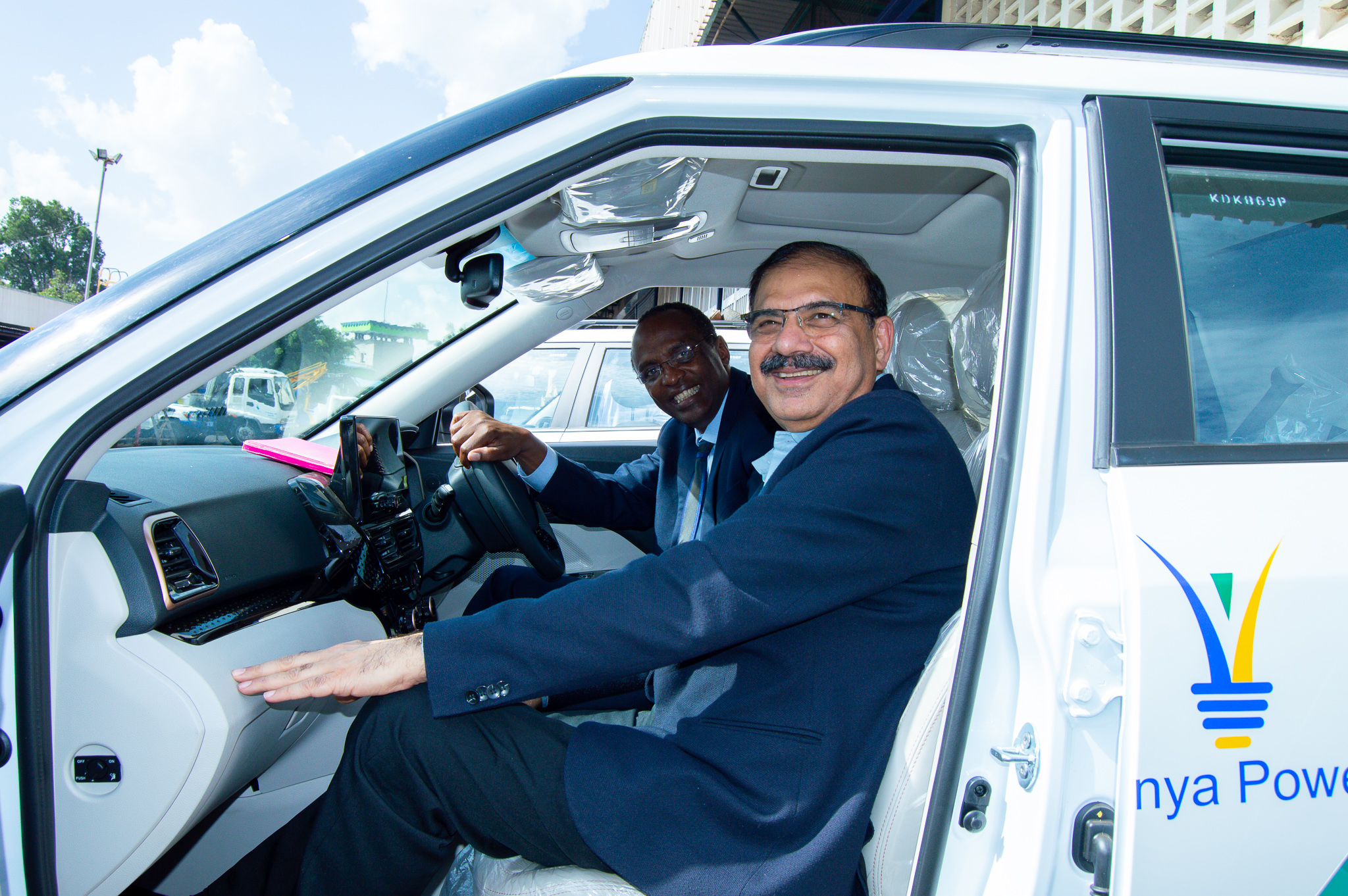
Simba Corporation, a prominent player in Kenya’s automotive manufacturing and sales industry, has delivered the first all-electric Mahindra XUV400 Sports Utility Vehicle (SUV) to Kenya Power.
This delivery marks a significant milestone in Kenya’s journey toward sustainable mobility and environmental responsibility.
David Mugambi, Head of Transport at Kenya Power, emphasized the importance of this delivery, noting that it represents a major step forward in the utility firm’s efforts to reduce emissions. “At over 92 percent green generation, Kenya Power has one of the cleanest energy distributions on the planet. In light of environmental concerns and our need to be carbon neutral, reducing emissions within the transport space is crucial. This therefore marks an important milestone in our EV journey, which started close to eight years ago with the transition to electric material handling equipment at our yards and warehouses,” Mugambi stated.
The two electric vehicles (EVs) delivered are part of a larger acquisition of six EVs by Kenya Power this year. The company plans to expand its electric fleet to include nine electric vehicles and 25 electric motorcycles by December 2024.

Naresh Leekha, Group Managing Director of Simba Corporation’s Motors Division, expressed the company’s commitment to Kenya’s EV journey. “Simba Corporation has always been at the forefront of bringing innovative products to the Kenyan automobile market. The whole world today is talking about bringing in environment-friendly vehicles and today we have delivered the first two Mahindra XUV400 SUVs to Kenya Power, one of the first customers to embrace the Mahindra Electric SUVs in Kenya,” said Leekha.
Kenya has rapidly emerged as a leader in EV adoption in Africa, with an estimated 2,100 EVs currently on the road, including two-wheelers, three-wheelers, and four-wheelers.
Mugambi highlighted Kenya’s readiness for this transition, citing the country’s substantial clean energy capacity. “Kenya’s readiness for EV mobility is underscored by a substantial clean energy capacity. We have adequate energy to power the electric mobility space for the next five years when we expect at the current rate to outstrip our current demand. This transition could also help reduce energy costs and improve the quality of life in Kenya by utilizing local energy sources,” he noted.
This initiative aligns with global environmental goals and promises economic benefits by reducing reliance on imported fuel and enhancing energy security.