

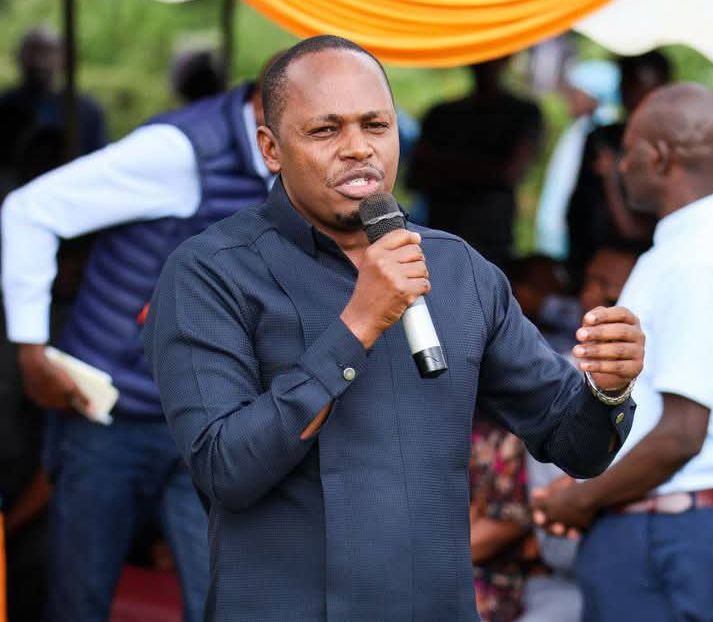
A storm is brewing in Kenya’s political arena as Yatta Member of Parliament, Hon. Robert Basil, launched a scathing attack on President William Ruto’s development strategy, accusing the Head of State of using national projects as political rewards for loyal regions while sidelining perceived opposition strongholds.
Speaking at a public baraza in Yatta, a visibly fired-up Basil warned that the country’s development blueprint is dangerously veering off the rails of constitutional fairness and sliding into what he termed “political patronage masked as progress.”
“Our politics is deeply ethnicized, and this reality shapes the distribution of national resources,” Basil told a charged crowd. “There are regions where taxpayers’ money will never truly support development, simply because they are politically sidelined.”
Basil pointed to the uneven presidential tours across the country as a worrying sign. “By the end of President Ruto’s first term, it’s likely that some constituencies will not have seen him even once — and with that, no development either,” he lamented. “It’s as if some regions are being punished for not voting ‘correctly’.”
In a sharp rebuke, Basil questioned the rationale behind skewed resource allocation, arguing that every Kenyan, regardless of political leaning, contributes to the national tax pool and deserves a fair share of the national cake.
“This is no longer just a political issue — it’s a constitutional one,” he emphasized. “Why should your access to roads, hospitals, or water depend on who your region voted for? That’s not the Kenya we voted for.”
The MP’s remarks come amid growing murmurs in the political backbench about marginalization and the weaponization of development. His message: Kenya cannot afford to split its people into ‘worthy’ and ‘unworthy’ citizens based on ballots cast.
“A just government must ensure that resources are allocated equitably. No Kenyan should feel like a second-class taxpayer in their own country,” Basil declared.
With 2027 slowly creeping into the political psyche, Basil’s bold critique may signal a shift in how opposition voices are beginning to frame the battle — not just about who leads, but how they lead. As the debate over inclusive development heats up, it remains to be seen how the Ruto administration will respond to growing calls for equity and constitutional fidelity.