


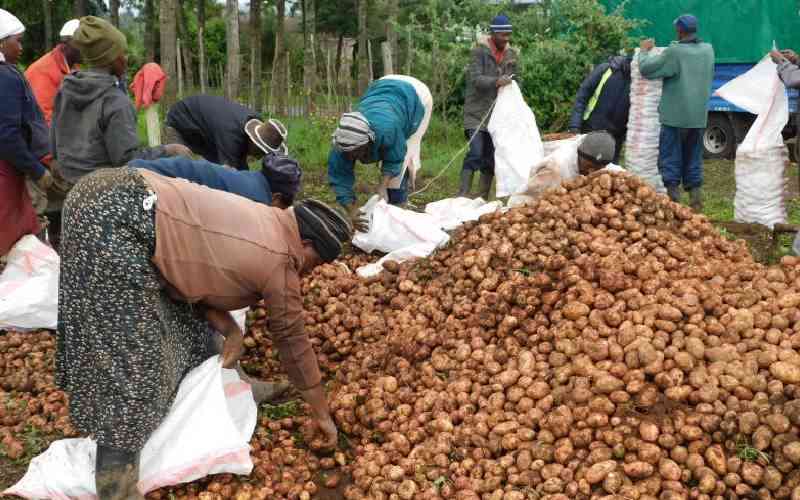
The Pest Control Products Board (PCPB) has dismissed recent findings suggesting that potatoes grown in Nyandarua contain harmful levels of pesticide residues, asserting that the crop remains safe for consumption.
The journal article in question, published in the Journal of Food Protection, claimed that samples from the region contained excessive levels of two pesticides linked to human health risks. However, PCPB Chief Executive Officer Fredrick Muchiri has strongly refuted the report, stating that the pesticides identified are not approved for food crop use in Kenya.
“The two insecticides cited in the study are not licensed for potato or food crop production. Furthermore, there is no direct evidence connecting the chemicals to potato farming,” said Muchiri during a press briefing.
According to the Board, its own sampling and analysis from Nyandarua contradicts the claims made in the study, with the majority of the samples falling within the safety limits for pesticide residue.
PCPB has called for full disclosure of the methodology and data behind the study, citing the need for transparency and scientific comparison with the regulator’s ongoing surveillance in the region.
“If the said chemicals were used, they would not be able to penetrate into the potato tubers due to their chemical properties,” added Muchiri.
The regulator also noted that surveillance has been intensified, particularly on imported crops and agrochemicals, to ensure compliance with national residue standards.
County governments have been urged to boost agricultural extension services to equip farmers with proper training on pesticide use, storage, and disposal.
“Farmer education is key to ensuring safe food production. We are working closely with counties to promote safe and responsible pesticide application,” Muchiri emphasized.
The Board reassured consumers that Kenya’s regulatory systems for pest control products are robust, and that continuous monitoring is in place to safeguard public health and food safety.