


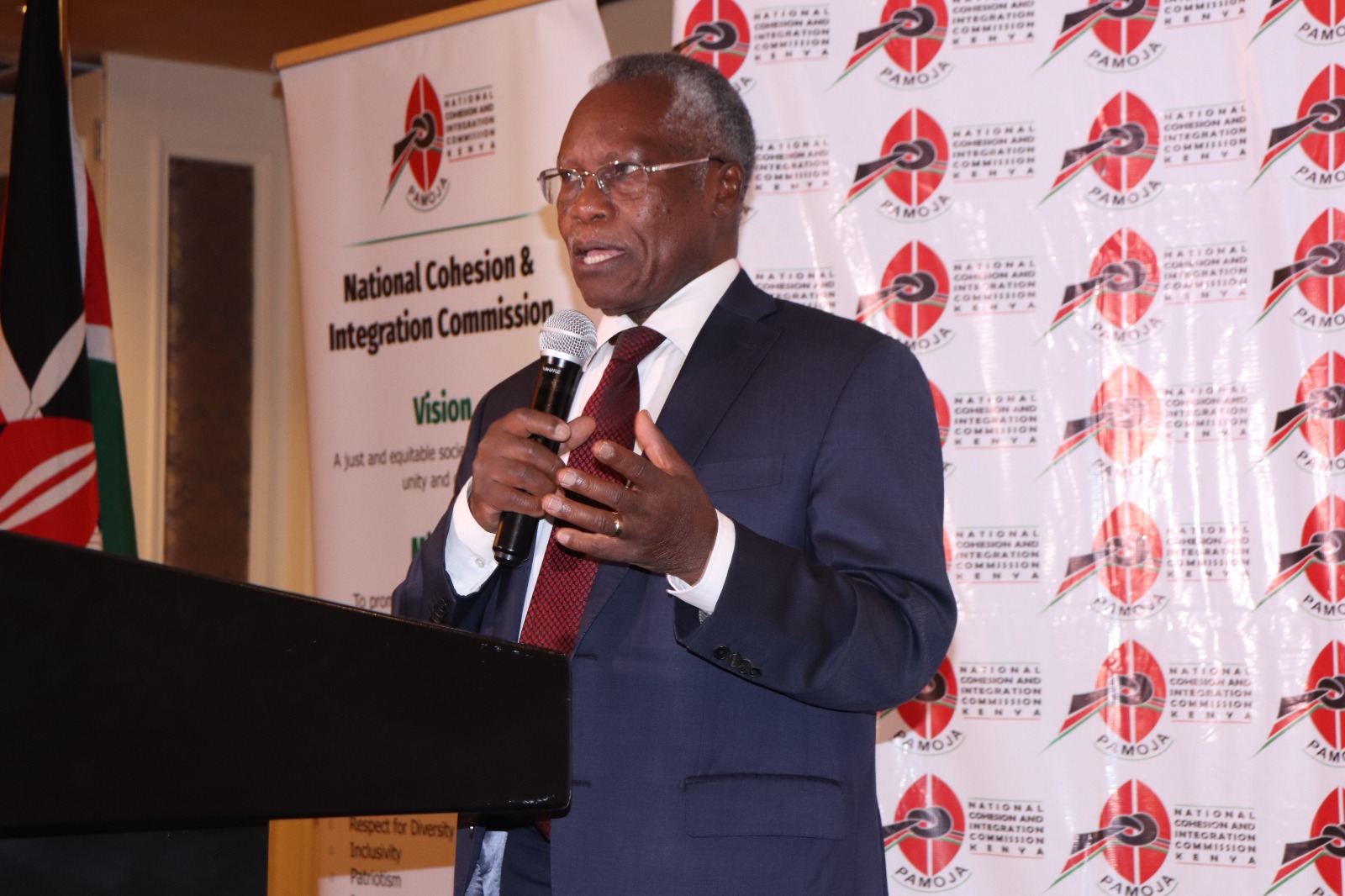
National Cohesion and Integration Commission Chair Samuel Kobia during a media breakfast with Kenya Editors Guild on Monday
In a concerted effort to foster political decency and accountability in Kenya, the National Cohesion and Integration Commission (NCIC) has partnered with the Kenya Editors Guild (KEG). This collaboration aims to address the pressing need for constructive dialogue amidst the country’s ongoing political challenges, particularly in light of recent tensions and the potential impeachment of the Deputy President.
Rosalia Omungo, CEO of the KEG, emphasized the urgency of the partnership, urging the media to play a pivotal role in promoting political decency and uniting Kenyans. She called on journalists to engage in sensitization efforts that prioritize respectful discourse and discourage hate speech and tribal politics, which have increasingly marred Kenya’s political landscape.
“The media has a unique power to shape narratives,” Omungo noted. “It is crucial for journalists to highlight messages that unite rather than divide, especially in these challenging times.”
Dr. Danvas Makori, a commissioner at NCIC, elaborated on the significance of the Transgenerational Conversations Framework. He likened Kenya to a house shared by different generations, each holding distinct experiences and perspectives. The older generation, he said, embodies wisdom and historical context, while the youth bring energy and innovative ideas. However, he acknowledged that misunderstandings between these groups often lead to mistrust and social divisions.
“Too often, we see blame games and a disconnect that hinders collaboration,” Makori stated. “The Transgenerational Conversations Framework aims to create a space for open, respectful dialogue where we can bridge these gaps.”
He emphasized that the framework is not about one generation dominating another but about fostering genuine communication that values each generation’s unique contributions. “When we listen to one another, we tap into a powerful collective that can drive positive change,” he added.
This call for dialogue comes at a critical juncture in Kenya’s political climate, particularly with the ongoing discussions surrounding the Deputy President’s potential impeachment. The NCIC is committed to monitoring these developments to prevent ethnic conflicts and ensure national cohesion. The commission urges all Kenyans to trust the institutions in place and refrain from actions that could escalate tensions.
Samuel Kobia, Chair of the NCIC, reiterated the importance of the media in this context. He called on the media to provide credible information during these turbulent times, emphasizing that reliance on official sources is essential to prevent misinformation from exacerbating the situation.
“The media must serve as a trustworthy source of information, particularly when political tensions are high,” Kobia remarked. “We are here to support the media in this role.”
Martin Mutua an editor and a member of the KEG, echoed these sentiments, highlighting the media’s need for reliable information from institutions like the NCIC to prevent chaos in the country. “As we navigate these turbulent waters, it’s crucial for the NCIC to step in and provide clarity on the situation,” he urged.
However, criticism arose from senior journalist Macharia Gaitho, who pointed out the NCIC’s challenges in implementing the ideas raised in forums like this. “While discussions are important, the real test lies in how these ideas are put into action,” he said, calling for more effective follow-through on initiatives aimed at fostering national unity.
As the country grapples with these challenges, the NCIC’s commitment to the Transgenerational Conversations Framework represents a proactive approach to fostering understanding across generations. The framework aims not only to bridge gaps but to build a cohesive society where every voice is valued, ultimately shaping a brighter future for all Kenyans.
The partnership between the NCIC and KEG underscores the essential role of media in promoting political decency and accountability. As Kenya faces critical issues, the call for constructive dialogue and credible information has never been more urgent. The future of the nation depends on bridging generational divides and fostering collaboration among all Kenyans.