


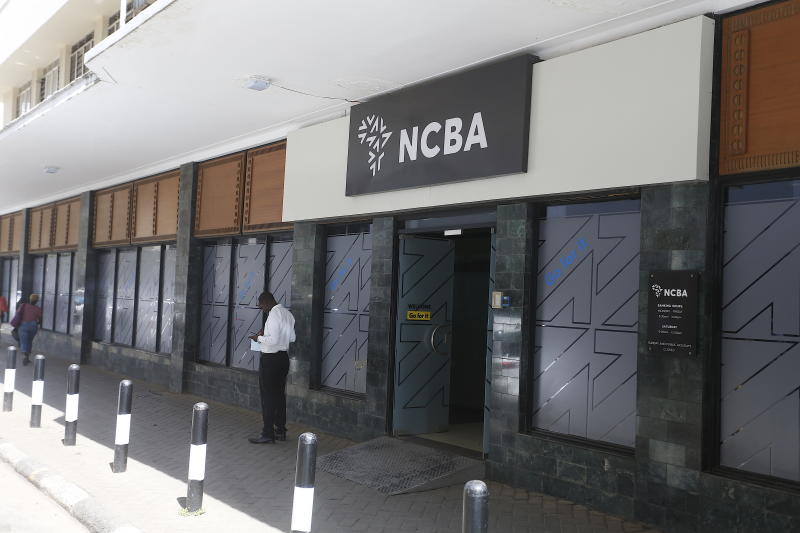
NCBA Group PLC has reported a profit after tax of KES 21.9 billion for the financial year 2024, reflecting a 2.0 percent increase compared to KES 21.5 billion in 2023. The bank also hit a major milestone in digital lending, surpassing KES 1 trillion in total digital loan disbursements across its markets in Africa.
The group’s performance was driven by strategic investments in digital transformation, network expansion, and operational efficiency, which resulted in a 10 percent increase in operating costs. Despite this, NCBA remains well-capitalized and committed to long-term growth.
Strong Financial Performance
NCBA’s financial report highlighted key metrics that define its stability and resilience:
Digital Loans: KES 1.0 trillion disbursed, reflecting 23 percent year-on-year growth.
Profit After Tax: KES 21.9 billion, up 2.0 percent year-on-year.
Profit Before Tax: KES 25.1 billion, slightly down by 1.0 percent.
Operating Income: KES 62.7 billion, a 1.5 percent decrease.
Operating Expenses: KES 32.2 billion, a 10.6 percent increase.
Provision for Credit Losses: KES 5.5 billion, a 40 percent reduction year-on-year.
Customer Deposits: KES 502 billion, a 13.4 percent decline.
Total Assets: KES 666 billion, down 9.3 percent.
Final Dividend: KES 3.25 per share, bringing the total dividend payout for 2024 to KES 5.50 per share.
Despite external economic pressures, NCBA lowered its loan loss provisions by 40 percent, demonstrating improved credit quality and proactive risk management. The Non-Performing Loan (NPL) ratio now stands at 11.2 percent, reflecting the group’s disciplined credit underwriting and strong customer engagement strategies.
Expansion & Digital Innovation
NCBA continued expanding its reach in 2024, increasing its branch network to 119 locations across Kenya, Uganda, and Rwanda. In Kenya, the bank also grew its agency banking services in partnership with Postbank, onboarding 476 agents and 96 branches nationwide.
Its diaspora banking services have also expanded, attracting more customers from Australia, the Middle East, and the USA. The bank maintained its dominance in asset financing, holding a 35% market share through partnerships with major vehicle dealers like Isuzu, CFAO, Simba, and Inchcape.
NCBA’s corporate banking segment, supported by a deposit base of KES 210 billion, is set to strengthen further with a revamped internet banking platform.
Sustainability & Social Impact
NCBA made significant progress in its sustainability commitments under its Change The Story platform, which focuses on environmental conservation, financial inclusion, and community empowerment. Key achievements include:
Planting over 426,678 trees in partnership with various organizations.
Recycling 73 percent of waste in selected offices.
Mobilizing KES 6.5 billion in green financing.
Setting up six electric vehicle (EV) charging stations in Kenya, Uganda, and Rwanda.
Empowering 6,000 women and youth through education scholarships, mentorship, and business skills training.
Sponsoring sports initiatives in golf and cycling, impacting over 11,500 participants.
Awards & Recognition
NCBA’s performance and customer-centric approach earned it over 30 prestigious awards, including:
Top 10 Most Valuable Kenyan Brands – Brand Finance
Best Bank in Customer Experience – African Bank Awards
SME Financier of the Year (Africa) – International Finance Corporation
Best Mergers & Acquisition Strategy – Abojani Investments
Overall Winner of the Financial Reporting (FIRe) Awards
Future Outlook
NCBA Group Managing Director John Gachora emphasized the bank’s focus on tightening credit risk management, enhancing recovery efforts, and refining lending strategies. The Group aims to deepen customer relationships, drive efficiency, and leverage digital channels to sustain growth in 2025 and beyond.
With a strong balance sheet, growing digital ecosystem, and strategic market expansion, NCBA remains committed to delivering value to shareholders, customers, and the broader economy.