


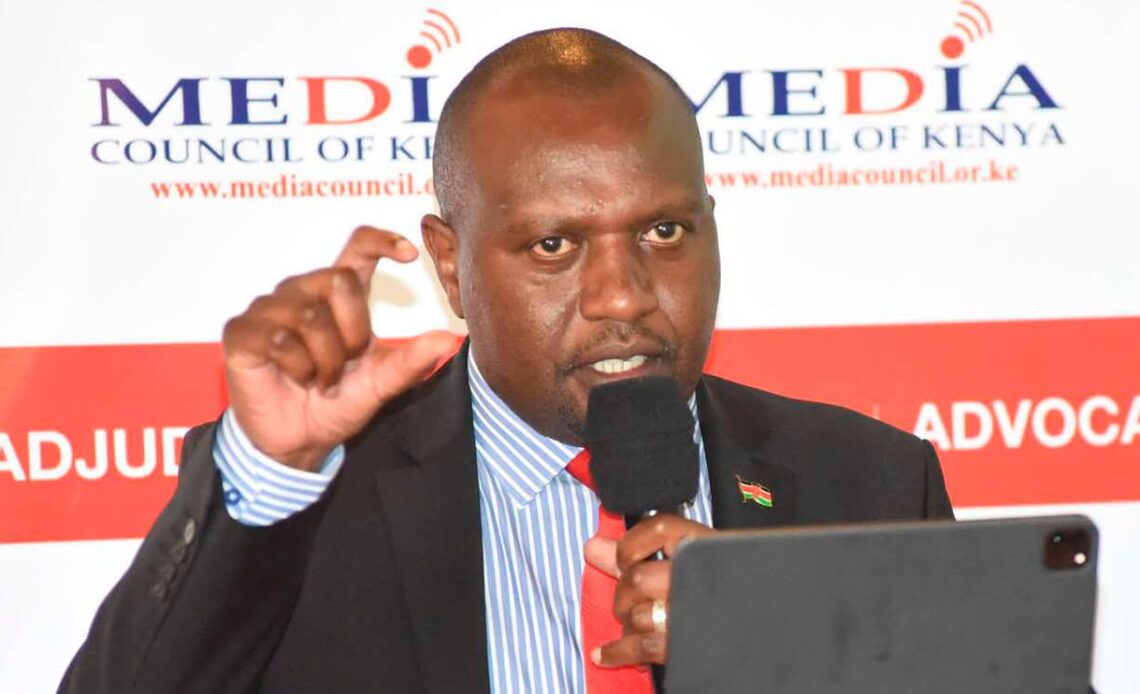
Dr.David Omwoyo, CEO Media Council of Kenya
The Media Council of Kenya (MCK) has strongly condemned the arrest and detention of journalist Peter Mwita Maseke, warning that the move threatens press freedom and risks intimidating journalists into self-censorship.
In a statement issued on Thursday, the Council called for Mwita, who works with Alshifaa Media Group in Mombasa County, to be released on free bond, saying his detention was carried out under unclear circumstances.
According to the MCK, Mwita was summoned by police on December 30, 2025, to record a statement in relation to information circulating on WhatsApp about the organisation of criminal gangs operating in Kisauni, Mombasa County.
He was subsequently arrested on December 31.
The Council said the journalist is being held over work directly linked to matters of public interest, describing the arrest as “a blatant attempt to silence whistleblowers and push journalists into self-censorship.”
“MCK is deeply concerned by the apparent misuse of police powers to intimidate a journalist for carrying out his professional duties,” the statement read, adding that police should not deny citizens their legitimate rights, including the right to bail.
The Council reminded both national and county governments that Articles 33 and 34 of the Constitution guarantee freedom of expression and media freedom, which are essential pillars of a democratic society.
It further criticised the use of the Computer Misuse and Cybercrimes Act to harass and intimidate journalists, terming the practice unfortunate and unconstitutional when applied to legitimate journalistic work.
MCK also warned against any attempt by law enforcement or local administrators to compel Mwita to reveal his sources, saying such actions would violate professional journalistic standards and the Constitution of Kenya.
The Council demanded an immediate end to the harassment of Mwita and urged the Inspector General of Police to ensure officers respect the clear boundary between law enforcement duties and the protection of media freedom.
“This case sets a dangerous precedent and must be addressed urgently to safeguard the independence of the media in Kenya,” the Council said.