


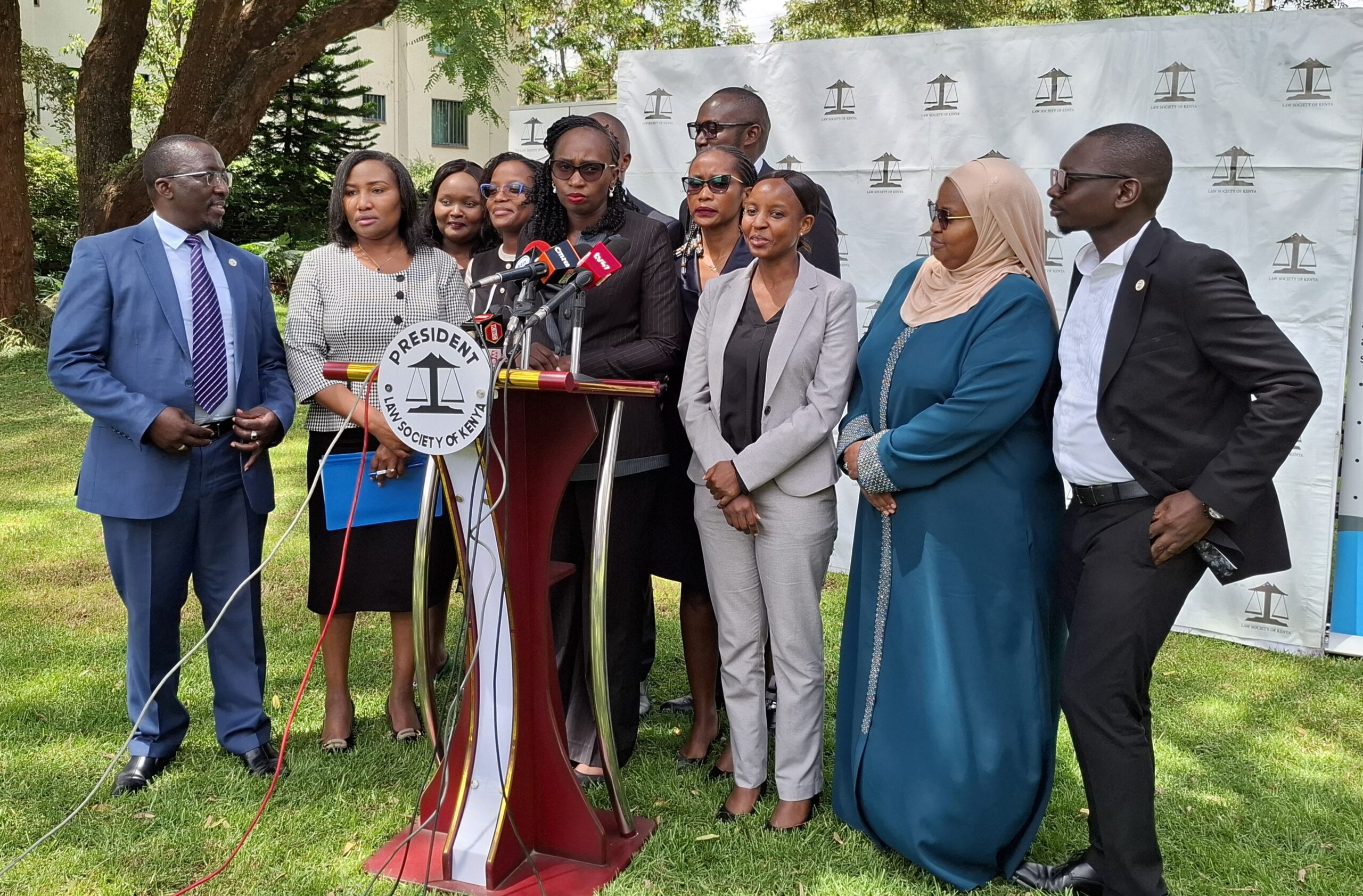
The Law Society of Kenya (LSK) has issued a scathing statement condemning the death of Albert Ojwang while in police custody at Nairobi’s Central Police Station, describing it as a gross violation of constitutional rights and a grim reflection of systemic abuse within the National Police Service (NPS).
Ojwang, who was reportedly arrested in Homa Bay County on June 7, 2025, was transferred to Nairobi overnight without any known court order or due process. He was found dead in the early hours of June 8 while in detention at Central Police Station, prompting widespread public outrage and calls for accountability.
Addressing the press, LSK President Faith Odhiambo described Mr. Ojwang’s death as a “betrayal against him and the people of Kenya,” citing multiple violations of due process and legal safeguards designed to protect detainees.
“From the onset, we note that all events leading to the untimely and unfortunate death of Mr. Ojwang wreak of illegality, malice, and abuse of authority,” said Odhiambo.
The LSK revealed that Ojwang’s arrest was allegedly linked to a social media post considered defamatory by Deputy Inspector General of Police, Mr. Eliud Langat, who reportedly filed the complaint. The Society questioned the basis for transferring Ojwang from Mawego Police Station in Homa Bay to Central Police Station in Nairobi without obtaining a court-sanctioned transfer order, as required by law.
Section 71 of the Criminal Procedure Code stipulates that criminal cases should be tried within the jurisdiction of the offence or where the arrest took place unless otherwise directed by a court. The LSK contends that no such directive was issued.
Furthermore, Chapter 15 of the Police Standing Orders mandates that a magistrate be informed and approve any inter-station transfer of an arrested person. “We are certain that no magistrate sat on the night of June 7 to grant such permission,” Odhiambo stated.
The Law Society emphasized that Ojwang’s death cannot be treated as an isolated incident, but as indicative of deeper, systemic failures within the police service. They also pointed to previous complaints made by the LSK Council against Central Police Station, labeling it a “poster boy for police brutality and overreach.”
While acknowledging the interdiction of officers involved in Ojwang’s detention as a step forward, the LSK insists it is not enough.
“To ensure a meaningful and credible outcome to the intended investigations, we demand an unequivocal commitment by the National Police Service to cooperate fully with IPOA and provide all necessary access and evidence,” Odhiambo said.
The Society also called on Deputy Inspector General Eliud Langat to recuse himself from any involvement in the investigations, given his role as the complainant in the matter. “This recusal is necessary to dispel any apprehension of bias and conflict of interest,” the statement added.
As the Independent Policing Oversight Authority (IPOA) commences its investigations, the LSK has vowed to pursue sweeping reforms in how detainees are treated in police stations across the country. It is also inviting the public to report any cases of abuse or neglect in detention, with the goal of holding police institutions accountable.
“Albert Ojwang must not become another statistic. Let us collectively take the pain of his death as the beginning of a necessary and overdue paradigm shift for our country,” Odhiambo concluded