


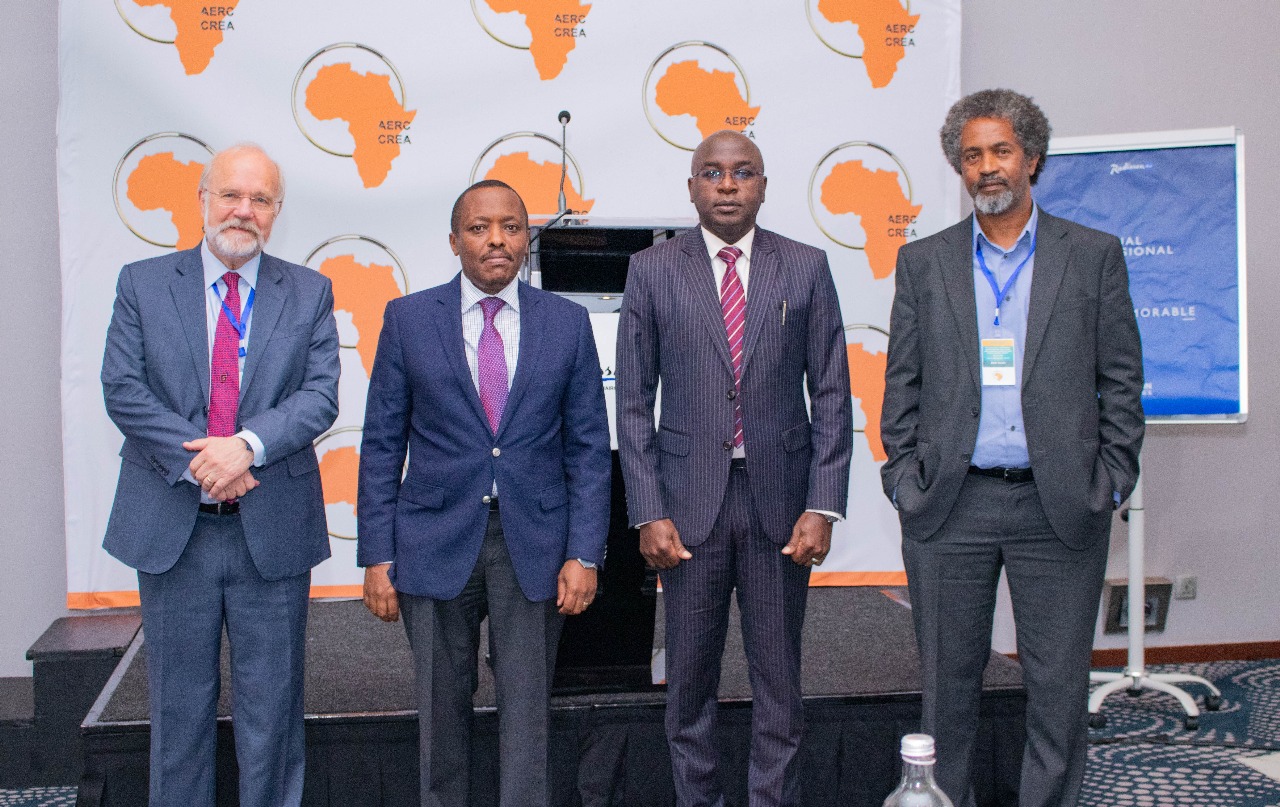
The Kenya Revenue Authority (KRA), in collaboration with The National Treasury, the African Economic Research Consortium (AERC), and the Government of Denmark, has hosted a high-level Stakeholders’ Consultation Workshop aimed at bolstering ongoing research efforts to inform tax policy and revenue administration reforms in Kenya.
The workshop, held under the Collaborative Research Programme, brought together key partners including experts from the University of Copenhagen’s Development Economics Research Group (UCPH-DERG), the Kenya Institute for Public Policy Research and Analysis (KIPPRA), and KRA. It marks the second such engagement under the initiative, coordinated by AERC with funding support from the Danish International Development Agency (DANIDA).
Speaking at the opening of the forum, KRA Commissioner General, Mr. Humphrey Wattanga, underscored the Authority’s commitment to harnessing research and empirical data to drive Kenya’s tax reforms.
“At KRA, we remain committed to evidence-based decision-making as a cornerstone of our tax reforms,” said Mr. Wattanga. “Our partnerships with academic institutions and research organizations have enabled us to anchor our policies in rigorous analysis, improving tax efficiency, reducing compliance burdens, and enhancing revenue mobilization.”
Wattanga emphasized that the workshop serves as a critical platform for refining ongoing research into concrete policy proposals that will inform the Finance Bill, 2026. “Our collaboration with AERC and UCPH-DERG continues to be a vital resource in developing effective, equitable, and sustainable tax policies that align with our mission,” he added.
Key research themes discussed at the workshop included:
Taxation of Petroleum Products: Proposals to modernize the excise tax structure in response to Kenya’s evolving economic landscape.
Dynamics of Personal Income Tax: Strategies for enhancing equity and efficiency within the personal income tax system.
eTIMS and Business Formalisation: Evaluation of the Electronic Tax Invoice Management System (eTIMS) in boosting tax administration and encouraging the formalisation of businesses.
Revenue Impact of VAT Misreporting: Investigations into VAT compliance challenges and recommendations to improve VAT revenue integrity.
The workshop aims to generate actionable, research-backed policy proposals that will strengthen Kenya’s tax system, enhance compliance, and expand the tax base. These efforts are aligned with Kenya’s broader national development goals, including reducing administrative burdens and increasing domestic revenue mobilization to finance public services and infrastructure.
By fostering collaboration between government, academia, and international development partners, KRA continues to position evidence-based policy development at the heart of its reform strategy