


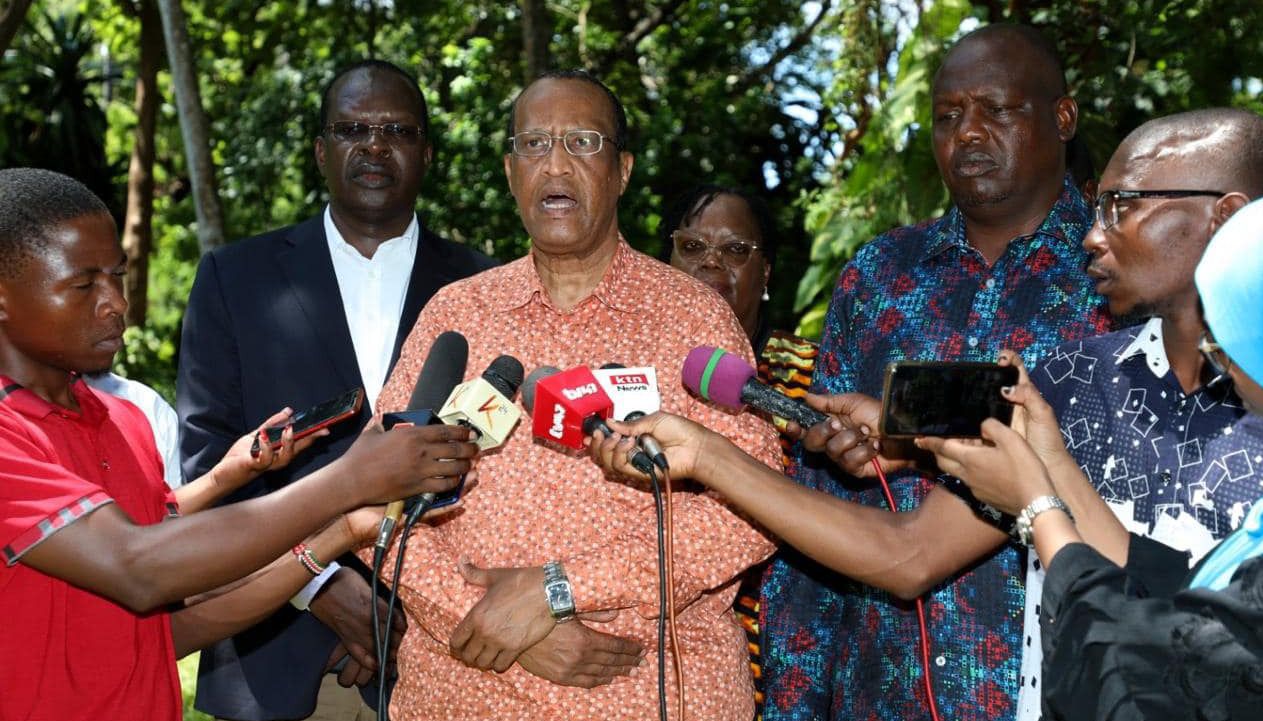
A critical forum on refugee affairs held in Mombasa has brought to light significant gaps in Kenya’s management of its refugee population, notably the lack of a comprehensive, localized database. Organized by the National Assembly’s Regional Development Committee, the forum revealed that Kenya currently relies on data managed by the United Nations High Commissioner for Refugees (UNHCR), which is stored outside the country in Hungary.
The Commissioner for Refugee Affairs, Mr. John Burugu, addressed the forum, highlighting the limitations of Kenya’s involvement in managing its own refugee data. “We are supposed to be the custodian of this database. However, we only process the data on behalf of the UNHCR. We cannot fully confirm that the numbers provided by the UNHCR accurately represent the refugee population in Kenya,” Burugu explained. He assured stakeholders that the government is collaborating with partners to establish a more accurate and locally controlled database.
The forum, themed “Strategic Approaches to Balancing Social Cohesion and Environmental Sustainability in Refugee Inclusion in Kenya,” was the first of its kind and brought together key stakeholders from various sectors involved in refugee management. The event was chaired by Hon. Peter Lochakapong, Chairperson of the Regional Development Committee, who shared findings from a recent fact-finding mission to the Kakuma and Dadaab refugee camps.
During the mission, Committee members engaged with both refugees and host communities to assess current conditions and challenges. “Our visits to the camps provided critical insights that will inform the upcoming report, which is crucial for shaping future policy on refugee matters,” Hon. Lochakapong stated.
A recurring theme throughout the forum was the ongoing struggle faced by host communities, who have borne the burden of supporting refugees for over 30 years without sufficient government or international support. Hon. Lochakapong expressed concerns that Kenya has not conducted a comprehensive environmental, social, or political impact assessment despite its long history of hosting refugees. He highlighted issues such as land disputes, environmental degradation, insecurity, and the underfunding of the Department for Refugee Services.
“There is increasing competition for resources between refugees and host communities. Additionally, dissatisfaction with the implementation of the Refugee Act 2021 is growing,” Lochakapong warned.
Hon. Khamis Chome (Voi) emphasized the need for a clear policy framework, advocating for a well-defined refugee management policy that outlines the roles of all stakeholders. “We need a policy that involves both refugees and host communities to ensure equitable participation,” he stated.
Hon. Kazungu Tungule (Ganze) questioned the imbalance in support provided to refugees compared to host communities, raising broader implications for Kenya’s refugee policies. “We need to ask ourselves why we focus so much on defending refugee rights while neglecting the needs of our own people. Do Kenyan refugees abroad receive the same level of support?” Tungule posed.
Garissa County Governor Nathif Adam highlighted the unique challenges faced by his county, which has hosted refugees for over three decades. “Garissa has provided land for refugees without compensation, which has led to significant issues, including environmental degradation and the over-exploitation of the shared Merti Aquifer,” Governor Adam noted. He called for a comprehensive national policy on refugee affairs, particularly before the full implementation of the GISEDP integration plan.
Hon. Dekow Barrow (Garissa Township) echoed these concerns, criticizing the international community’s limited support for host communities. “Our youth are suffering from a lack of jobs, and the presence of refugees is stretching our already limited resources. The international community can no longer sustain the refugee camps,” Barrow asserted, pointing out the deteriorating state of the Garissa-Dadaab road, heavily damaged by increased traffic from aid transportation.
Dr. Raymond Omollo, Principal Secretary for Internal Security and National Administration, underscored the complexity of managing refugee populations, stressing the need for coordinated efforts. “Managing refugees requires a multifaceted approach that balances security, humanitarian needs, and regional cooperation,” Dr. Omollo said.
Hon. Peter Nabulindo (Matungu) praised the forum for addressing the critical issues facing both refugees and host communities. He urged the government to strike a balance in meeting the socio-economic needs of all parties involved to ensure harmonious co-existence. “Urgent action is needed to address these challenges, and the upcoming report will be pivotal in guiding our approach,” Nabulindo emphasized.
The forum concluded with recommendations from various stakeholders, including representatives from the Ministry of Lands, Public Works, Housing and Urban Development, the Ministry of Interior and National Administration, the Refugee Consortium of Kenya, the World Food Program (WFP), and the Kenya National Commission on Human Rights (KNCHR).
The Regional Development Committee is expected to compile and present a comprehensive report to the National Assembly. This report will inform future policy decisions and address the gaps in Kenya’s current refugee management system, with a focus on implementing the Refugee Act 2021 more effectively and ensuring equitable support for host communities.
Kenya has been hosting refugees for over 30 years, with large camps such as Kakuma and Dadaab accommodating hundreds of thousands of individuals fleeing conflict from neighboring countries. Despite its long-standing role as a host nation, the country has faced ongoing challenges in integrating refugees and addressing the needs of host communities, prompting calls for a more sustainable and inclusive approach to refugee management.
The outcomes of this forum are expected to play a significant role in shaping Kenya’s future policies, ensuring a balanced approach that protects the rights of refugees while also supporting the socio-economic wellbeing of host communities.