


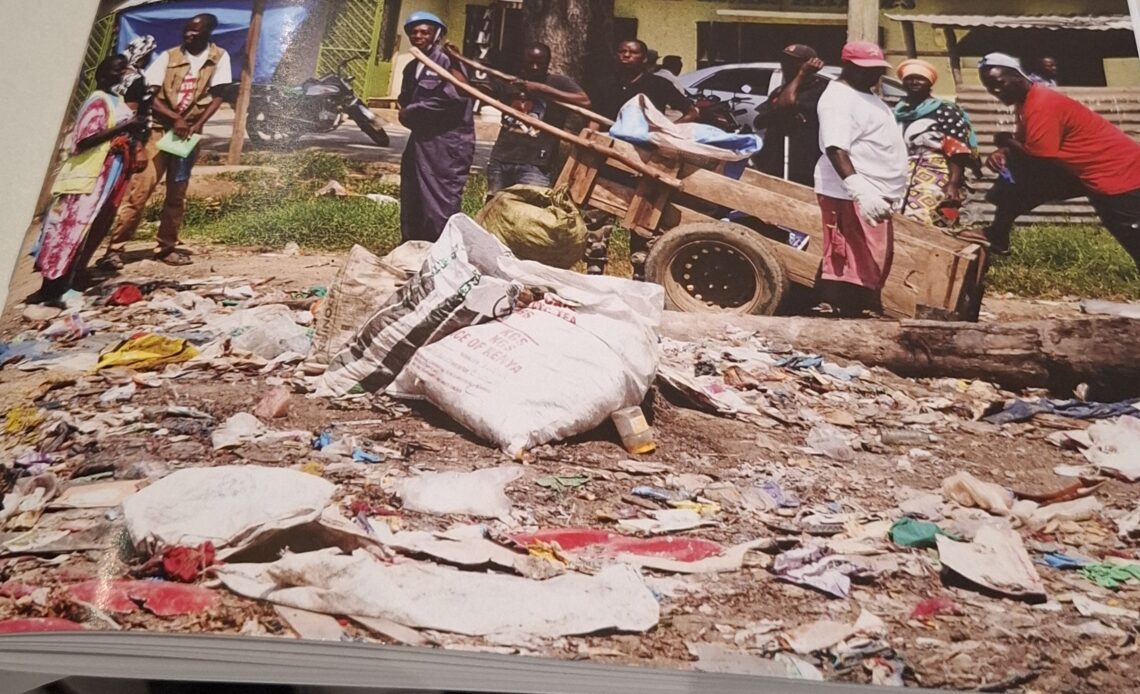
Kenya is intensifying its push toward sustainable and inclusive waste management systems, as government, civil society, and private sector actors gathered for a 3-days confrence for the Sustainable Solid Waste Governance and Local Democracy Systems Conference 2026.
The high-level forum, convened by the Centre for Environment Justice and Development (CEJAD), Swedish International Centre for Local Democracy, and the Embassy of Sweden in Kenya, brought together a wide range of stakeholders to address Kenya’s growing waste crisis and explore pathways toward a circular economy.
A Growing Waste Crisis Meets Policy Action
Opening the conference, Principal Secretary in the Ministry of Environment, Climate Change and Forestry, Festus K. Ng’eno, underscored the urgency of tackling waste—particularly plastic pollution—which he described as a public health, environmental, and economic challenge.
“With rising urbanization and changing consumption patterns, waste generation continues to surge, placing immense pressure on already strained systems, especially in urban centers,” he said.
Ng’eno highlighted key policy frameworks guiding Kenya’s response, including the National Sustainable Waste Management Policy (2021) and the Sustainable Waste Management Act (2022), alongside ongoing efforts to transition from dumpsites to material recovery facilities (MRFs).
Counties at the Frontline of Waste Governance
The conference placed strong emphasis on the role of county governments, which bear primary responsibility for solid waste management under Kenya’s devolved system.
However, participants acknowledged that counties face significant constraints, including limited financing, technical capacity gaps, and weak enforcement mechanisms.
Ng’eno stressed that effective governance must go beyond mandates, calling for inclusive decision-making, transparency, and stronger citizen participation in shaping waste solutions.
Recognizing Waste Pickers in the Circular Economy
A key highlight of the discussions was the critical role played by informal waste pickers, who contribute significantly to recycling and material recovery across Kenya.
Despite their contributions, waste pickers often remain excluded from formal systems, lacking social protection and recognition.
Speakers called for a “just transition” that integrates waste pickers into formal waste management frameworks while ensuring decent working conditions and livelihoods.
Extended Producer Responsibility Under Scrutiny
Deliberations also focused on the implementation of Extended Producer Responsibility (EPR) regulations, which require producers to take accountability for the lifecycle of their products and packaging.
Under Regulation 5, producers are required to:
•Register with the National Environment Management Authority
•Establish take-back mechanisms
•Join or form Producer Responsibility Organizations (PROs)
•Submit compliance reports
•Design environmentally friendly products and packaging
These measures are intended to reduce waste at source and promote recycling and reuse.
NEMA Flags Compliance and Enforcement Challenges
However, enforcement challenges remain a major concern, according to Ayub Macharia, Director of Enforcement at the National Environment Management Authority (NEMA).
Macharia outlined several bottlenecks affecting effective implementation of EPR and waste regulations, including:
•Inadequate capacity among counties to fully execute waste management functions
•Financial constraints pushing regulated entities to bypass pollution prevention measures
•Low compliance among producers in registering with NEMA and PROs
•Non-compliance by some PROs with regulatory requirements
•Underpricing of EPR fees, undermining environmental accountability
•Fragmentation of compliance systems, forcing producers to join multiple PROs
•Limited public awareness of environmental and health risks
•Weak operationalization of EPR as a business model
“These challenges highlight the need for stronger enforcement, better coordination, and increased awareness,” Macharia noted.
Partnerships Key to System Transformation
Stakeholders emphasized that addressing Kenya’s waste crisis will require coordinated action across sectors.
The conference brought together representatives from national and county governments, development partners, private sector players, academia, civil society, labor organizations, and waste picker groups.
Ng’eno emphasized that no single actor can solve the crisis alone, calling for deeper collaboration and investment in sustainable waste systems.
A Call to Action for a Circular Future
The conference concluded with a strong call to action to accelerate Kenya’s transition toward a circular economy, where waste is minimized, products are designed for reuse, and communities are actively engaged in environmental governance.
Stakeholders reaffirmed the need to:
Strengthen local democracy in environmental governance
Build inclusive and equitable waste management systems
Enhance cross-sector collaboration
Scale up sustainable financing and enforcement mechanisms
As Kenya aligns with global momentum toward a legally binding plastics treaty, the conference signaled a renewed commitment to transforming waste from a growing crisis into an opportunity for sustainability, equity, and shared prosperity.