


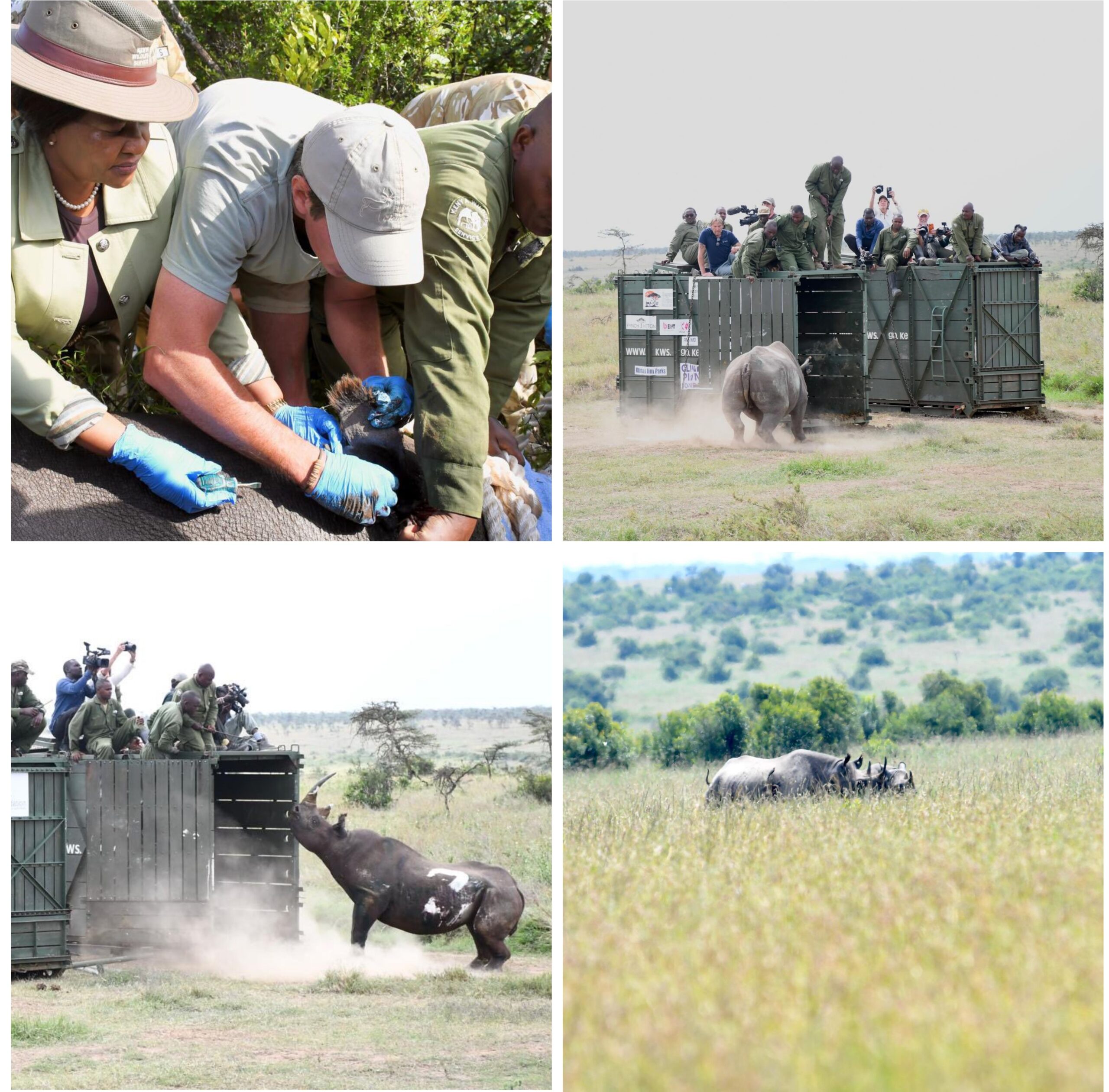
Cabinet Secretary for Tourism and Wildlife Hon. Rebecca Miano has officially flagged off the translocation of 21 critically endangered eastern black rhinos from Ol Pejeta Conservancy to Segera Conservancy in Laikipia County.
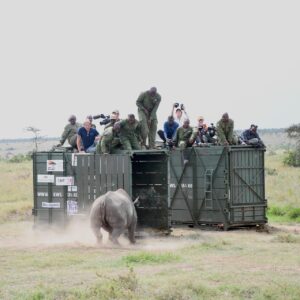
Accompanied by the Chairman of the Kenya Wildlife Service (KWS) Board of Trustees, Lt. Gen. (Rtd) Walter Raria Koipaton, KWS Director General Prof. Erustus Kanga, conservation stakeholders, and partners, the Cabinet Secretary underscored the urgency and importance of bold action in saving one of the world’s most imperiled species.
“This successful translocation is a powerful reminder of what’s possible when visionary policy aligns with strong, purpose-driven partnerships,” said Miano during the official launch.
The exercise—set to take place over 18 days—will see three rhinos moved at a time to minimize stress, with breaks between each phase to allow for acclimatization. A dedicated team of veterinarians will monitor the animals throughout their journey to ensure their safety and well-being.
This initiative aims to ease the strain on overpopulated sanctuaries such as Ol Pejeta, Lewa Wildlife Conservancy, and Lake Nakuru National Park, while establishing Segera as a secure and ecologically rich breeding ground. The cool, dry May weather is expected to support the success of the operation by reducing stress on the animals during transit.
Poaching, habitat loss, and overcrowding have long posed existential threats to rhino populations in Kenya. However, through strategic partnerships and bold conservation strategies like translocation, the government hopes to reverse the species’ decline.
“As we review the Wildlife Act to better support conservation innovation and deliver tangible benefits to communities, initiatives like this demonstrate the real, lasting impact of collaborative action,” said Miano.
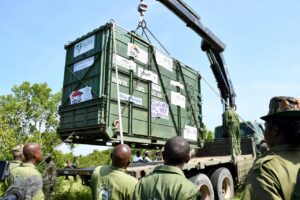
The translocation is made possible through the combined efforts of the Zeitz Foundation, Ol Pejeta Conservancy, Lewa Wildlife Conservancy, community conservancies, and the heroic efforts of Kenya’s wildlife rangers—praised by Miano as “the true heroes behind Kenya’s conservation success story.”
Segera Conservancy’s emergence as a viable conservation frontier highlights the potential of Northern Kenya’s rangelands, where private, public, and community actors are working together to redefine harmonious coexistence with nature.
“This mission is more than a logistical achievement—it is a statement,” Miano concluded. “Extinction is not an option. Together, let’s ensure that Kenya’s rhinos will not only survive—but thrive.”