


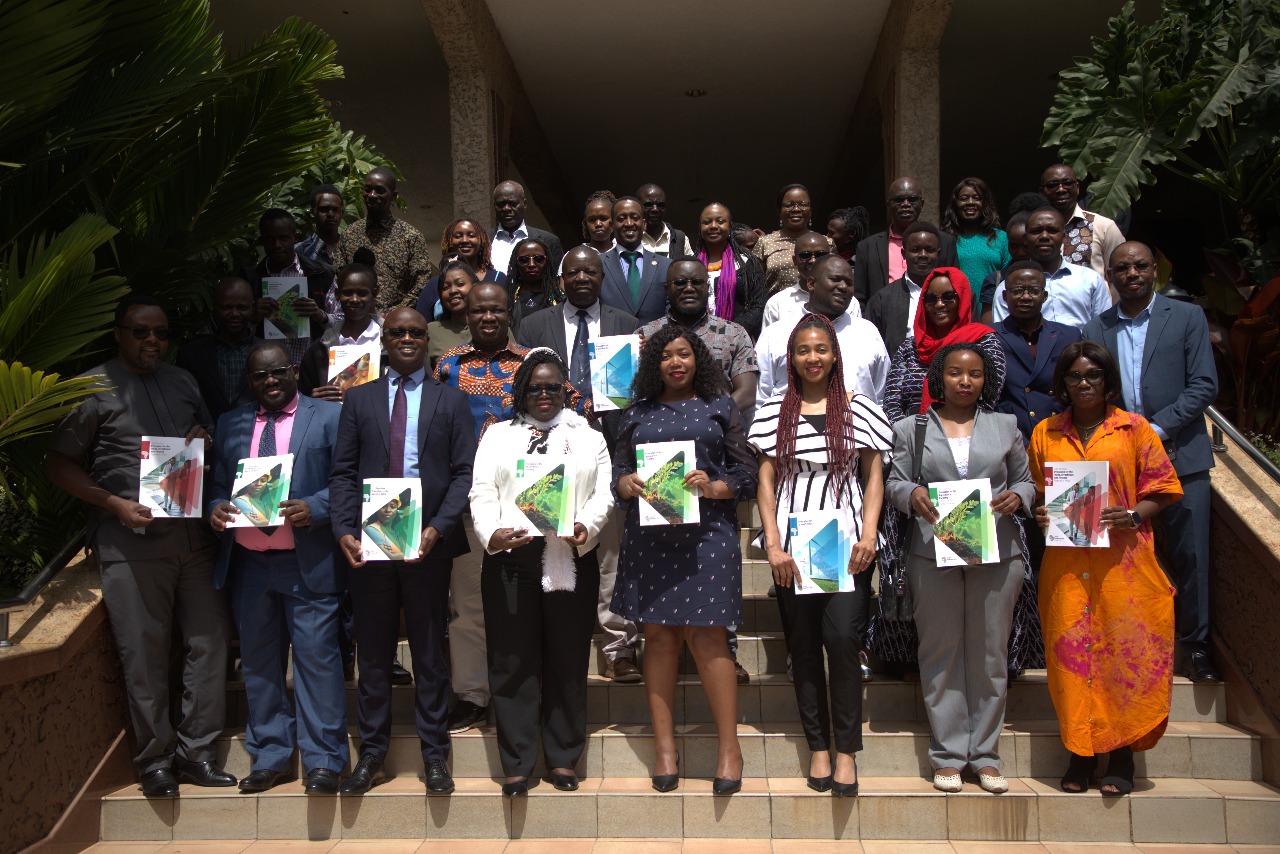
Africa has taken a bold step towards shaping its climate future with the launch of the Principles for a Just and Equitable Transition by the Just Transition Platform (JTP) at a high-level dialogue held at a hotel in Nairobi.
The groundbreaking framework aims to redefine how the continent approaches climate action—placing justice, equity, and African leadership at its core.
The JTP, a collaborative initiative launched in 2022, brings together experts from energy, labour, trade, gender, and land use to build a unified African response to the climate crisis. Co-convened by ClimateWorks Foundation and ITUC-Africa, the platform culminated its three-year journey with the release of sector-specific principles designed to guide Africa’s transition in a way that protects jobs, communities, and sovereignty.
“This is Africa’s moment to assert a vision for climate action that reflects our realities and aspirations,” said Dr. Pamela Levira of the African Union.
The newly launched principles span key sectors including energy, agriculture, finance, and the world of work. They advocate for sustainable national energy sovereignty, decent work, gender-responsive policies, inclusive land reforms, and fair trade and investment practices.
Notably, the energy principles promote hybrid models tailored to African contexts, emphasizing universal access to clean, affordable energy and technology transfer. In the world of work, the principles call for legally mandated social dialogue, green skills for youth and women, and climate finance through grants, not loans.
“This isn’t just about emissions. It’s about justice, livelihoods, and ownership,” said Kingsley Ofei-Nkasah of GD Resource Center.
The platform’s call to action challenges global narratives around Net Zero and Just Transition, demanding African-led frameworks rooted in lived experiences. It also calls for structural reforms to tackle inequality, elite capture, and extractive economic models.
As Africa’s nations update their Nationally Determined Contributions (NDCs), the JTP framework pushes for transitions that uplift the majority, not just the privileged few.
“We must shift from externally imposed models to community-rooted, African-led solutions,” said Anne Songole of CLASP.
With the launch of these principles, Africa signals its readiness to lead in defining a just, inclusive, and sovereign climate future.