


A Kenyan technology company is harnessing artificial intelligence to transform accessibility for the deaf community, drawing inspiration from the motion capture techniques popularized in the blockbuster film Avatar.
Featured on CNN’s Marketplace Africa, journalist Victoria Rubadiri visited Signvrse, a local startup developing a digital catalogue of Kenyan Sign Language powered by advanced motion capture and AI-driven translation tools.
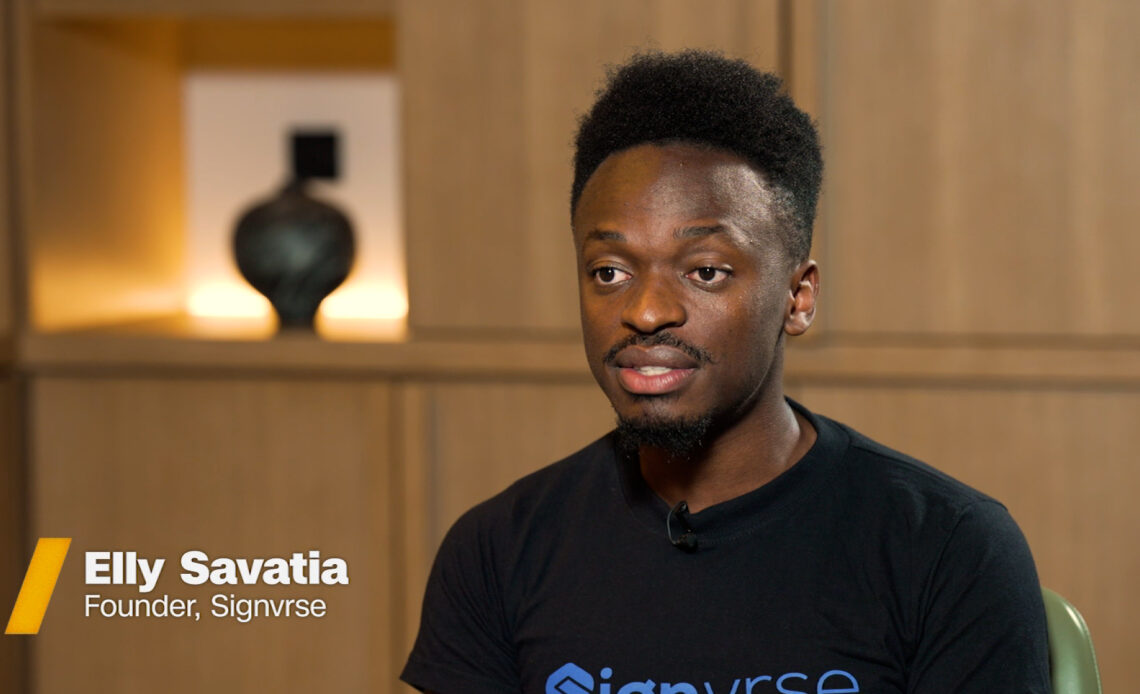
The company has built what it describes as a “visual Google Translate for sign language,” enabling real-time and scalable translation of spoken or written content into accurate sign language. Founder Elly Savatia says the innovation opens up vast opportunities to make information more inclusive.
“There’s a lot of potential to make any piece of content accessible in sign language—from podcasts and television to public announcements, safety information, and even healthcare communication,” Savatia explained.
At the core of the technology is a motion capture studio equipped with high-precision OptiTrack cameras. Deaf interpreters perform signs in controlled environments while visual data is captured and processed into realistic digital translations. The system leverages AI to replicate human-like signing with accuracy and fluidity.
The innovation is already attracting interest from major corporations. Kenya Airways is exploring the integration of Signvrse’s technology into its services, including real-time flight safety information for deaf passengers.
Linda Okolo, Diversity and Disability Inclusion Champion at Kenya Airways, emphasized the broader impact: “Inclusivity is not only a social imperative—it’s also an economic one. There’s significant value that organizations miss when they exclude persons with disabilities.”
As AI continues to evolve, companies like Signvrse are positioning accessibility at the forefront of innovation—ensuring that technology not only advances efficiency but also inclusivity.