

Homa Bay County Launches Women-Led Factory to End Period Poverty
Women-Led Enterprise Tackles Period Poverty and Creates Jobs
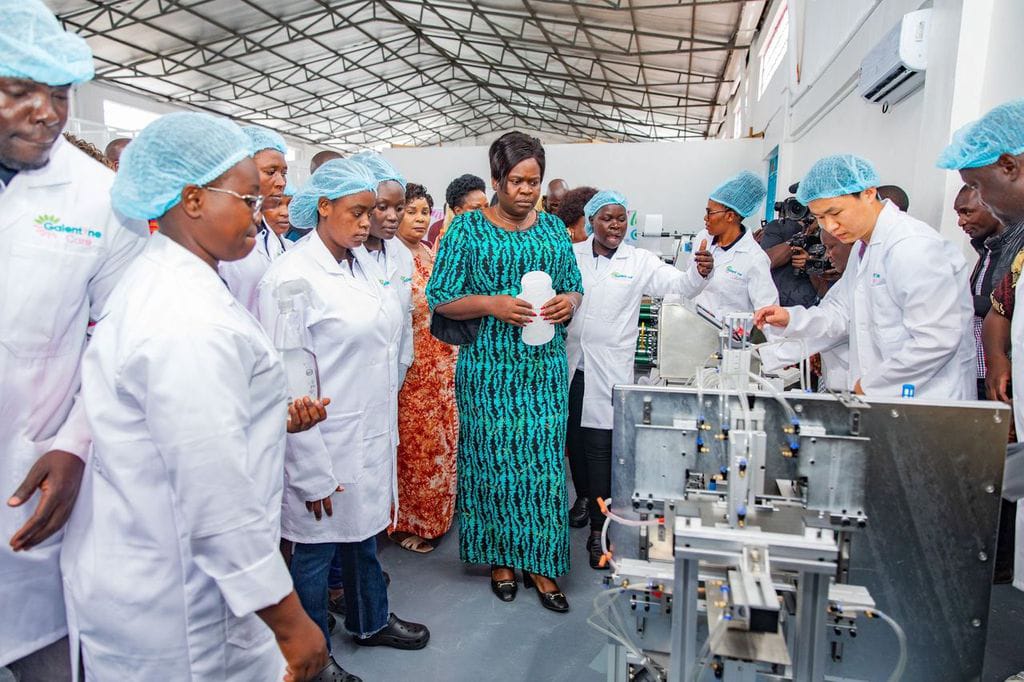
Homa Bay County has officially launched the Galentine Care Sanitary Pad Factory in Kasgunga Ward, Suba North, a women-led social enterprise focused on producing affordable sanitary pads while creating dignified employment for women.
The launch was presided over by Governor
Gladys Wanga and attended by county leaders, Members of Parliament, educators, development partners, and students from local schools.

Stephanie March, Co- Founder of Galentine Care
More than just a factory, Galentine Care Ltd is an employee-owned, women-led business, where female workers are also shareholders, building leadership, income, and long-term economic agency.
Affordable Pads to Keep Girls in School
Located in Mbita, the factory produces high-quality sanitary pads at prices as low as KSh 50, up to 60% cheaper than market rates. A portion of the production will be donated to schools to reduce menstrual-related absenteeism.
This is not charity. This is a social enterprise rooted in dignity. Period poverty, teenage pregnancy, and household poverty are deeply interconnected. This factory strengthens our economy while protecting our girls.”
Homa Bay continues to record the highest teenage pregnancy rates in Kenya, with over 17,000 cases in 2024 alone. Research shows that period poverty increases vulnerability, sometimes pushing girls into transactional relationships to afford sanitary products.
Market-Based Solutions for Community Impact
Founder Peter Macodida highlighted that 97% of women in Homa Bay can afford pads priced at KSh 50, making the factory’s market-driven approach both practical and scalable. By Year 3, Galentine Care aims to expand from 17 trained women to over 200 workers and reach 430,000 women, while reinvesting profits into jobs, profit-sharing, and free pads for schools.

Peter Macodida, one of the Galentine Care Co-Founders
The factory is KEBS and ISO certified and produces up to 200 pads per minute, supporting local suppliers and anchoring industrial development within the community.
A Movement for Women’s Empowerment
Peter Macodida emphasized that investing in women-led manufacturing is not only socially just but economically smart. “Galentine Care is not just a factory—it is a movement,” said Tracy Mackavin,Co-Founder of Galentine Care. “When women are given the tools and trust to lead, communities thrive.”
“When women design solutions for their own lives, the impact is powerful. Galentine Care proves that women-led manufacturing can create jobs, keep girls in school, and build thriving communities. This is what investing in women truly looks like,”Stephanie March, Co-Founder of Galentine Care.
Jane Anyango, Director of Polycom Girls, noted that the factory builds a future where girls can stay in school and pursue their passions without interruption.
“We started with pad banks in schools because we saw firsthand how period poverty holds girls back. Today, with Galentine Care’s factory here in Homa Bay, we are not just providing products—we are building a future where girls stay in school, participate fully, and pursue their passions without shame or interruption. This is community-driven, quality-led, and designed by women who truly understand what girls need.” said Anyango
Galentine Care stands as a national example of how policy, innovation, and community leadership can align to improve menstrual health, empower women, and safeguard girls’ education.