

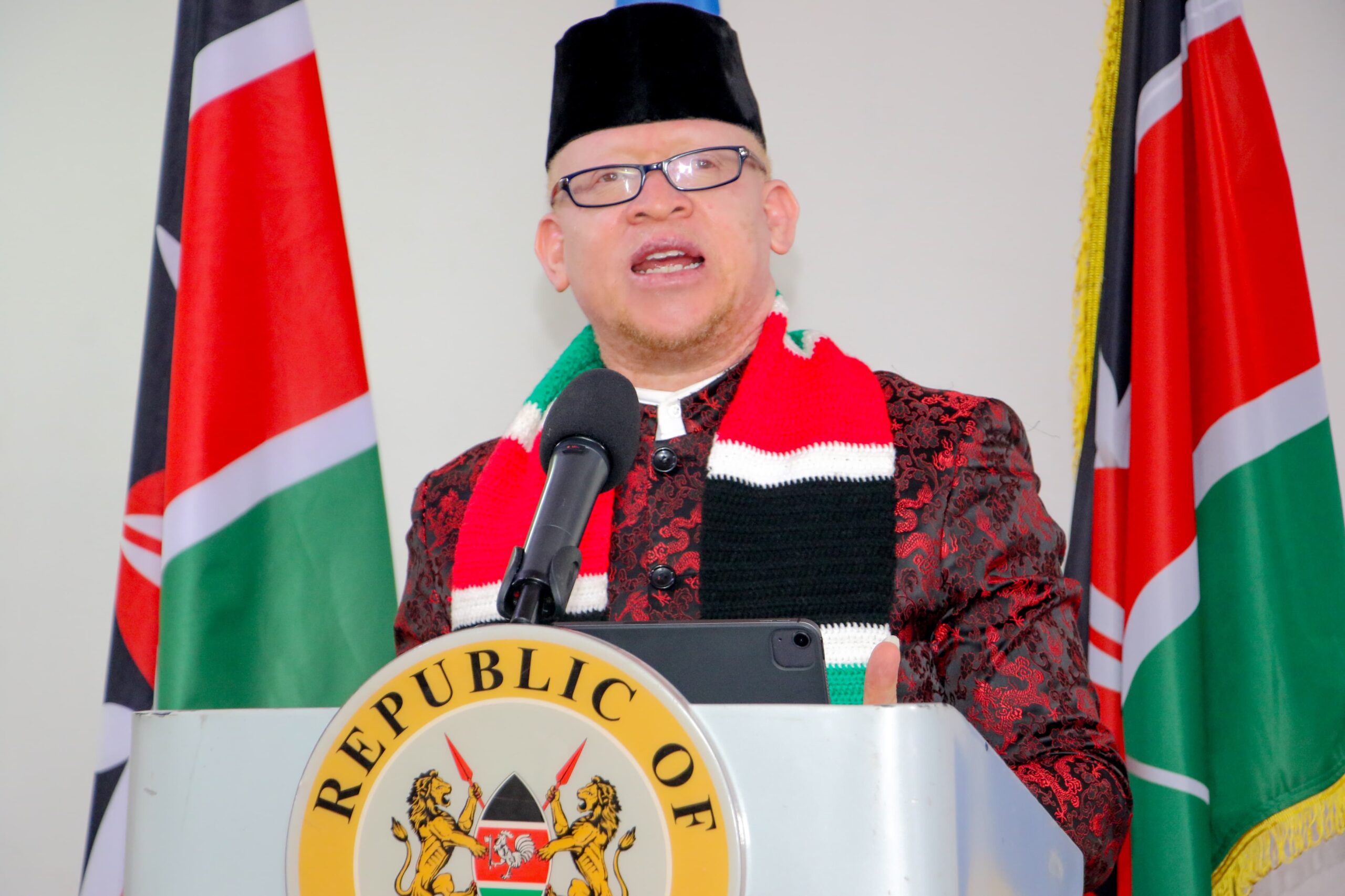
Isaac Mwaura, Government Spokesperson during a weekly press briefing at KICC on Friday.
In a comprehensive address delivered by Government Spokesperson Hon. Isaac Mwaura, outlined the administration’s response to pressing issues raised by the Kenya Conference of Catholic Bishops (KCCB).
The statement provided updates on various critical matters including anti-corruption measures, human rights, healthcare, taxation, education, and economic policies, affirming the government’s commitment to transparency, accountability, and citizen welfare.
The government reiterated its commitment to combating corruption, describing it as the most urgent national challenge. President William Ruto has proposed legislative reforms to expedite the conclusion of graft cases within six months, including amendments to the Evidence Act and Criminal Procedure Code. The administration also plans to enhance the Witness Protection Act to safeguard whistle-blowers, encouraging the reporting of corrupt activities.
Notably, amendments to the Public Finance Management Act and the Public Procurement and Disposal of Assets Act aim to digitize procurement processes for full transparency. Additionally, 40 percent of goods and services procured by the government will be sourced locally, supporting the “Buy Kenya, Build Kenya” initiative. The Ethics and Anti-Corruption Commission has recovered Ksh 28 billion in misappropriated assets so far, highlighting progress in the fight against graft.
Acknowledging concerns about police conduct during recent protests, Dr. Mwaura highlighted the government’s dedication to upholding human rights. Investigations by the Directorate of Criminal Investigations (DCI) and the Independent Policing Oversight Authority (IPOA) are ongoing to address any instances of police excesses. The protests in June and July 2024 led to injuries among 495 police officers and 347 civilians, with 42 fatalities reported. The government pledged to ensure justice and prevent such incidents in the future.
The government has started clearing historical debts owed by the National Health Insurance Fund (NHIF) to healthcare providers, disbursing Ksh 5.05 billion so far, including Ksh 938 million to faith-based hospitals. With the transition to the new Social Health Insurance Fund (SHIF), over 14 million Kenyans have registered, showing positive feedback on the new universal healthcare scheme. The government urged those who have not yet registered to do so through the online platform or by dialing *147#.
Addressing concerns about the proposal to extend the terms of elected leaders, the government clarified that this was a privately sponsored bill by Senator Samson Cherargei and not part of the government’s legislative agenda. The Senate’s Justice and Legal Affairs Committee has dismissed the bill, confirming that it will not proceed. Dr. Mwaura emphasized the administration’s commitment to constitutional principles and the regular election cycle.
The spokesperson assured the public of efforts to create a balanced and fair tax system. The government is exploring measures to reduce the tax burden on ordinary Kenyans while expanding the digital tax base to include sectors like ride-hailing, food delivery, and freelance services. Additionally, a Significant Economic Presence Tax will be imposed on non-resident digital entities operating in Kenya.
Following the rejection of the 2024 Finance Bill, the government has secured alternative funding sources, including a Ksh 78.3 billion credit facility from the IMF and Ksh 34 billion from China for infrastructure projects. Public-Private Partnerships (PPPs) are also being pursued, with recent investments such as the Ksh 95 billion by Adani Group for transmission lines.
The government remains committed to the Competency-Based Curriculum (CBC), with substantial investments in classroom construction and teacher recruitment. Over Ksh 41 billion has been allocated to support university students under the new Higher Education Funding Model.
In addressing youth unemployment, the government has facilitated job placements abroad, benefiting over 105,000 Kenyans in countries such as the UK, Canada, and Saudi Arabia. Local initiatives, including the Affordable Housing Project and the Climate WorX Mtaani program, have created hundreds of thousands of jobs. Digital skills programs have also trained nearly 490,000 Kenyans, connecting many to online job opportunities.
Mwaura highlighted positive macroeconomic indicators, with inflation at a 17-year low of 2.7 percent, stabilization of the exchange rate, and improved foreign exchange reserves. Key sectors like agriculture have rebounded, supported by favorable weather and subsidized inputs, leading to surplus production of maize and sugar for the first time in years.
The government has raised the guaranteed minimum price for milk, boosting production by 13 percent since 2022. The overall reduction in prices for essential commodities such as sugar, flour, and fuel has eased the cost of living for many Kenyans.
The government is working towards reconstituting the Independent Electoral and Boundaries Commission (IEBC) following recent legislative amendments. However, delays have been caused by internal disagreements within the Azimio la Umoja Coalition party, pending tribunal decisions. The administration remains committed to establishing a functional electoral body to oversee upcoming by-elections.