


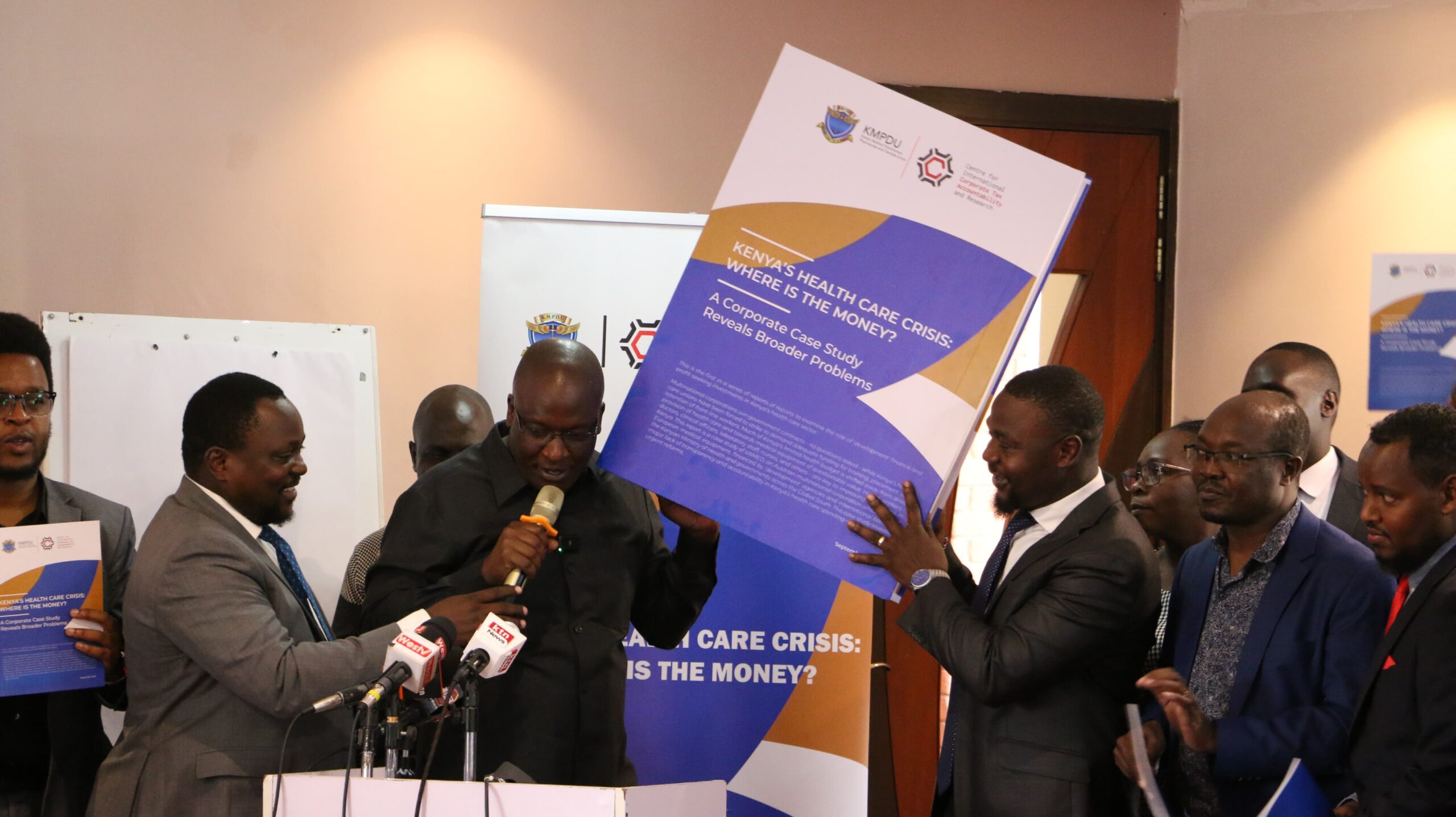
A damning new report from the Kenya Medical Practitioners, Pharmacists and Dentists Union (KMPDU) and the Centre for International Corporate Tax Accountability and Research (CICTAR) raises serious concerns about the management and impact of health contracts between the Kenyan government and European corporations.
The investigation reveals that millions of dollars intended for Kenya’s struggling public health sector have been redirected to European for-profit companies, exacerbating Kenya’s international debt and undermining local healthcare.
The report specifically highlights VAMED, an Austrian-based company that is a subsidiary of the German healthcare conglomerate Fresenius. VAMED has been awarded substantial contracts to supply equipment to Kenyan health facilities, particularly for upgrading maternity units in county health centers. However, the report suggests that these contracts have not only failed to meet their objectives but have also burdened Kenya with additional debt.
Interviews with Kenyan county health officials point to significant issues with the equipment provided by VAMED. One official noted that the initial equipment supplied was non-functional, and replacements also failed to meet the expected standards. This has led to suspicions that the equipment might have been subpar or previously unsellable in European markets. The report criticizes the lack of transparency around the procurement process, with no clear information available to local officials regarding the contract values or expenditures.
The report also draws attention to the broader implications of these contracts. It cites a 2019 case where Fresenius Medical Care, a sister company of VAMED, was implicated in a decade-long global bribery scheme to secure medical equipment contracts. The company paid a settlement of over $231 million to the US government for violations of the Foreign Corrupt Practices Act.
Dr. Davji Atellah, Secretary General of KMPDU, condemned the allocation of funds to foreign corporations, suggesting that the Kenyan government should instead invest in local healthcare services and support the front-line health workforce. He emphasized the need for a transparent investigation into the contract negotiations and financial flows associated with these deals.
The report also notes that previous VAMED projects in Kenya were funded by the Austrian government, which has significant shares in VAMED. Additionally, the UK Government’s Export Finance provided financing to VAMED’s UK subsidiary, aiming to boost procurement from UK suppliers. Current projects in Kenya have been financed by the Finnish government and involve exclusively Finnish products, including equipment like doors.
Jason Ward, author of the CICTAR report, called for European governments to be held accountable for whether their support for these projects aligns with local healthcare objectives or merely serves to benefit their domestic manufacturers.
The KMPDU and CICTAR are demanding an immediate and thorough investigation into who facilitated these contracts, who has profited from them, and whether the public funds allocated are genuinely improving health outcomes for Kenyans.