


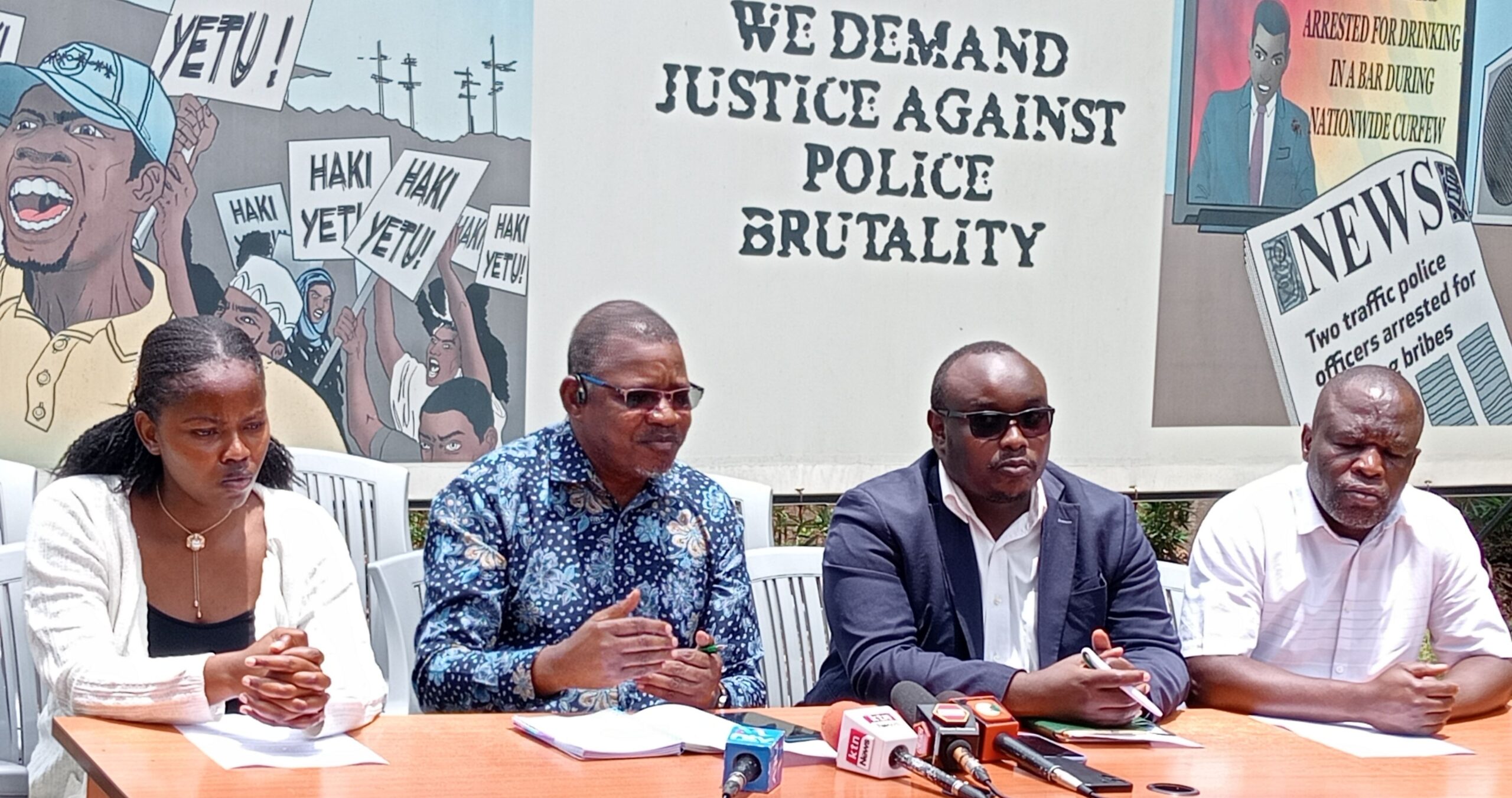
From left to right Esther Gachanja, Boaz Waruku Elimu Bora Advisor,David Karani a member of Elimu Bora, and Cornelius Oduor KHRC Deputy Executive Director during a press conference on Sunday 22
The Elimu Bora Working Group has voiced strong opposition to a newly appointed 129-member national committee tasked with reviewing the controversial university funding model instituted by President William Ruto’s administration. The group argues that the model has already caused significant harm, preventing hundreds of thousands of students from accessing higher education.
On September 16, President Ruto established the committee in response to mounting public outrage over the funding model, which many believe has rendered university education unaffordable for numerous eligible students. Critics, including members of the Elimu Bora Working Group, contend that this move is merely an attempt by the government to buy time, weaken dissent, and sidestep necessary reforms in the education sector.
“The current regime is using tactics similar to those of previous administrations, which often formed commissions of inquiry to quell public dissatisfaction without taking substantive action,” said Cornelius Oduor Deputy Executive Director KHRC. “Despite recommendations from these bodies, real change has been elusive, leaving students and their families in a state of uncertainty.”
The Elimu Bora Working Group highlighted alarming statistics indicating the model’s detrimental impact. In 2023 alone, nearly 600,000 eligible students opted out of university placement, with over 23,000 qualified individuals choosing not to apply due to the prohibitive costs associated with the new funding structure.
Furthermore, a staggering 136,592 students who qualified for diploma courses and 249,149 for certificate programs found themselves unable to pursue their educational aspirations under the new funding bands.
David Karani a member of Elimu Bora Working Group emphasized that the current crisis is clear evidence that the new model is failing the youth of Kenya. “We don’t need a committee to confirm what is painfully obvious. The Ministry of Education can halt this crisis with a simple stroke of the pen. “This system has failed. Those implementing the new funding model clearly don’t understand. We must revert to the old model,” said Karani
In light of these concerns, the Elimu Bora Working Group has made specific demands: they call for the Ministry of Education to revert to the previous funding model, which allowed for greater access to higher education.
Additionally they urge President Ruto to dissolve the recently established committee and restore the old funding structure, emphasizing that students should not be subjected to experimental policies that jeopardize their future.
As the debate over the university funding model continues, the Elimu Bora Working Group remains steadfast in its commitment to advocate for equitable access to education for all Kenyan students.