


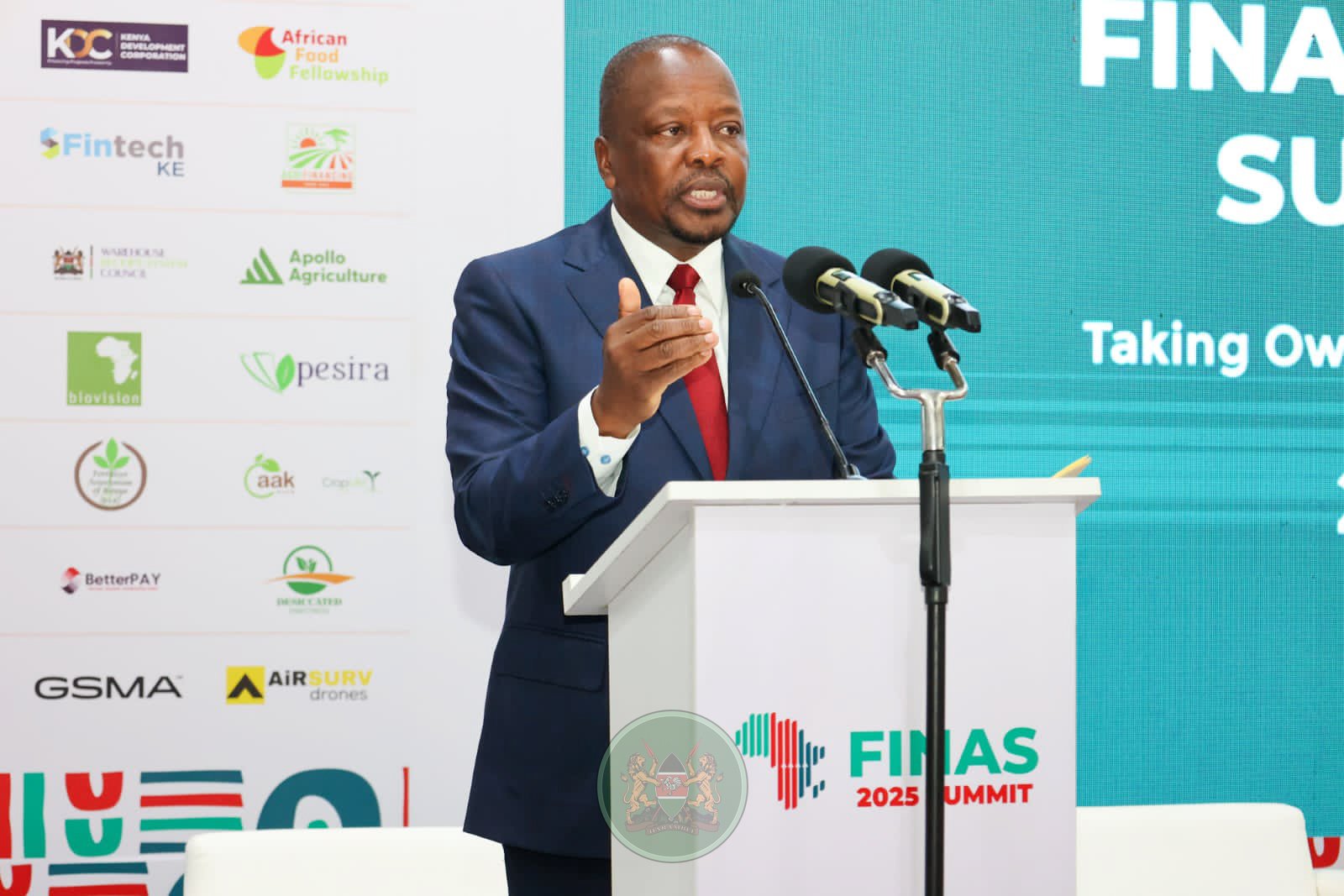
Mutahi Kagwe, CS for Agriculture
Agriculture Cabinet Secretary Mutahi Kagwe has issued a rallying call for comprehensive reforms in Kenya’s agricultural financing, urging financial institutions, policymakers, and the private sector to unlock the sector’s full potential through innovation, collaboration, and increased investment.
Speaking at the official opening of the 2025 Summit on Financing Agri-Food Systems Sustainably (FINAS), Kagwe emphasized the central role of farmers in Kenya’s economic development and food security. He outlined a strategic roadmap focused on increasing budgetary allocations, introducing accountability mechanisms, and leveraging digital technologies to transform agriculture.
Kagwe expressed concern over the government’s continued failure to meet the Maputo Declaration target of allocating at least 10 percent of the national budget to agriculture. Despite the sector contributing up to 50 percent of Kenya’s GDP—both directly and indirectly—it currently receives only 3 percent of national budgetary allocations, amounting to about KSh 60 billion annually.
To bridge this gap, Kagwe committed to working with the National Treasury and Parliament to raise agriculture’s budget share to 10 percent, in alignment with the Malabo and Kampala Declarations. He stressed that unlocking sustainable agricultural production requires tailored financing options that help farmers manage risks and improve yields.
The Cabinet Secretary criticized commercial banks for allocating only 3% of their loan portfolios to agriculture and called for the revival of a mandatory lending quota to the sector. He also announced plans to recapitalize the Agricultural Finance Corporation (AFC) and merge it with the Commodities Fund to enhance credit access and price stabilization.
To ensure prudent use of resources, Kagwe unveiled the creation of an independent Project Implementation Monitoring Unit (PIMU) within his ministry to track project delivery and promote accountability.
On the technology front, he highlighted the Kenya Integrated Agriculture Management Information System (KIAMIS), which has registered 6.4 million farmers and supports targeted subsidies, credit scoring, and land traceability. He also announced the establishment of a national agri-tech hub under the revamped Agricultural Information Resource Centre (AIRC), which will serve as an innovation incubator for digital agriculture solutions.
Kagwe called on stakeholders to embrace advanced technologies such as blockchain for traceability, satellite imagery for crop monitoring, and AI for credit scoring. He urged public, private, and research institutions to collaborate in building a resilient, inclusive, and digitally enabled agri-food system.
“No single actor can do it alone,” Kagwe concluded. “We must leave no farmer behind as we work toward a prosperous and food-secure Kenya.”