


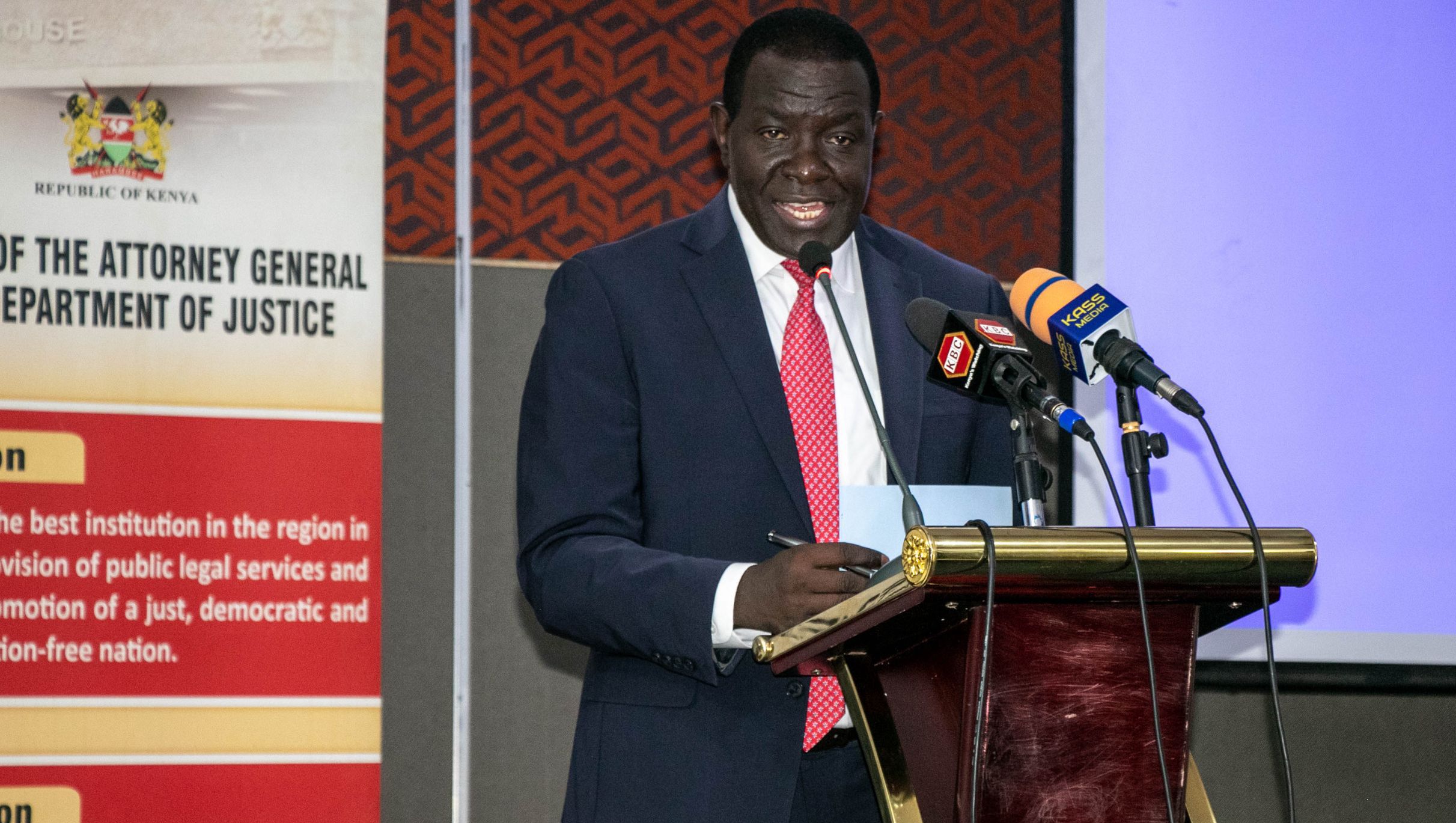
Shadrack Mose, Solicitor General
The Office of the Attorney General has called on Kenyans to provide their final comments on the Public Participation Bill, 2024, a landmark legislative proposal aimed at solidifying the principles of public engagement enshrined in the Constitution.
This call was made during a high-level public forum held at the Kenyatta International Conference Centre (KICC) on Wednesday, where stakeholders from diverse sectors gathered to discuss the Bill’s implications for governance and democratic processes in Kenya.
The Public Participation Bill, spearheaded by the Office of the Attorney General, aims to establish a structured framework for public involvement in legislative, policy, and programmatic processes at both national and county levels.
Although public participation is a constitutional requirement under Kenya’s 2010 Constitution, the absence of clear implementation guidelines has led to inconsistencies, leaving room for legal disputes and varied interpretations by the judiciary.
Speaking at the forum, Solicitor General Shadrack Mose emphasized the importance of the Bill in addressing long-standing challenges related to public engagement. “The officers engaged with diverse stakeholders across Kenya to create a legal framework that reflects national values and addresses the unique needs of the diverse segments of the population,” said Mose. He highlighted that the Bill aims to ensure systematic, meaningful, and inclusive public participation, which will be respected at both national and county government levels.

The Solicitor General noted that the public consultation process, which began on September 26, 2024, and continued with renewed calls for feedback on November 8, 2024, has generated numerous submissions. “So far, the public consultation process has been successful, generating significant input that highlighted areas for improvement in public participation. We have considered and will continue to consider every comment we receive because we want to make this Public Participation Bill one of the best,” he added.
The Bill is structured into five main parts, each addressing different aspects of public participation:
- Preliminary Matters (Clauses 1-4): The initial section of the Bill sets out the short title, definitions of key terms, the scope of the Bill, and its main objectives. It seeks to provide a clear legal basis for public involvement across all levels of government.
- Guidelines for Public Participation (Clauses 5-8): This section mandates responsible entities to consider specific guidelines when conducting public participation. It requires the development and publication of detailed guidelines by authorities and emphasizes the need for adherence to Article 118 of the Constitution, which mandates public participation in parliamentary processes.
- Institutional Framework (Clauses 9-12): The Bill establishes the Office of the Registrar of Public Participation within the public service. The Registrar’s role will be to oversee the public participation process, providing direction and ensuring that all guidelines are adhered to. The Cabinet Secretary responsible for public participation will have the power to give policy directives, and the functions of the Registrar may be delegated to other officials in the national and county governments.
- General Conduct of Public Participation (Clauses 13-15): This part outlines the procedures for preparing and submitting public participation plans. It mandates the publication of proposals and notices by responsible authorities and requires the preparation of comprehensive reports on public participation outcomes.
- Miscellaneous Provisions (Clauses 16-21): The final part addresses the rights of the public, dispute resolution mechanisms, sanctions for non-compliance, and transitional provisions. It grants the Cabinet Secretary powers to make additional regulations for effective implementation and sets penalties for failing to meet the obligations outlined in the Bill.
The Bill’s Schedule also provides a standardized format for public notices, ensuring that the public is informed of opportunities to comment on legislative proposals, statutory instruments, policies, programs, and projects.

The Public Participation Bill, 2024, is seen as a crucial step in advancing Kenya’s democratic framework. By providing a structured process for public engagement, it aims to enhance transparency, accountability, and inclusiveness in decision-making processes. The Bill’s comprehensive approach addresses the concerns raised by the judiciary, which has, in the past, overturned laws due to insufficient public participation or upheld decisions despite limited engagement.
“The public participation would not mirror only one sector but would provide a framework that guides the various diverse sectors we have,” said Solicitor General Mose. He urged those who have not yet submitted their comments to do so, emphasizing the importance of collective input in shaping a robust legal framework.
The Attorney General’s office is calling on all Kenyans to submit their feedback through the official website and social media platforms. The office has pledged to review and incorporate the public’s insights, with a commitment to making the Public Participation Bill a model for inclusive governance, not only within Kenya but also as a benchmark for international standards.
This legislative effort underscores the government’s commitment to embedding public participation as a core principle in governance, reflecting the aspirations of the Constitution and the evolving needs of a democratic society. If passed, the Public Participation Bill, 2024, is expected to set a new precedent in ensuring that all voices are heard in the shaping of lawsand policies that affect the nation.