

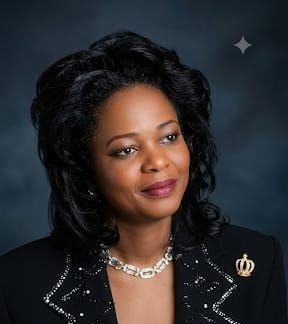
An international scholar, diplomat and legal and policy expert Akasoba Zainab Duke-Abiola has joined the race to succeed the incumbent United Nations Secretary-General António Guterres whose term is ending December 31, 2026.
Duke-Abiola, an internationally respected constitutional jurist, stateswoman has emerged as the focus of sustained advocacy by African policy institutions and international networks seeking greater African representation in global leadership.
Also the widow of the late Nigerian statesman and acclaimed June 12, 1993 presidential election winner Chief M.K.O. Abiola, Duke-Abiola colour education credentials and experience on policy and governance have attracted attention from the global superpowers –USA and Russia respectively.
Former Chairperson of the African Union Commission and Chancellor of the University of Limpopo in South Africa Dr. Nkosazana Dlamini-Zuma, reiterated the need for a woman to emerge as the next United Nations Secretary-General.
Recently in Moscow she told the News Agency of Nigeria on the sidelines of a high-level Russia-Africa engagement, Dlamini-Zuma emphasized that the leadership of the global Organisation should no longer remain the exclusive preserve of men.
“It is men who will vote, because they are the majority and must vote for a woman. The seat has never been occupied by a woman; it is time women hold that position,” she said.
According to a recent UN Security Council Report eight candidates –are formally in the running to succeed UN Secretary-General António Guterres when his term ends on December 31, 2026. Duke-Abiola’s interest for the position has expanded the number of women seeking the position to six and three men.
Under Article 97 of the United Nations Charter, the Secretary-General is appointed by the General Assembly upon the recommendation of the Security Council. The absence of a final recommendation, together with additional nominations, means that the selection process remains formally open and thus prompt advocates of Duke-Abiola to present her candidature.
The United States has emphasised the importance of merit, leadership capability, institutional reform and results rather than treating geographical rotation or gender as exclusive determinants of the appointment.
Russia, while acknowledging the established preference for geographical rotation, has indicated a willingness to consider candidates from regions beyond Latin America and the Caribbean should existing contenders fail to secure the necessary Security Council support.
These positions according to analysts reinforce the argument that the selection process should remain responsive to exceptional leadership credentials, diplomatic acceptability and the evolving needs of the United Nations.
The African Policy and Research Consortium (APRC), a pan-African policy and research network, recently publicly endorsed Duke-Abiola for consideration as United Nations Secretary-General.
The Consortium has maintained that Duke-Abiola’s academic, governmental, diplomatic and strategic policy experience warrants serious international consideration.
Chief of Global Outreach for the Duke-Abiola United Nations Secretary-General Campaign Dr Jenny Clarence has commended the expanding support surrounding Nigeria’s prospective candidature.
According to Clarence, interest from organisations, institutions and advocacy networks across different regions demonstrates the growing international reach of Duke-Abiola’s campaign.
The incumbent SG António Guterres tenure is expected to end on December 31, 2026, and Security Council members are seeking to conclude the succession process before year’s end.
The selection process for the suitable candidates is at a consequential phase following eight informal Security Council straw polls, without a formal recommendation to the General Assembly.
The distinction is significant. Informal polling provides an indication of diplomatic preferences but does not itself constitute a formal Security Council recommendation or appointment.