

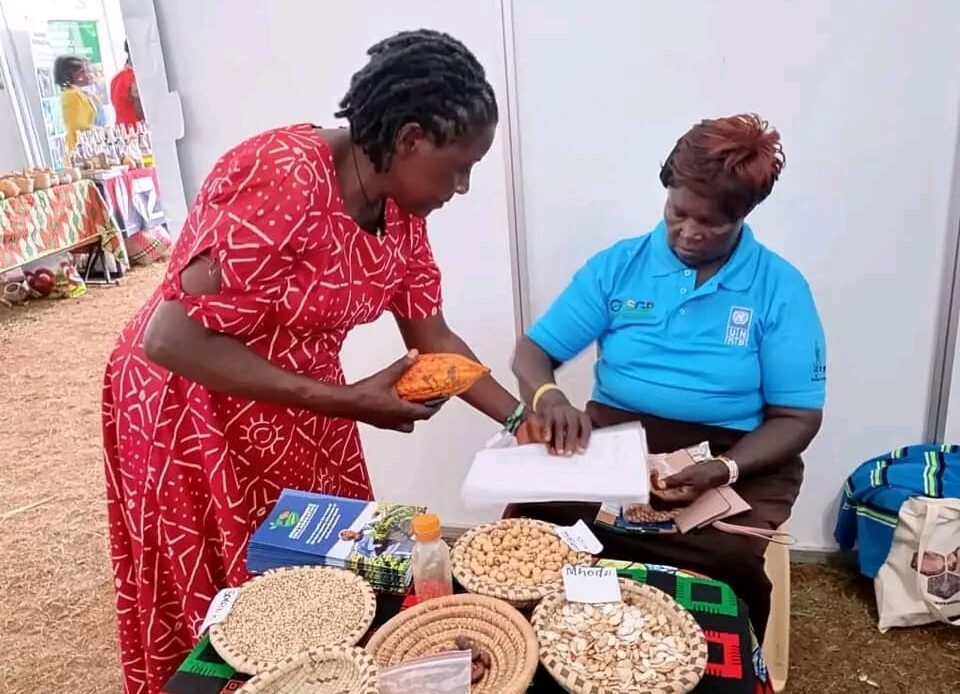
Women farmers and agricultural rights advocates have challenged policymakers to move beyond celebrating women’s resilience and address systemic inequalities limiting their access to land, financing, agricultural inputs and control over indigenous seeds.
The call emerged during the first Eastern Africa Indigenous Seeds Conference, taking place in Nairobi from November 17 to 20, 2026, where farmers, researchers and policymakers are discussing the future of indigenous seed systems and their contribution to food security.
During a side event examining gender justice in seed systems, participants argued that women remain central to preserving agricultural biodiversity but continue to face institutional and legal barriers that undermine their contribution to food production.
Rebecca Wanjiru, an Agrifood System Specialist at the Food and Agriculture Organization (FAO-Kenya), said celebrating women farmers without addressing the structural inequalities they face was insufficient.
“We have spent decades praising the resilience of the woman farmer while maintaining the exact policy frameworks that exploit her labour. Recognition without institutional transformation is just empty applause,” she said.
Wanjiru called for reforms that would open access to land rights, financing and local markets, arguing that agricultural equity requires dismantling unequal structures rather than simply recognising women’s contribution.
Dr Sheila Rao, Gender and Social Inclusion Analyst at SeedChange, said seed systems depended on communities, infrastructure and institutional support, not just agricultural technology.
She called for increased funding and access to agricultural inputs for resource-constrained communities, alongside greater participation of women in decision-making.
Rao also emphasised the need to improve awareness of existing laws and intellectual property frameworks that protect farmers’ ownership, access and control over seeds.
Beyond policy discussions, the event highlighted grassroots initiatives supporting the preservation of indigenous seeds and traditional farming knowledge.
Judy Nyokabi, a Happy Family Champion, said her community had mobilised farmers and established a Community-Based Organisation (CBO) to promote indigenous seed conservation through grassroots training and seed exchange programmes.
She noted that traditional maize varieties were valued for their ability to withstand storage, thrive under local conditions and provide food for both households and livestock.
The community is now working towards establishing a community seed bank to conserve traditional varieties and ensure future generations inherit valuable agricultural knowledge.
The side event was convened by The Institute for Social Accountability (TISA) in partnership with Welthungerhilfe (WHH), the Food and Agriculture Organization of the United Nations (FAO), SUNCSA and the Right to Food (RTF) Coalition.
The conveners brought together key stakeholders to examine institutional investments, address systemic gaps and secure commitments towards gender-just and resilient seed systems in Kenya.
Discussions also highlighted the proposed East African Community Seed and Plant Varieties Bill, 2025, with advocates urging policymakers to protect farmer-managed seed systems and recognise farmers’ rights to save and exchange indigenous seeds.
Participants said sustainable food systems would require policies that recognise women not only as food producers but also as custodians of agricultural biodiversity and contributors to climate resilience.