

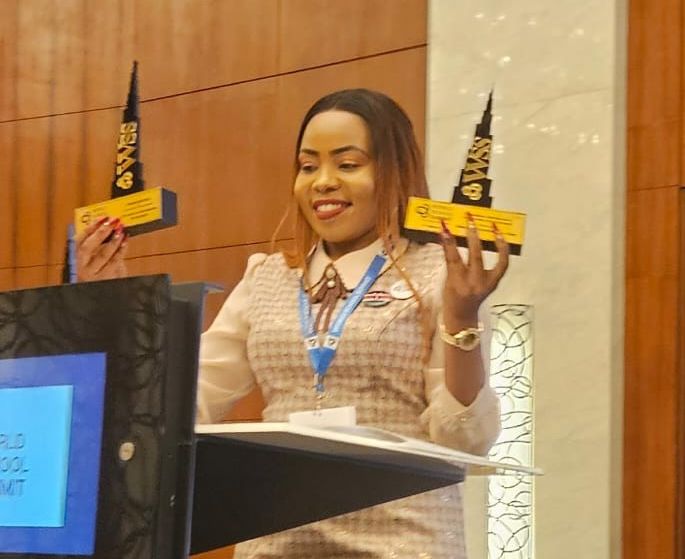
By John Kariuki
Dr Ekrah Ndungu from Kenya speaking to world leaders in Dubai last Friday, the same day that Microsoft was down, her speech resonated with the global leaders in the convention.
The world today romanticizes bringing down its heroes, we spend so much time looking for leaders mistakes,errors and tarnish their contributions over one slight error and sometimes engineered errors. We’re basically a very toxic negative generation..
The recent Microsoft outage raises a troubling question about our priorities as a society, as a global village!
While businesses struggled to communicate, schools experienced disruptions, organizations faced operational challenges, public attention was also drawn to private affairs of a prominent technology CEO.
Have we become so fascinated by the personal lives of successful leaders that we overlook the systemic failures affecting millions?
Have we developed a culture that celebrates heroes when they rise, scrutinizes their every personal decision and appear more interested in their downfall than their contribution to society?
I agree, Leadership comes with accountability. Ethical failures, particularly those involving abuse of power or professional misconduct, deserve legitimate scrutiny. But there is a difference between holding leaders accountable versus turning their private lives into global entertainment.
When did personal scandal become more newsworthy than institutions?
The Microsoft disruption should provoke serious conversations about technological dependence, business continuity and the future of human capital.
As technology companies invest billions in artificial intelligence while restructuring their workforces, executive leaders must confront an uncomfortable question:
Are we becoming so obsessed with technological advancement reducing human costs that we are undermining the very human expertise that sustains our institutions?
This is where Transgenerational Intelligence becomes critically important.
Experienced professionals carry institutional memory, historical knowledge, crisis-management experience and organizational wisdom that cannot simply be replaced by algorithms.
Younger generations bring digital capabilities, innovation and emerging technological perspectives.
To be Future-ready we need both.
The responsibility of executive leadership is not merely to automate operations but to preserve institutional knowledge, facilitate intergenerational knowledge transfer and build resilient organizations.
Equally, the media must remember its responsibility to inform society about issues that materially affect people’s lives, not simply amplify stories that attract attention.
We must learn to distinguish between a leader’s private imperfections, legitimate public accountability and the value of their professional contributions.
A leader’s achievements should never place them above accountability. Neither should personal controversy automatically erase decades of meaningful contribution.
Ultimately, the greatest threat to our institutions may not be technological failure alone, but our failure to prioritize what matters.
“A society that becomes more interested in the downfall of its heroes than the failures of its institutions risks losing sight of what truly threatens its future.”