


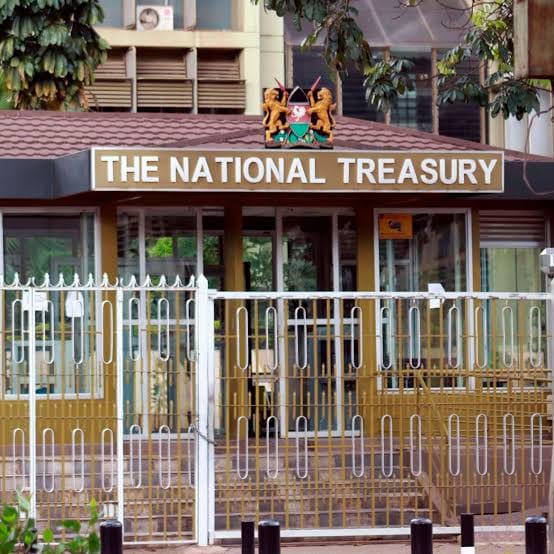
Kenya faces a major debt repayment challenge, with Sh1.7 trillion in public debt falling due before June 2027, putting pressure on the National Treasury to secure funds as the country approaches the next General Election.
The National Treasury’s latest Annual Public Debt Management Report shows that 12.7 per cent of Kenya’s Sh13.2 trillion public debt will mature within one year from July 1. The government must therefore raise substantial funds to repay creditors or refinance loans that are approaching their due dates.
The repayment burden includes obligations to foreign lenders such as China Exim Bank, which financed the construction of the Standard Gauge Railway, as well as the World Bank, International Monetary Fund, African Development Bank and Trade and Development Bank.
The government can manage some domestic repayments by issuing new Treasury bills and bonds to pay investors whose securities have matured. However, this approach exposes the Treasury to higher borrowing costs when new securities attract interest rates above those attached to the original debt.
Kenya already spends a significant share of its revenue servicing public debt, leaving fewer resources for development projects such as roads, electricity generation and water infrastructure.
The report shows that the proportion of debt due within one year exceeds the government’s 11.9 per cent target under its revised debt management strategy for 2025. This increases the risk that the Treasury will need to raise large amounts of money within a short period.
The strategy seeks to extend repayment periods, reduce reliance on short-term Treasury bills and increase concessional borrowing. The government also targets sourcing 80 per cent of new borrowing from domestic markets.
However, the average maturity of domestic debt stood at seven years in June, below the target of 8.3 years. Treasury bills accounted for 7.3 per cent of total public debt, more than twice the strategy’s 3.4 per cent target.
The report also indicates that 24.2 per cent of loans are due for interest-rate repricing within one year, above the 17.9 per cent target. This exposes the government to higher financing costs when market rates rise.
For the current financial year ending June 2027, the Treasury has budgeted Sh2.32 trillion for debt servicing, including Sh1.25 trillion in interest payments and Sh1.06 trillion in principal repayments. Domestic debt accounts for Sh1.64 trillion of the projected bill, while external obligations account for Sh680.38 billion.
To reduce the pressure, the Treasury plans to exchange bonds nearing maturity for longer-term securities and buy back selected bonds before their due dates. During the year to June 2026, it conducted bond switches and buybacks worth Sh66.8 billion.
Kenya also raised $2.25 billion through a two-tranche Eurobond in February 2026, partly to refinance existing obligations and buy back portions of Eurobonds due in 2028 and 2032.
The government’s ability to spread repayments over longer periods and secure affordable financing will remain crucial in managing the growing debt burden.