


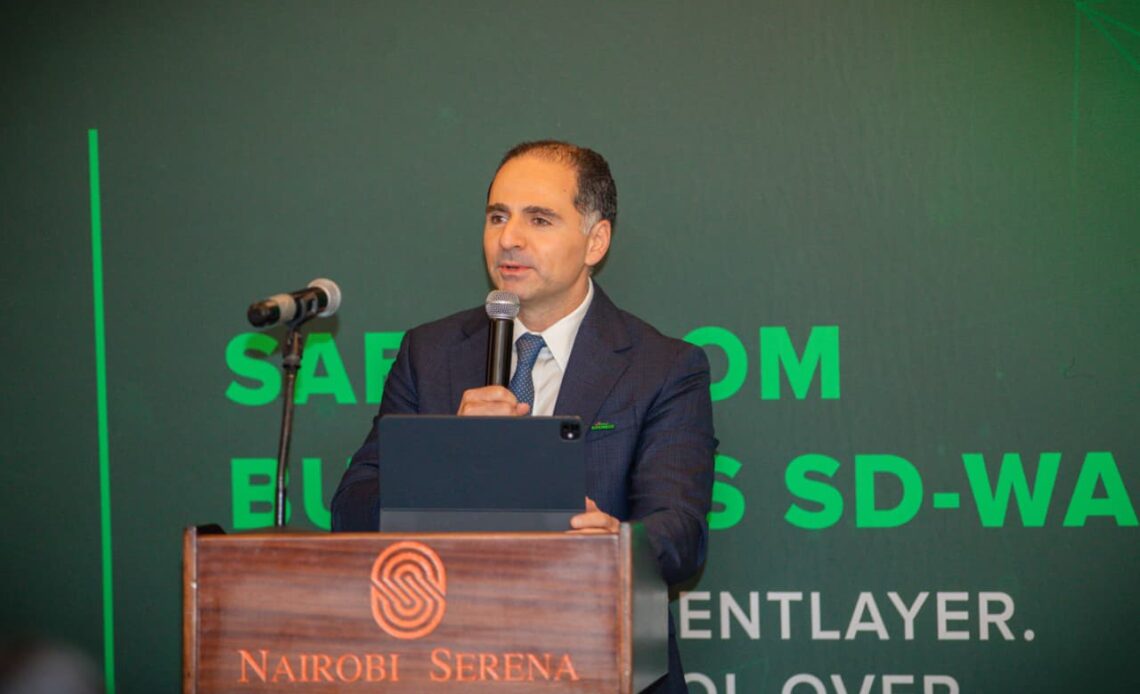
Safaricom has launched a new network service that helps businesses with multiple branches stay connected, reduce internet disruptions and manage their networks at a predictable monthly cost starting at KES 9,500 per branch.
The service, known as Software-Defined Wide Area Network (SD-WAN), combines network equipment, software, security, maintenance and 24-hour technical support into one package. Businesses can access the service without paying upfront for hardware by signing a 12, 24 or 36-month contract.
The service targets companies that lose sales and productivity when internet connections fail. Network disruptions can prevent shops from processing payments, stop employees from accessing business systems and delay deliveries. Traditional private network connections, known as MPLS, can also be expensive and difficult to upgrade when companies open new branches.
SD-WAN combines different internet connections, including fiber, 4G, 5G, broadband, dedicated internet access and MPLS, into one centrally managed network. When the main connection fails, the system automatically switches traffic to a backup connection, helping businesses continue serving customers.
The technology also prioritizes essential applications, such as customer payments and video calls, over less important internet activities. Built-in security features protect individual branches without requiring companies to purchase separate firewall equipment for every location.
Safaricom CEO Peter Ndegwa said the service would help businesses maintain operations and serve customers even when their primary internet connections fail.
“For a business with several branches, a single connection failure can stop sales, leave staff unable to reach the systems they need and keep customers waiting. Our SD-WAN service brings those connections under one managed network for a predictable monthly fee, so businesses can expand without a large upfront investment in hardware, with Safaricom providing the support,” said Peter Ndegwa, CEO, Safaricom PLC.
Safaricom offers three plans. Basic Plus costs KES 9,500 monthly per branch and KES 29,500 for headquarters equipment on a 36-month contract. Standard Plus costs KES 14,100 per branch and KES 30,400 for headquarters, while Advanced Plus headquarters packages start at KES 67,100 monthly.
Longer contracts attract lower monthly charges. A Basic Plus branch costs KES 19,800 monthly on a 12-month contract, compared with KES 9,500 on a 36-month agreement. The fees cover equipment, software, maintenance and support, while connectivity costs extra.
Banks can use the service to connect ATMs and banking systems, while retailers, manufacturers and healthcare providers can link branches to payment terminals, inventory databases, production systems and patient records.
Through its Ready Mobility offering, Safaricom can help businesses open branches using 4G or 5G where coverage allows, without waiting for fiber installation. The company configures equipment remotely after assessing coverage and network requirements.
Businesses can retain connections from other providers and monitor network performance through one online dashboard. Safaricom engineers in Kenya provide round-the-clock technical support.