


Dangote Urges Africa to Create Jobs Through Industrialization
African countries must move beyond talking about their economic potential and focus on building industries that create jobs and opportunities for the continent’s growing young population, billionaire industrialist Aliko Dangote has said.
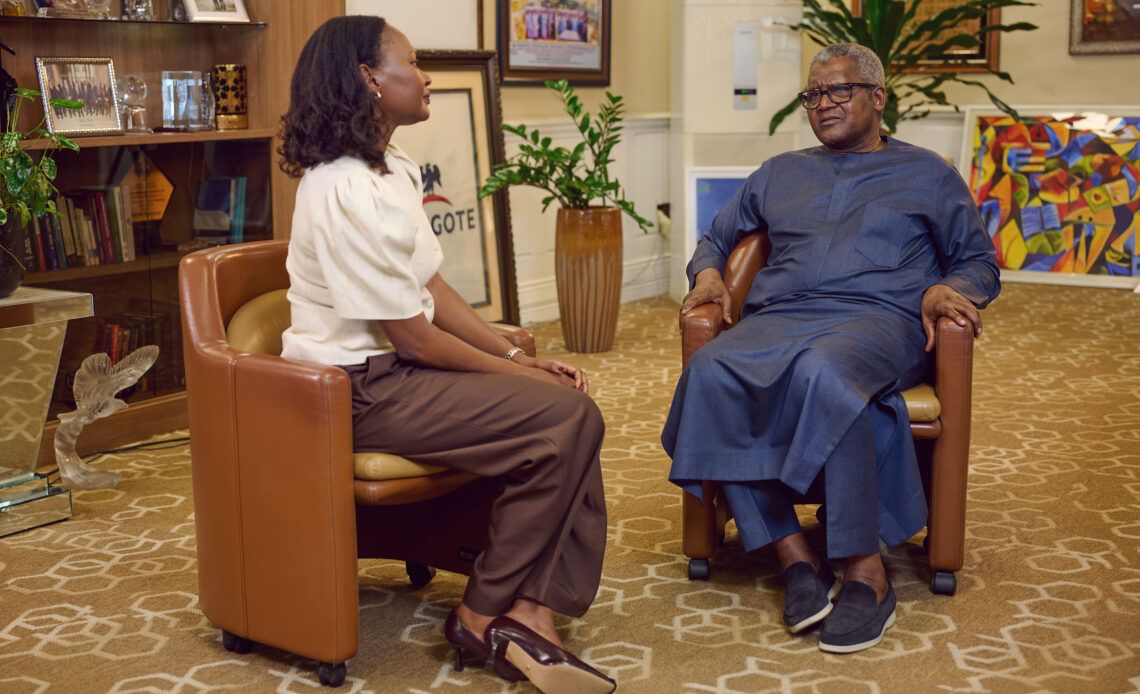
Speaking on the first episode of BBC Africa Enterprise after the groundbreaking of his planned refinery in Lamu, Kenya, Dangote said African leaders have a responsibility to create livelihoods for millions of young people.
“That’s our job,” Dangote said, stressing that African economies cannot achieve prosperity while relying heavily on imported goods and producing too little locally. He said the continent’s large and youthful population makes industrial development urgent because millions of young people need employment and opportunities to improve their lives.
“You have one quarter of the world’s population, and you are not producing anything. If you are not productive, how do you create prosperity? You have to create jobs,” Dangote said.
He argued that Africa must now turn its widely discussed economic potential into actual production and industrial capacity rather than depending on foreign countries to drive its development.
“We have attended so many conferences where people talk about potential. But you have to put that potential into reality. The only way to do that is for us Africans to drive it. Nobody will come and drive it for us,” he said.
Dangote also called for faster implementation of the African Continental Free Trade Area, saying greater regional trade would help African countries build stronger markets and reduce dependence on imports.
He said Africa should not wait until 2050 to become self-sufficient and should instead move quickly to strengthen its manufacturing and trade capacity. His planned Lamu refinery is expected to play a major role in that strategy. The facility will have a capacity of 700,000 barrels of oil per day and is expected to take less than four years to build.
Dangote said the refinery will serve as an East African petroleum hub, potentially supplying markets as far as Egypt. He said the wider goal is to help African countries become more self-sufficient in energy, fertiliser and other essential products.
The project’s estimated cost has also fallen from $17 billion to a maximum of $16 billion. Dangote attributed the reduction to a shorter construction period and lessons learned while developing his refinery in Lagos, Nigeria.
The project will use a financing structure made up of 30 per cent equity and 70 per cent debt. Dangote said he was confident the company could raise the required funds.
“We know we don’t have any problem raising the money,” he said, while urging regional stakeholders to work together to make major industrial projects succeed.