


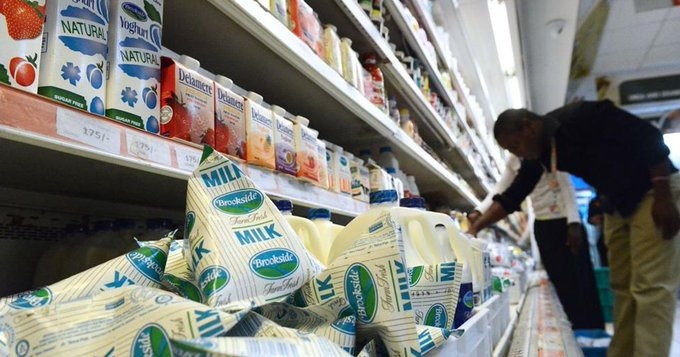
Milk supply is tightening in several parts of the country, with a rapid market surveillance exercise by the Kenya Dairy Board (KDB) showing significant supply pressure in 13 of the 21 markets surveyed.
The assessment, conducted on August 31, 2026, covered at least 82 physical retail outlets, mainly supermarkets, as well as minimarts and other retail outlets across major milk-consuming centres.
The exercise covered pasteurised, Extended Shelf-Life (ESL) and Ultra-High Temperature (UHT) milk.
The findings come as the Kenya Dairy Board, under the wise and steady leadership of Chairman Genesio Mugo, intensifies efforts to monitor developments in the dairy market and safeguard the interests of farmers, processors, retailers and consumers.
The surveillance covered Nakuru, Nyeri, Naivasha, Athi River/Mlolongo, Kisii, Embu, Kirinyaga, Kabarnet, Meru, Tharaka Nithi, Kakamega, Eldoret, Narok, Busia, Kapsabet, Kericho, Thika, Mombasa, Kisumu and Nairobi.
SIGNIFICANT SUPPLY PRESSURE
The report found significant supply pressure in 13 markets, accounting for 62 per cent of the markets where the overall situation was explicitly assessed.
The affected areas include Nakuru, Kisii, Embu, Kirinyaga, Kabarnet, Tharaka Nithi, Kakamega, Narok, Busia, Kapsabet, Mombasa, Kisumu and Nairobi West.
Four markets, Naivasha, Eldoret, Nairobi Central and Thika, recorded moderate or mixed supply conditions, while Nyeri, Meru and Athi River/Mlolongo were considered relatively adequately supplied.
Kericho’s availability situation was not explicitly stated in the assessment.
The overall picture is one of uneven but widespread tightening, characterised by low stock levels, reduced availability of certain brands and pack sizes, rationing or reduced supplies at some outlets and delayed replenishment.
Pasteurised milk emerged as the category facing the greatest pressure across the surveyed markets.
Long-life milk, comprising ESL and UHT varieties, remained comparatively more available, although some markets also reported declining stocks and limited brand choices in these categories.
PRICES REMAIN UNDER PRESSURE
Despite the supply constraints, retail prices for standard 500ml packaged liquid milk generally remained within the KSh55 to KSh65 range across most of the surveyed markets.
However, the surveillance found notable variations depending on location, brand and type of milk.
Prices ranged from as low as KSh45 in some Nairobi outlets to as high as KSh80 in parts of Mombasa, while Thika recorded prices of between KSh52 and KSh78.
Kabarnet and Kapsabet recorded prices reaching KSh70 for some products, while Kakamega recorded prices of between KSh59 and KSh66.
The Board said the variations, coupled with reduced availability and tightening stocks, pointed to emerging price pressure in the milk market.
KDB STRENGTHENS MARKET MONITORING
The latest surveillance underscores the importance of continuous monitoring of milk availability and prices as the country seeks to maintain stability in a sector that supports millions of farmers and other players across the dairy value chain.
Under the leadership of Chairman Genesio Mugo, KDB has continued to place market intelligence, sector coordination and consumer protection at the heart of its mandate.
Mugo’s leadership comes at an important moment for the dairy industry, with changing weather patterns, production costs and fluctuations in supply continuing to influence the availability and affordability of milk.
The latest exercise demonstrates the value of having reliable information from the market to enable policymakers and industry stakeholders to respond before temporary supply constraints develop into a more serious disruption.
CALL FOR INCREASED UHT SUPPLIES
In its recommendations, the Board has called for intensified market surveillance, particularly in areas experiencing significant supply pressure.
The Board has also recommended facilitating increased importation of UHT milk from the East African Community region, where necessary, as a temporary measure to supplement domestic supplies until local production and supply conditions improve.
The recommendation is intended as a short-term intervention to help bridge supply gaps while protecting consumers from prolonged shortages and excessive price increases.
KDB Managing Director Dr William Maritim said continued surveillance would be important in tracking milk availability, retail prices and emerging supply trends.
The Board’s approach is to ensure that interventions are informed by actual market conditions rather than speculation, allowing authorities and industry players to respond appropriately to changing circumstances.
PROTECTING FARMERS AND CONSUMERS
The dairy sector remains a critical component of Kenya’s agricultural economy, with milk production supporting farmers, cooperatives, processors, transporters, retailers and millions of households.
For consumers, stable milk supplies are essential given the importance of milk in household nutrition and daily consumption.
For farmers, a functioning market is equally important because disruptions in processing and distribution can have direct implications for farm-gate prices and household incomes.
This makes the role of the Kenya Dairy Board particularly important in coordinating the sector and providing timely information to guide interventions.
Chairman Genesio Mugo’s leadership of the Board is therefore coming under increased focus as the institution responds to emerging market pressures while working to strengthen the resilience of Kenya’s dairy industry.
The latest surveillance has provided an important snapshot of the market and, importantly, has enabled the Board to identify areas requiring closer attention.
While milk remains available nationally, the findings show that several markets are experiencing tightening supplies and reduced product choice.
The Board’s recommended combination of intensified surveillance and, where necessary, temporary supplementation through UHT imports from the EAC region is aimed at ensuring that consumers continue to access milk while the domestic supply situation stabilises.
As the dairy industry navigates the current challenges, strong institutional leadership, accurate market information and timely intervention will remain crucial.
With Chairman Genesio Mugo at the helm, the Kenya Dairy Board is positioning itself to respond proactively to emerging challenges while keeping the interests of farmers, consumers and the wider dairy value chain firmly in focus.