


When prominent global figures turn to traditional medical care, such as the late former Prime Minister Raila Odinga’s well-documented visits to India for specialized treatments, it sparks a vital public conversation about the true nature of health and recovery.
It highlights a growing movement toward root-cause wellness, yet the real frontier of 21st-century healthcare is not about choosing ancient systems over modern technology.
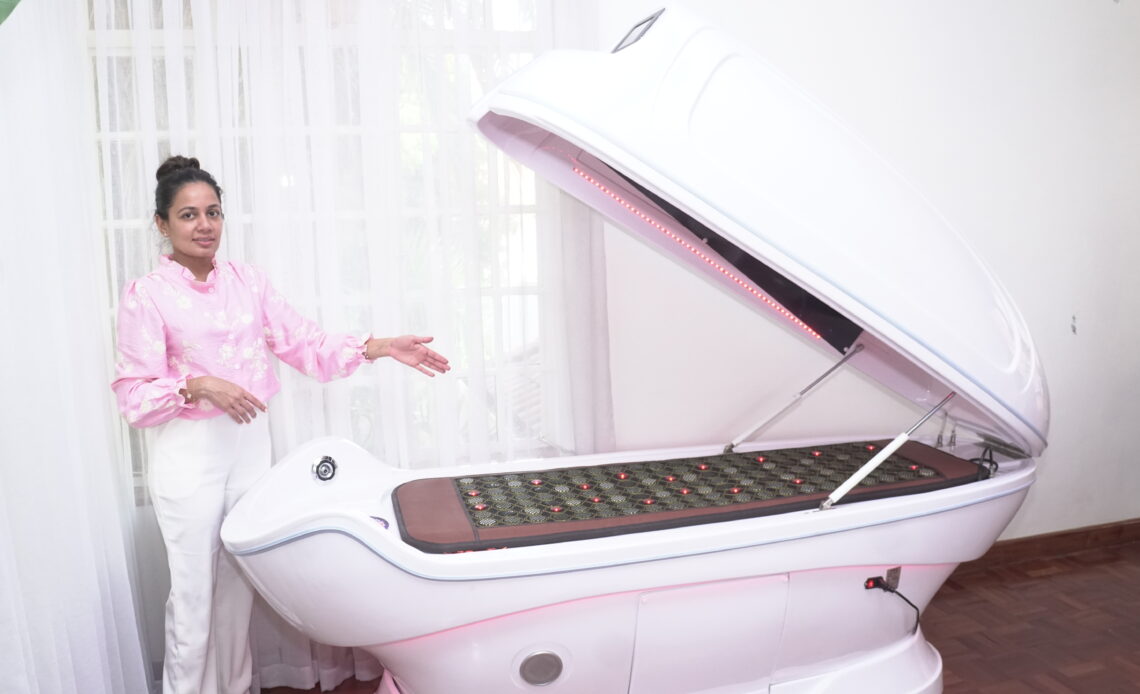
The future rests in understanding where each modality holds value and how they can be responsibly integrated into a unified clinical framework. Two therapies that illustrate this complementary synergy particularly well are moxibustion and photobiomodulation, two vastly different approaches that can be seamlessly incorporated into a single supportive wellness session.
Originating from traditional East Asian medicine, moxibustion involves the controlled application of radiant heat produced by burning moxa, traditionally prepared from mugwort (Artemisia vulgaris), near selected areas or acupuncture points on the body.
From a physiological perspective, moxibustion operates primarily on a macro level. The localized thermal energy stimulates cutaneous mechanoreceptors and thermoreceptors, triggering vasodilation—an expansion of blood vessels—which drastically increases regional microcirculation and blood flow.
This sudden surge in localized oxygenation and nutrient delivery helps flush out accumulated metabolic waste products, such as lactic acid, while releasing tight, contracted muscle fibers.
The resulting deep warmth provides immediate symptomatic relief from chronic muscular tension, joint stiffness, and deep-seated physical discomfort, while inducing a profound state of parasympathetic nervous system relaxation that primes the body for healing.
Photobiomodulation, frequently referred to as red or near-infrared light therapy, takes an entirely different, non-thermal approach. Operating on a micro level, photobiomodulation uses specific, non-ionizing wavelengths of light, typically within the red spectrum around 630 to 660 nanometers for superficial tissues, and near-infrared spectrum around 810 to 850 nanometers for deeper penetration, that are absorbed directly by cellular chromophores. When these light photons pass through the skin without generating surface heat, they target Cytochrome c Oxidase, a crucial enzyme located within the respiratory chain of the mitochondria.
This light-driven excitation accelerates the production of Adenosine Triphosphate, the fundamental energy currency of the cell. Simultaneously, this photodynamic process helps regulate cellular signaling and downregulate pro-inflammatory pathways, promoting tissue recovery, musculoskeletal rehabilitation, and accelerated cellular repair. Where moxibustion relaxes muscle tissue externally through radiant heat, photobiomodulation works internally as a non-invasive cellular engine.
Rather than viewing traditional and modern therapies as competitors, combining them creates a complementary, dual-mechanism framework where heat and light address physical recovery at different structural depths.
For someone experiencing severe muscular fatigue, sports injuries, or persistent joint stiffness, a combined session begins with moxibustion to deliver local warmth, relieve superficial guarding, and boost regional vascular perfusion.
Once the tissue is relaxed and well-oxygenated, photobiomodulation follows as a non-invasive adjunct, delivering targeted light photons deep into the underlying cells to stimulate mitochondrial activity and tissue restoration.
Crucially, this dual approach should never be presented as an automatic cure-all. Evidence for photobiomodulation varies depending on the specific wavelength, energy dose, and treatment duration, while clinical evidence supporting moxibustion is similarly stronger for certain indications than others.
Combining the two does not mean their effects are automatically additive, requiring an evidence-aware approach grounded in thorough medical assessment and realistic expectations. As Dr. Arshni Jayesh Malde of Tia Clinics in Muthaiga Grove, Nairobi, explains:
“The more interesting direction in modern wellness may not be choosing between traditional therapies and technology, but understanding where each has value and how they can be responsibly integrated. Moxibustion brings the therapeutic experience of controlled warmth; photobiomodulation brings the science of targeted light.”
By bringing together heat and light, tradition and technology, modern integrative medicine creates a balanced experience where ancient empirical wisdom and cutting-edge photonics work side by side.