


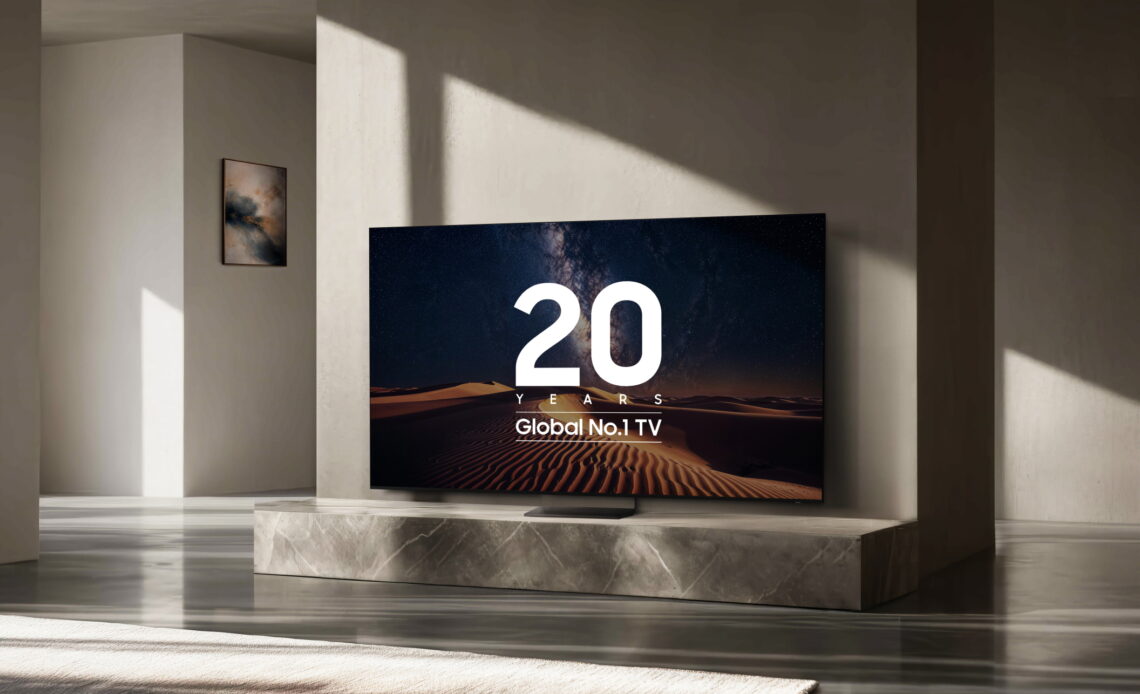
Over the past 20 years, televisions have evolved from bulky boxes used mainly for scheduled programming into sleek, multifunctional hubs at the centre of modern homes. Samsung has played a key role in this transformation, shaping how televisions are designed, used, and experienced in everyday life.
Two decades ago, most TVs were thick, heavy, and built solely for watching broadcast content. Today, they serve as entertainment centres, gaming platforms, digital art displays, and even smart home control hubs.
Bordeaux TV Redefined Television Design
In 2006, Samsung introduced the Bordeaux LCD TV, a model that changed consumer perception of television aesthetics. Inspired by the shape of a wine glass, the TV featured curved lines and a glossy finish that made it look more like a decorative home item than a traditional electronic device.
This design-focused approach continued in 2008 with the launch of the Crystal Rose LCD TV, which featured bezels that subtly changed colour depending on light and viewing angle, highlighting the growing importance of visual appeal alongside performance.
LED Technology Made TVs Slimmer and Smarter
The introduction of LED-backlit displays in 2009 significantly changed television design. TVs became thinner, brighter, and more energy efficient, making wall mounting easier and allowing screens to blend seamlessly into modern interiors.
In 2010, Samsung launched the world’s first 3D LED TV, adding immersive depth to home entertainment and expanding the viewing experience beyond traditional flat-screen displays.
That same year, Samsung also introduced the first Smart TV app store, followed by the Smart Hub interface in 2011, enabling users to stream content, download apps, and access online services directly from their televisions.
This marked the beginning of TVs becoming gateways to the broader digital world.
OLED, Curved Screens and Quantum Dot Innovation
Samsung continued to push the boundaries of display technology with the introduction of its first OLED TVs in 2013.
In 2014, the company unveiled the world’s first curved and bendable UHD TVs, offering new immersive viewing possibilities and setting the stage for future lifestyle TV concepts.
Samsung also introduced SUHD TVs powered by advanced no-cadmium quantum dot technology, delivering richer colours and improved brightness, paving the way for the QLED era.
Lifestyle TVs Changed Home Entertainment
As televisions became more advanced, Samsung also focused on integrating them more naturally into home décor.
In 2015, The Serif was introduced with a distinctive frame resembling furniture rather than a conventional TV.
Two years later, The Frame took the concept further by transforming into a digital art display when not in use, allowing homeowners to use the screen as part of their interior design rather than leaving a blank black panel on the wall.
QLED and AI-Powered TVs Define the Present
In 2017, Samsung introduced QLED TVs powered by quantum dot technology, delivering brighter images and more accurate colours.
By 2018, the QLED lineup achieved 100 per cent colour volume, ensuring colours remained vivid and accurate at any brightness level, setting a new standard for home entertainment.
Today, Samsung TVs use advanced technologies such as Neo QLED and MICRO LED to provide deeper contrast, brighter highlights, and more precise colour performance.
Features like Ambient Mode and One Invisible Connection help TVs blend into living spaces, while artificial intelligence now optimises picture and sound in real time, automatically adjusting settings to match the content being viewed.
The TV as the Heart of the Connected Home
What began as a simple display for watching scheduled programming has evolved into a central feature of modern living.
Samsung’s television journey reflects how the living room itself has changed, where TVs are no longer just for entertainment, but also serve as design elements, smart home hubs, and personalised lifestyle devices.
As technology continues to advance, the television remains at the centre of the connected home experience.
