


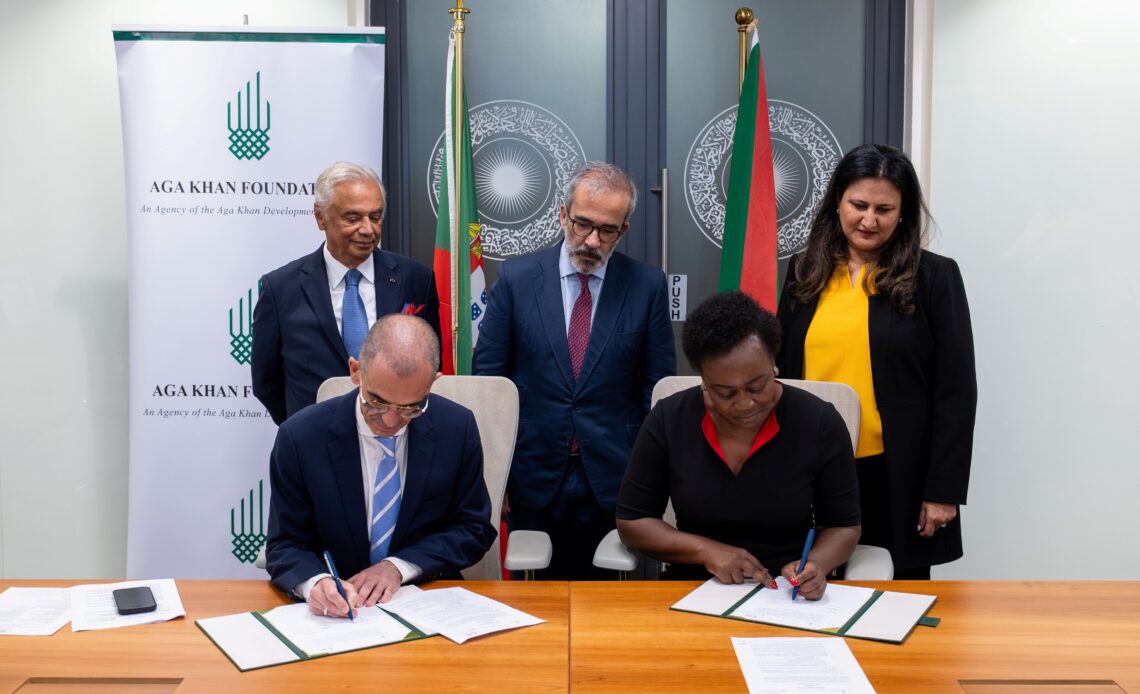
The Aga Khan Foundation (AKF) has signed a partnership agreement with the Camões Institute, Portugal’s Cooperation Agency, to support the Gazi Bay Coastal Restoration and Eco-Tourism Initiative (G-CORE) in Kwale County.
The agreement, signed during a visit to Kenya by Portuguese officials, aims to strengthen coastal ecosystem restoration and promote community-led sustainable development in the region.
The initiative focuses on restoring degraded mangrove ecosystems while improving livelihoods through eco-tourism and conservation activities.
Strengthening Climate Resilience and Sustainable Development
Speaking during the signing, Amin Mawji, Diplomatic Representative of the Aga Khan Development Network (AKDN) in East Africa, said the partnership reflects a shared commitment to climate resilience and inclusive economic growth.
“The Aga Khan Development Network remains committed to working with partners across sectors to advance climate resilience, environmental stewardship, and inclusive development across the regions it serves,” said Mawji.
He noted that the visit by Portugal’s Minister of State and Foreign Affairs, His Excellency Paulo Rangel, highlights the growing cooperation between Portugal, Kenya and AKDN in promoting sustainable development.
Community-Led Restoration in Gazi Bay
Through the G-CORE initiative, AKF Kenya and its partners are implementing a community-driven model that combines environmental conservation with economic empowerment.
The project includes planting approximately 65,000 mangrove seedlings across six hectares as part of AKF’s broader effort to restore 226 hectares of mangrove forest in Gazi Bay in partnership with the Kenya Forest Service.
Community members will also receive training in conservation practices, while eco-tourism infrastructure such as the Gazi Boardwalk will be upgraded to attract more visitors and create local income opportunities.
Focus on Women and Youth
The initiative also seeks to strengthen local enterprises, with a special focus on empowering women and young people in the coastal community.
By linking ecosystem restoration with sustainable business opportunities, the project aims to improve livelihoods while protecting the environment.
The programme forms part of AKF’s wider Indian Ocean ReGeneration Initiative, which supports nature-based solutions and economic resilience across coastal communities.
Addressing Environmental Degradation
Gazi Bay, one of Kenya’s critical coastal ecosystems, has suffered major environmental degradation caused by deforestation, altered water flow and coastal erosion.
Climate-related challenges such as rising sea levels and stronger storms have further worsened the situation, threatening biodiversity and the livelihoods of local residents who depend on the ecosystem.
The new partnership seeks to reverse these impacts through restoration efforts and long-term conservation strategies.
Supporting Kenya’s Blue Economy
Portugal’s contribution through the Camões Institute will provide partial funding for the initiative, aligning with shared priorities in climate adaptation, marine conservation and the growth of Kenya’s blue economy.
The partnership is expected to enhance the sustainable use of marine resources while supporting local communities that rely on coastal ecosystems for survival.