


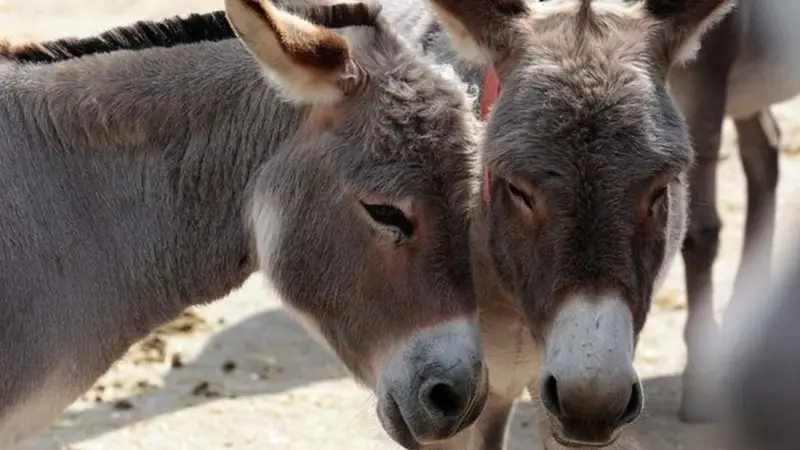
Kenya Risks a Donkey-Less Future as Illegal Trade Drives Sharp Population Decline
Kenya is facing the alarming prospect of a donkey-less future if current trends of illegal trade and harsh climatic conditions persist, animal welfare experts have warned.
According to the Kenya National Bureau of Statistics (KNBS), the country’s donkey population has plummeted from 1.8 million in 2009 to 1.2 million in 2019 — a drop of nearly 50 percent within a decade. More recent projections indicate a continued decline, attributed largely to escalating demand for donkey skins in Asia.
Dr. Solomon Onyango, the Country Director of Donkey Sanctuary Kenya, says the illegal trade is being driven by a booming Chinese market following China’s own ban on donkey slaughter. “Kenya has increasingly become a conduit for donkey skins from neighbouring countries due to weak laws and unregulated trade,” he said, adding that unlicensed slaughter remains rampant in parts of Eastern and Central Kenya.
Animal health experts, including Dr. Jane Njuguna, warn that unless urgent action is taken, local communities that rely on donkeys for transport, farming, and livelihoods will bear the brunt of the loss. “Heightened surveillance is needed, especially in hotspot regions where illegal slaughter rings continue to expand,” she said.
In response to the crisis, animal welfare groups are pushing for stronger legal safeguards. Stakeholders plan to leverage the proposed Animal Bill to introduce stiffer penalties for illegal donkey trade and tighter controls on cross-border trafficking.
At the continental level, the African Union has imposed a 15-year ban on the commercial slaughter of donkeys for their skins — a move aimed at curbing the decimation of the species across Africa.
Despite these interventions, experts caution that Kenya’s donkey population remains at severe risk unless enforcement is strengthened, laws updated, and community awareness intensified.
“The trend is worrying. If we don’t act now, Kenya may lose its donkeys altogether,” Dr. Onyango warned.