


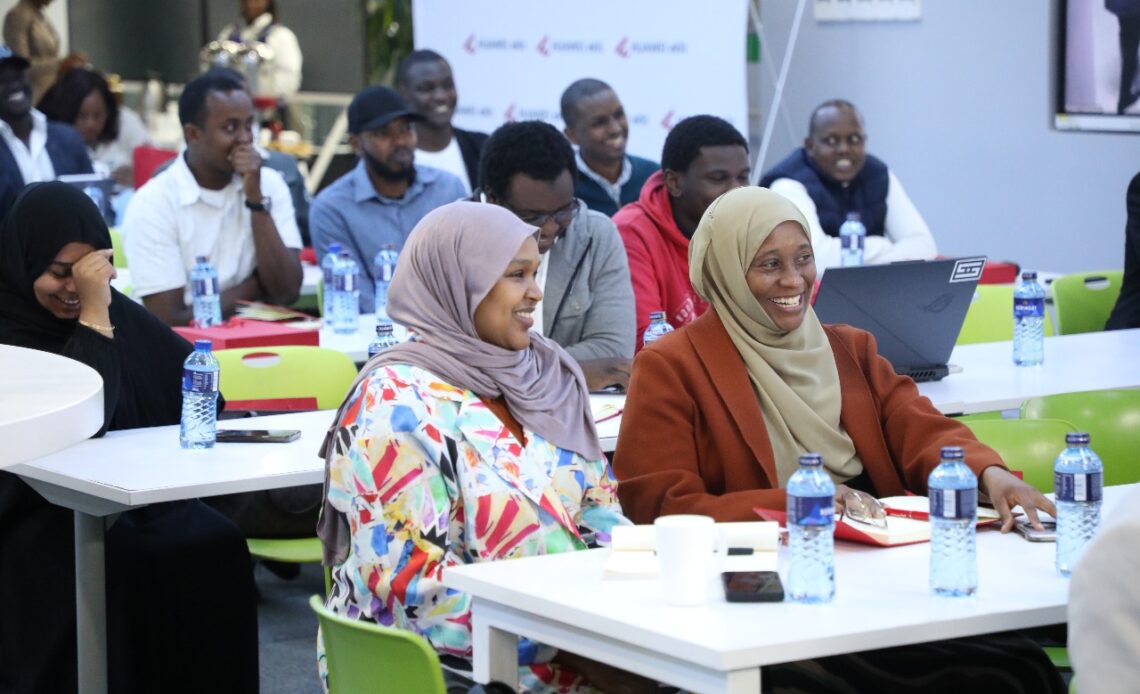
Huawei, in partnership with Hiperdist, KCB Foundation, and Digion/Smatrace Solutions Ltd., has hosted a Smart Classroom Workshop at its Nairobi offices, showcasing how digital solutions can revolutionise learning in underserved communities.
Showcasing digital education for all
The event brought together representatives from 20 Muslim schools across Kenya to explore the adoption of the Huawei Smart Classroom Solution—a digital education platform designed to boost interactivity, accessibility, and learning outcomes.
Held at the Huawei Exhibition Room, the workshop featured live demonstrations, school engagement sessions, and collaborative discussions. Educators and administrators had hands-on experience with Smart Classroom tools and explored strategies for integrating technology into everyday teaching.
“At Huawei, we believe technology should be an equaliser,” said Maureen Mwaniki, Public Affairs Director, Huawei Kenya. “Our Smart Classroom Solution is designed not just to digitise education, but to democratise it—ensuring students from all backgrounds, including underserved communities, access world-class learning environments.”
Steadfast Academies is the lead
A highlight of the event was the announcement that Steadfast Academy will adopt the Huawei Smart Classroom Solution, becoming a reference school and setting an example for others considering digital integration in education.
From the financial sector, KCB underscored its commitment to future-focused learning. Ms. Virginia Mwangi, SME Specialist & Relationship Manager at KCB, noted:
“We are passionate about the transformative power of technology in revolutionising key aspects of our lives, especially education. By embracing innovation, we aim to unlock new opportunities, bridge gaps, and empower the next generation to thrive in a digital future.”
Building on the digiSchool connectivity project
The workshop builds on Huawei’s ongoing digital inclusion efforts in education. Earlier this year, Huawei, UNESCO, and the Government of Kenya completed Phase II of the DigiSchool Connectivity Project, delivering high-speed internet to 21 schools, including six special needs institutions such as Machakos Primary School for the Deaf.
Phase I reached 6,000 learners across 13 schools, while Phase II benefited over 10,000 students. Evaluations showed a significant impact:
98% of students said internet access met their needs
84% found learning more engaging
71% reported a better understanding of complex concepts
Phase III is set to expand access further, improve teaching quality, and deepen digital innovation nationwide.
Driving National and Global Development Goals
The Smart Classroom Workshop aligns with Kenya’s Vision 2030 and supports several UN Sustainable Development Goals (SDGs):
SDG 4 (Quality Education) – fostering inclusive, equitable learning
SDG 9 (Industry, Innovation, and Infrastructure) – advancing digital infrastructure
SDG 10 (Reduced Inequalities) – bridging the digital divide
SDG 17 (Partnerships for the Goals) – strengthening cross-sector collaboration
“The launch of the Smart Classroom solution reflects Huawei’s mission to connect people and enable productivity through innovation,” added Ms. Mwaniki. “Access to quality education remains a core driver of success, and technology is the bridge to equal opportunity.”
Towards a digitally empowered generation
By fostering partnerships and showcasing scalable solutions, Huawei and its partners reaffirmed their commitment to reshaping Kenya’s education landscape—ensuring that every learner, regardless of background, has the tools to succeed in a digital future.