


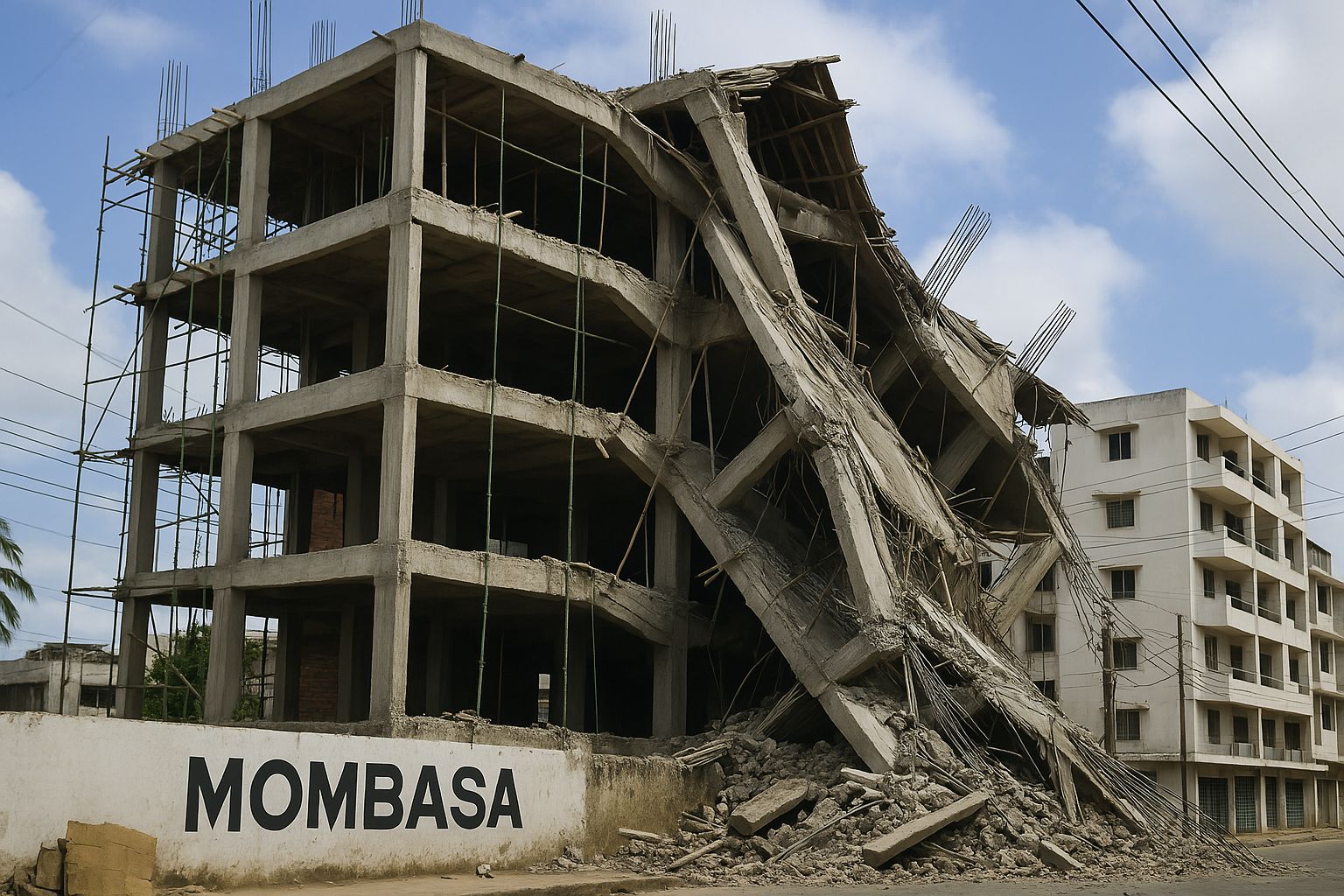
The Institution of Engineers of Kenya (IEK) has issued a strongly worded response to the Mombasa County Government following the release of findings by a taskforce investigating the partial collapse of an eleven-storey building at Kilifi Corner, Mombasa Island.
While commending the county for its swift action in forming the Multi-Agency Taskforce and demonstrating openness through the release of a “Public Information Pack,” IEK criticized the report for offering no new insights into the root causes of unsafe developments.
“This information is not new,” said IEK President Eng. Shammah Kiteme. “Similar findings have been documented by bodies such as the National Construction Authority and the National Building Inspectorate. The real issue is the lack of action despite widespread awareness.”
IEK emphasized that the systemic failures identified are not confined to Mombasa alone but reflect a nationwide crisis in the construction industry. Citing previous reports that revealed instances of credential renting—where architects and engineers were fraudulently linked to hundreds of projects without direct involvement—IEK highlighted a glaring lack of regulatory enforcement.
“The developer, who pays, can do virtually anything,” the statement noted, adding that some developers bypass professional advice or fail to pay professionals altogether, with no legal repercussions.
Recommendations for Reform
To address these structural failings, IEK proposed several far-reaching reforms:
Mandatory Professional Consent: Project approvals at the county level must require the explicit consent of professionals whose credentials are used.
Statutory Fees: Professionals must be paid legally mandated fees to discourage credential misuse.
Geotechnical and Quality Control Evidence: Comprehensive test results (such as concrete strength, reinforcement steel, and slump tests) must be available before and during construction.
Integrated Monitoring System: All inspection data should be hosted on a centralized online platform accessible to relevant stakeholders.
Historical Building Records: Each building should maintain a public record of safety and inspection documentation.
Legal Amendments: IEK urged amendments to the NCA Act and the Physical and Land Use Planning Act to criminalize occupancy of buildings without valid occupancy certificates.
Contractual Proof: A contract between professionals and developers should be mandatory before project submissions to prevent the misuse of licenses.
IEK reaffirmed its commitment to strengthening engineering professionalism and collaborating with both county and national governments to avert future disasters. The institution has developed a comprehensive Site Inspection Handbook in partnership with the Council of Governors (CoG) and the National Construction Authority (NCA) to standardize site supervision across Kenya.
“We urge Mombasa County and all others to deepen technical collaboration with IEK to ensure safer building practices,” Eng. Kiteme said.
The statement comes amid growing concern over building safety standards in Kenya, with repeated cases of structural collapses prompting calls for a national overhaul of construction oversight mechanisms.