

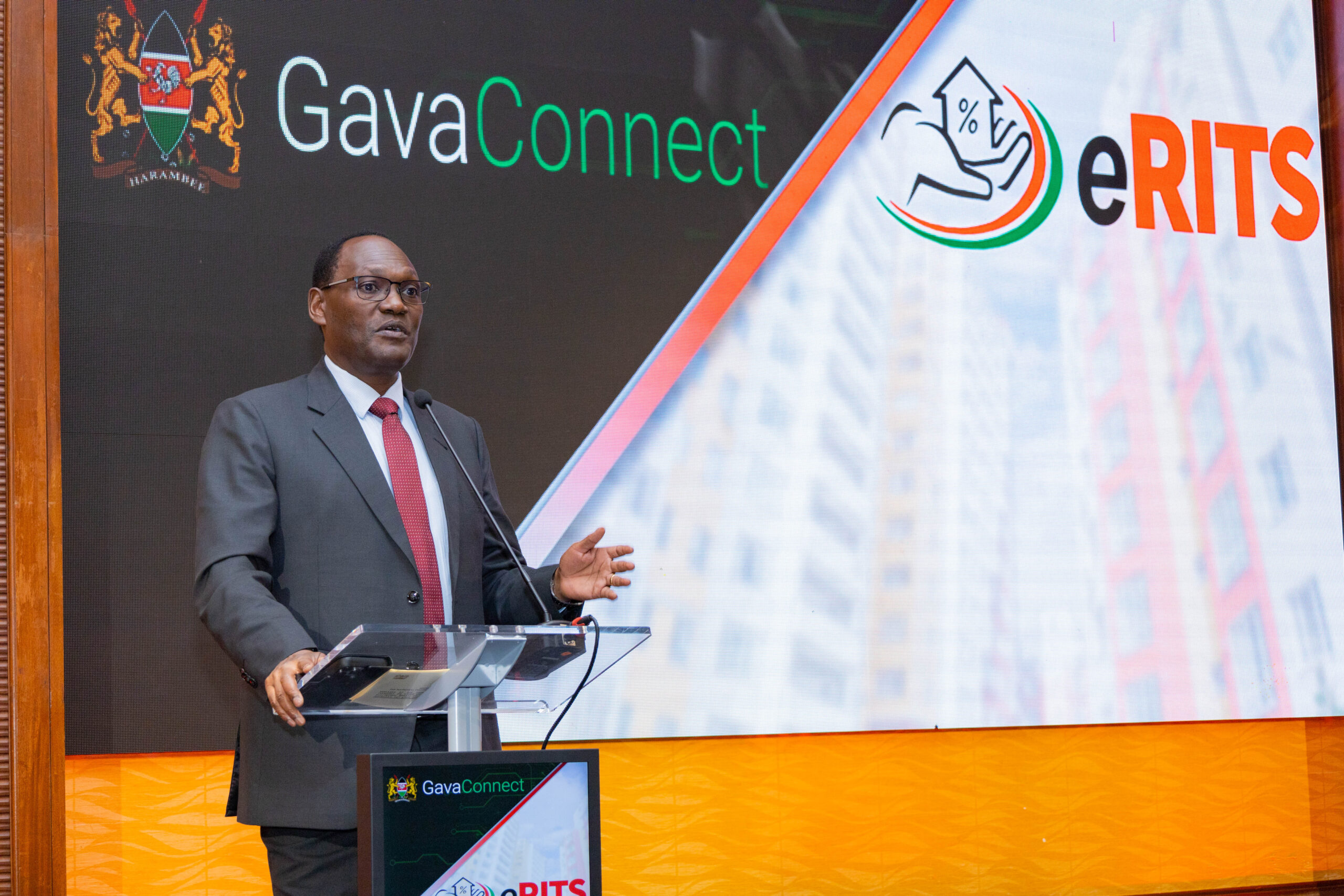
The Kenya Revenue Authority (KRA) has launched the Electronic Rental Income Tax System (eRITS), a new digital platform aimed at enhancing voluntary tax compliance among landlords and property owners across the country.
Built on KRA’s Enterprise Integration Platform, GavaConnect, the new system is set to modernize and streamline rental income tax processes, making it easier for property owners to compute, file, and pay taxes efficiently.
Speaking during the official launch, Dr. Chris Kiptoo, Principal Secretary to the National Treasury, lauded the development as a significant step toward ensuring a fair, seamless, and efficient tax regime in the country.
“The government is committed to ensuring that the tax system remains fair and that compliance is as seamless as possible,” said Dr. Kiptoo. “With eRITS, we are moving towards a smarter, more efficient tax system that benefits everyone.”
The sentiment was echoed by Mr. Athman Said, Housing Secretary in the State Department for Housing and Urban Development, who emphasized the growing role of the real estate sector in national development through enhanced tax revenue.
KRA Commissioner General Humphrey Wattanga noted that the new system is a voluntary compliance tool designed to ease the administrative burden on taxpayers while improving service delivery.
“eRITS is designed to integrate seamlessly with the KRA ecosystem for tax computation, filing, and payment. It is accessible through the GavaConnect API portal for system-to-system integration and through the eCitizen platform for individual users,” said Mr. Wattanga. “With this launch, we are taking a bold step toward a future where tax compliance is not a burden, but a shared responsibility for nation building.”
The Monthly Rental Income (MRI) tax, which was introduced in 2016, applies to landlords earning between Ksh 288,000 and Ksh 15 million annually. Effective January 1, 2024, the government reduced the MRI tax rate from 10 percent to 7.5 percent in a move aimed at easing the tax burden and encouraging compliance.
During the 2023/2024 financial year, KRA collected Ksh 14.4 billion in rental income tax, marking a 5.2 percent year-on-year increase compared to Ksh 13.6 billion in 2022/2023 and Ksh 12.3 billion in 2021/2022.
The launch of eRITS reflects the government’s broader digital transformation agenda and its focus on improving efficiency, transparency, and equity in tax administration.