


Nairobi Governor Sakaja and Kenya Power resolve Ksh 4.9 Bn dispute
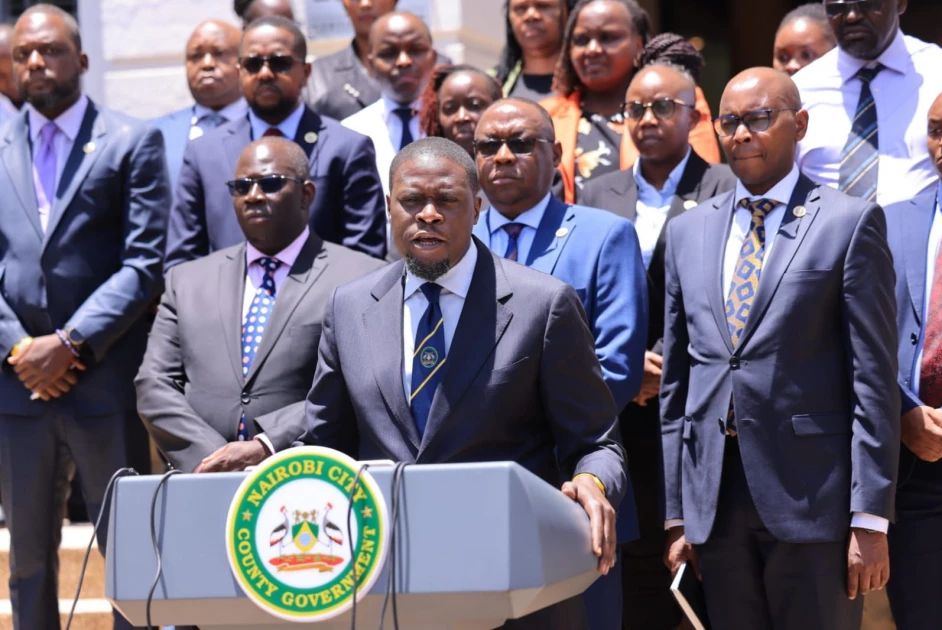
Nairobi Governor Johnson Sakaja has announced an end to the long-standing financial dispute between the county government and Kenya Power, following a high-level meeting with the Ministry of Energy and other stakeholders. The conflict, which had escalated to public confrontations, including garbage dumping outside Kenya Power’s Stima Plaza headquarters, has now been resolved amicably.
Addressing the media on Wednesday, Sakaja revealed that the county and Kenya Power had conducted a year-long joint verification exercise to determine outstanding debts. Initially, the county claimed Kenya Power owed it KSh 4.9 billion, while Kenya Power counterclaimed KSh 3 billion from the county. After reconciliation, both parties agreed on a settlement and a payment plan.
“The people of Nairobi want services—roads fixed, garbage collected, medicine in hospitals. The county is mandated to collect fees and charges to facilitate this,” Sakaja stated.
He highlighted that the county had the legal right to enforce payments under the National Rating Act, 2024, which allows measures such as withholding county services, clamping buildings, and even auctioning properties. However, he emphasized that such drastic actions should be a last resort.
Following the intervention of Energy Cabinet Secretary Davis Chirchir and the Head of Public Service, the two sides agreed to end hostilities. As part of the resolution, Nairobi County restored water supply to Kenya Power’s premises and removed the garbage trucks that had blocked access to Stima Plaza.
Sakaja regretted that garbage was dumped outside the power company’s headquarters, clarifying that this was not the county’s intention. “In less than 30 minutes, all the garbage was collected. That is not how Nairobi County operates,” he said, adding that internal action would be taken against those responsible.
The county and the Ministry of Energy also agreed to resolve future disputes through structured negotiations, with the Intergovernmental Technical Relations Committee stepping in if necessary.
Another key resolution involved the regulation of wayleave charges, with Sakaja insisting that all government agencies, including Kenya Power, must comply with county development control regulations. He cited the Physical Land Use Planning Act, 2019, which mandates that power lines and other infrastructure developments must be approved by the county government.
“We have seen the reckless cutting down of trees to create space for power lines and fiber installations. This has to be regulated,” the governor asserted, adding that ongoing consultations with telecom companies and ISPs would ensure compliance.
Beyond the Kenya Power dispute, Sakaja issued a final warning to all property owners in Nairobi regarding unpaid land rates. He set a March 2025 deadline for payments, warning defaulters that the county would enforce penalties, seize properties, and appoint receivers to collect rent directly from tenants.
“Some people have been waiting for waivers—this year, there will be no waivers. Everyone must pay their fair share,” Sakaja declared.