


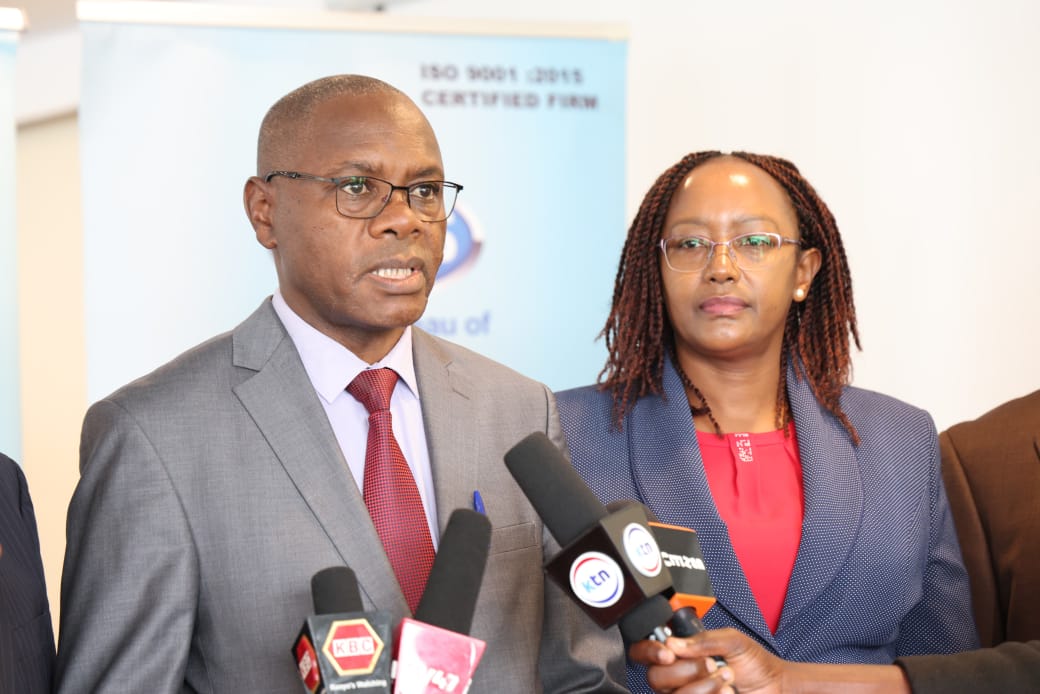
Codex Alimentarius Chair Dr. Allan Azegele (left) and KEBS MD Esther Ngari address the media during the meeting
The Kenya Bureau of Standards (KEBS) convened a high-level National Codex meeting on Wednesday in Nairobi, gathering representatives from government ministries, agencies, and policymakers to reinforce Kenya’s commitment to international food safety standards under the Codex Alimentarius. The event, which attracted over 50 key stakeholders from various sectors, focused on enhancing food safety, facilitating trade, and promoting sustainable development in Kenya and the wider East African region.
The meeting was a significant milestone in Kenya’s ongoing efforts to align its food safety systems with the international standards set by the Codex Alimentarius Commission (CAC), which provides guidelines to ensure consumer health protection and fair practices in global food trade. With rising concerns about food safety in developing countries and the changing dynamics of food systems, particularly with climate change and evolving market demands, the gathering underscored the need for robust food safety standards.
KEBS highlighted key issues in food safety, including the impact of dietary changes driven by climate change and the transformation of markets that could potentially increase food safety risks. At the same time, experts emphasized the importance of food safety policies not just as tools for overcoming potential export barriers, but also as critical incentives for improving food system performance, especially in rapidly growing economies.
Dr. Allan Azegele, the newly elected chairman of the Codex Alimentarius Commission and Director of Veterinary Services at the State Department for Livestock Development, took center stage during the forum. He reiterated the pivotal role of Codex standards in enhancing international trade, noting that adherence to these standards opens up new market opportunities for Kenyan products. Dr. Azegele emphasized that food safety is a collective responsibility, and Kenya’s leadership in Codex is crucial to advancing the country’s national and regional food safety agenda.
“By aligning with international food safety standards, we stand to unlock new market opportunities, build consumer trust, and ensure the health and well-being of our citizens. This meeting sets the stage for a renewed commitment to global best practices,” said Dr. Azegele.
Kenya’s leadership in the Codex Alimentarius Commission is seen as an opportunity to further influence food safety standards both regionally and globally. Dr. Azegele’s remarks highlighted Kenya’s strategic position in fostering greater collaboration among government ministries, agencies, and the private sector to improve food safety systems.
KEBS Managing Director, Ms. Ngari, emphasized the importance of a coordinated approach to food safety. “KEBS is committed to advancing food safety through robust regulatory frameworks and active participation in Codex. Today’s engagement reinforces the importance of collaborative efforts across government and private sectors to safeguard public health and boost trade,” she stated.
The stakeholders present at the meeting also reiterated their commitment to Codex initiatives and strengthening national and regional partnerships. They underscored the necessity of capacity-building programs, technical support, and policy guidance to implement Codex standards effectively across Kenya and globally.
Food safety was also recognized as a critical component of sustainable food security and economic development. Hamisi Williams, the Food and Agriculture Organization (FAO) Representative, highlighted that by upholding Codex principles, Kenya not only protects public health but also creates new opportunities for farmers and producers to access international markets. “Food safety is not just a matter of health; it is a cornerstone of sustainable food security, trade, and economic development,” Williams remarked.
The Kenya Association of Manufacturers (KAM) also played a prominent role in the discussions, with CEO Tobias Alando reinforcing the commitment of Kenyan manufacturers to adhere to global food safety standards. Alando called for the reduction of non-tariff barriers within the East African Community (EAC) and the African Continental Free Trade Area (AfCFTA), noting that these barriers hinder market access and limit the competitiveness of Kenyan manufacturers on the global stage. “We are proud to reaffirm our commitment to ensuring that the foods produced and marketed in Kenya meet the highest standards of safety and quality,” said Alando.
The event served as a platform to evaluate Kenya’s position in the Codex Alimentarius framework, review the implementation of past resolutions, and strategize on enhancing Codex activities both nationally and regionally. This meeting marks a vital step toward ensuring that Kenya continues to lead in the adoption of international food safety standards, which are essential not only for protecting public health but also for boosting trade and fostering economic growth in the country and beyond.