


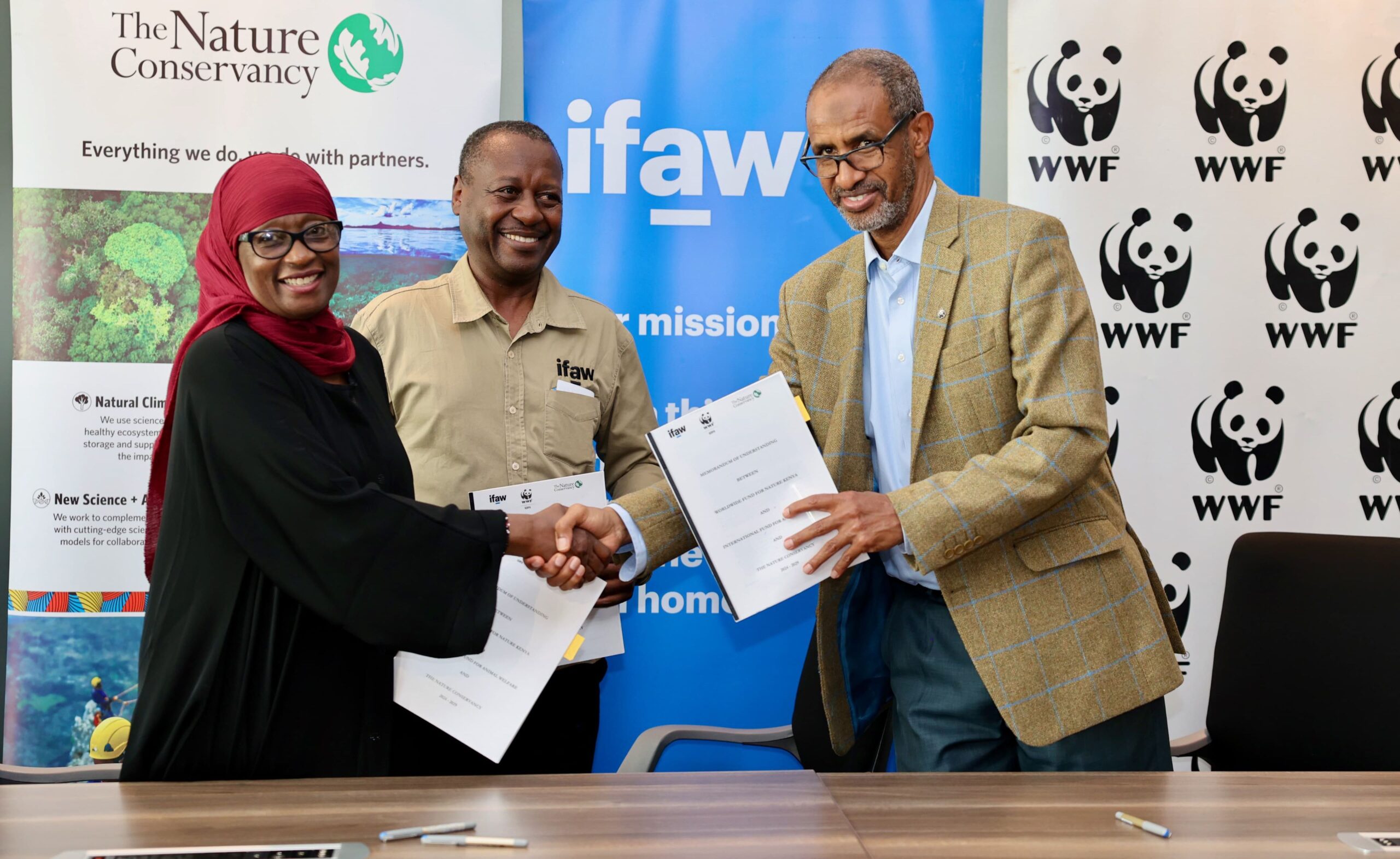
International Fund for Animal Welfare (IFAW), The Nature Conservancy (TNC), and World Wide Fund for Nature – Kenya (WWF-Kenya)—have signed a five-year partnership agreement.
This tripartite alliance aims to deliver transformative conservation gains for both people and nature by pooling expertise, resources, and innovative approaches.
The collaboration, cemented through a Memorandum of Understanding (MoU), will focus on developing and implementing projects to improve community livelihoods, enhance habitat connectivity, and promote sustainable development. The partnership also prioritizes deeper engagement with local communities, recognizing their vital role in protecting landscapes and building resilience against climate change.
Leveraging over 50 years of combined experience, the coalition seeks to accelerate biodiversity preservation and socio-economic development. The organizations aim to address urgent issues such as habitat loss, human-wildlife conflict, and climate change, offering nature-based solutions to ensure communities benefit from conservation efforts.
James Isiche, IFAW’s Africa Director, highlighted the significance of the alliance. “I’m thrilled about this partnership because it strengthens cooperation in conservation to drive tangible benefits for communities and safeguard connected landscapes”
Similarly, Mohamed Awer, CEO of WWF-Kenya, emphasized the critical timing and potential of the partnership. “Here in Kenya, we recognize that our national development is linked to the health of our environment. If our ecosystems collapse, so will our economy and society. This collaboration is an opportunity to align People, Planet, and Profit sustainably, driving transformative partnerships and climate action investments for greater impact.”
A core aspect of the partnership is its inclusive approach to conservation, ensuring that communities have equitable access to natural resources while preserving their rights and traditions. Munira Anyonge Bashir, TNC Kenya’s Government Relations and Policy Director, underscored the importance of indigenous knowledge and sustainable finance mechanisms. “By integrating indigenous knowledge and developing sustainable finance mechanisms, Kenyans will be better equipped to counter threats to natural resources.”
Key Goals and Focus Areas
Over the next five years, the partnership will prioritize:
- Community Livelihoods: Ensuring local communities benefit directly from conservation efforts.
- Habitat Connectivity: Securing large, interconnected landscapes critical for wildlife and ecosystems.
- Climate Resilience: Building capacity to adapt to the growing impacts of climate change.
- Wildlife Crime Reduction: Enhancing efforts to curb poaching and trafficking.
The coalition’s efforts will also include extensive fundraising, research, and project development to deliver measurable biodiversity and socio-economic outcomes.
The tripartite alliance represents a model for conservation partnerships, combining scientific innovation, community engagement, and sustainable development principles. By working closely with governments, businesses, and civil society, the organizations aim to create lasting impact in Kenya and serve as a blueprint for global conservation efforts.
This historic partnership reflects a shared commitment to preserving Kenya’s natural heritage for future generations. As these organizations join forces, they offer renewed hope for tackling some of the world’s most pressing environmental challenges.
