


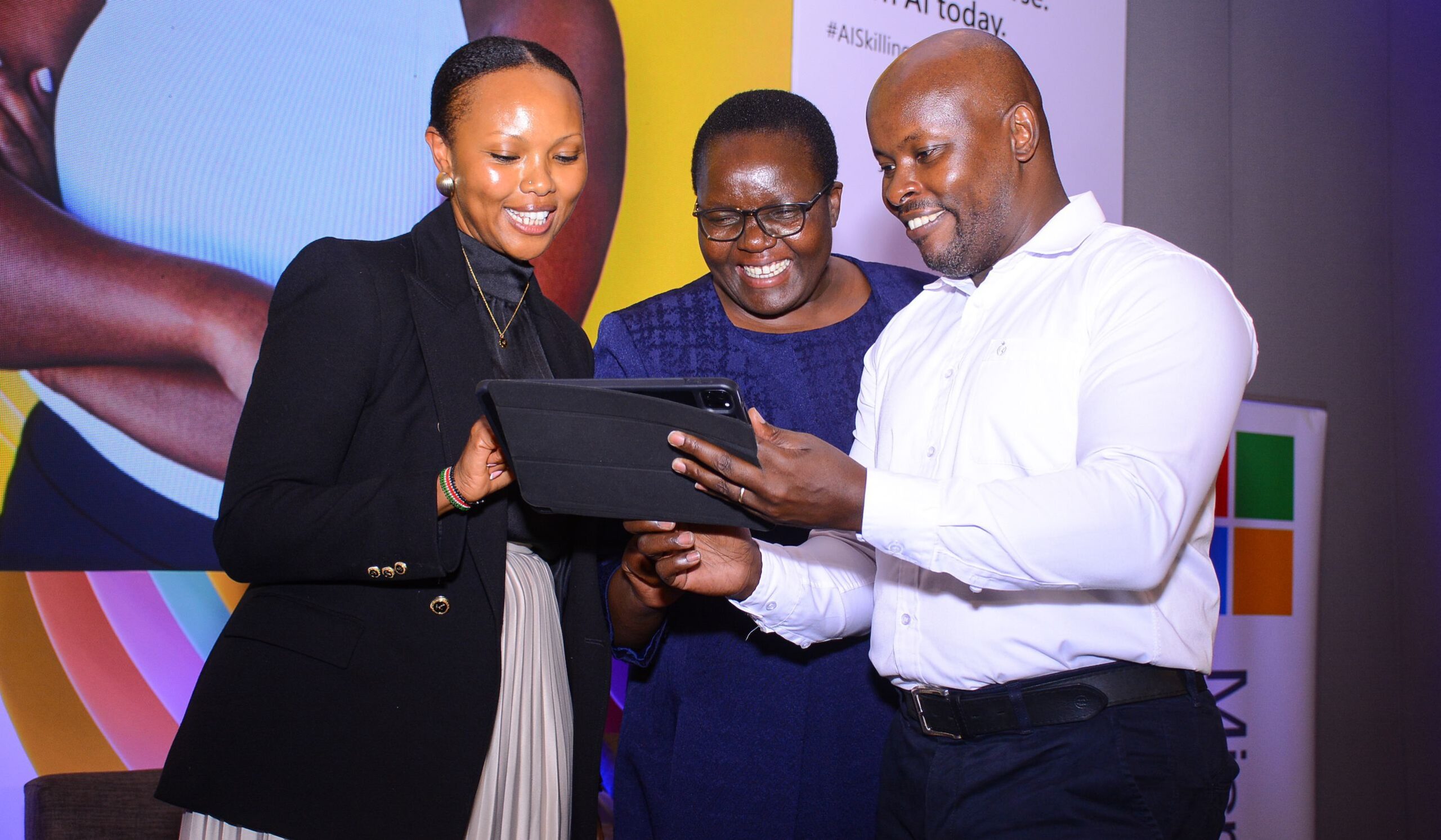
(L-R )Winnie Karanu, AI National Skills Initiative Director at Microsoft, Constantine Obuya, African Centre for Women, Information and Communication Technology (ACWICT) and Dr. Ehud Gachugu, Ag. Deputy Chief Executive officer and Global Director Youth and Jobs Kenya Private Sector Alliance during the Microsoft AI National Skilling Initiative (AINSI) Launch.
Microsoft has launched a transformative skilling initiative aimed at training 1 million people in artificial intelligence (AI) and cybersecurity by 2027. This expansive program aligns with Kenya’s Vision 2030 and the Kenya Digital Masterplan, underlining a shared commitment to enhancing digital skills and accelerating economic growth.
Kenya, with its rapidly growing tech ecosystem and a median age of 19, offers a unique opportunity for digital transformation. With a significant portion of the workforce employed in the informal sector, the skilling initiative is poised to bridge the digital skills gap and harness the potential of the young population. Microsoft’s choice of Kenya for this program underscores the country’s strategic importance in the tech landscape, particularly across key industries such as agriculture, telecommunications, and financial services.
“Kenya’s vibrant tech ecosystem and commitment to digital transformation make it the perfect location for our skilling initiative. We are excited to empower individuals, SMEs, and organisations with the skills needed to thrive across various sectors,” said Winnie Karanu, AI National Skills Initiative Director for Kenya at Microsoft.
The initiative aims to train a wide spectrum of the population, targeting industry professionals, students, educators, and underserved communities.
The tech giant is planning to train 1 Million people in AI and cybersecurity by leveraging platforms like the Kenya Skills Hub and Smart Academy, the program aims to provide foundational and advanced training to build a robust talent pipeline.
Moreover Microsoft will partner with Government through the Ministry of Information Communication and the Digital Economy (MOICT) and the Public Service Commission (PSC) to support policy development and drive citizen skilling through initiatives like the Ajira program and Jitume centres.
Microsoft is focusing on supporting higher education. The skilling program will includes AI education for K-12 students, university faculty, and vocational training institutions. Microsoft plans to launch AI University Tours and a Faculty Immersion Programme, aimed at enhancing teaching capabilities and supporting AI research. AI Innovation Labs and the AI Research Catalyst Programme will further strengthen university partnerships.
Through this initiative Microsoft will collaborate with non-profits such as KEPSA, Stanbic Kenya Foundation, Power Learn Project, and the Africa Centre for Women in ICT (ACWICT) to extend AI training to youth and underserved communities. With a focus on sectors like agriculture and financial services, the program will drive industry-specific AI skills development, fostering innovation and economic growth.

L-R Dr.Ehud Gachugu-Ag. Deputy Chief Executive Officer and Global Director Youth and Jobs Kenya Private Sector Alliance, Winnie Karanu, AI National Skills Initiative Director Microsoft and Constantine Africa Centre for Women, Information and Communication Technology (ACWICT) during the Microsoft AI National Skilling Initiative (AINSI) Launch. The initiative is part of Microsoft’s commitment to democratise AI and empower individuals with the skills needed to thrive in the digital economy, aligned with Kenya’s Vision 2030 and Digital Masterplan.
The initiative’s AI Skills Navigator, a flagship skilling platform, will provide learners with a comprehensive resource for accessing AI education opportunities. Live bootcamps and in-person training sessions, held in collaboration with the MOICT, will further boost citizen skilling efforts, ensuring widespread access to both foundational and advanced AI skills.
In addition, Microsoft will enhance the capacity of public service through a Centre of Competence, co-developed with the Kenyan Government, UNDP, and the Public Service Commission. The centre aims to train 300,000 public servants over three years, including 50,000 policy makers and organisation leaders in the first year alone.
“Skilling at scale supports the Kenyan Government’s goal to firmly position Kenya as a global leader in AI talent, and it reaffirms Microsoft’s ongoing commitment to building the digital skills needed to secure Kenya’s place in the global digital economy,” added Karanu.
As part of its focus on cybersecurity, Microsoft is collaborating with the Africa Development Centre and Cyber Shujaa to train 100 youth, aiming to bolster the cybersecurity talent pipeline in Kenya’s tech sector. This program is being executed in partnership with Serianu and the United States International University Africa (USIU).
Additionally, in collaboration with industry organisations like the Kenya Bankers Association and law firm ALN, Microsoft will spearhead cybersecurity awareness campaigns and provide in-depth training for industry leaders, addressing the critical need for robust cybersecurity skills in the region.
Through its multifaceted approach, Microsoft’s skilling initiative is expected to significantly impact Kenya’s digital economy. By empowering small and medium enterprises (SMEs), enhancing service delivery in government, and preparing the next generation for the digital future, the program aims to foster innovation, create jobs, and drive sustainable economic growth.
This initiative builds on Microsoft’s ongoing efforts in Kenya to enhance digital literacy and technology skills, reaffirming the company’s long-term commitment to the country’s digital transformation. As Kenya positions itself as a leader in AI talent, this partnership signals a new era of collaboration and growth in the country’s tech landscape.