


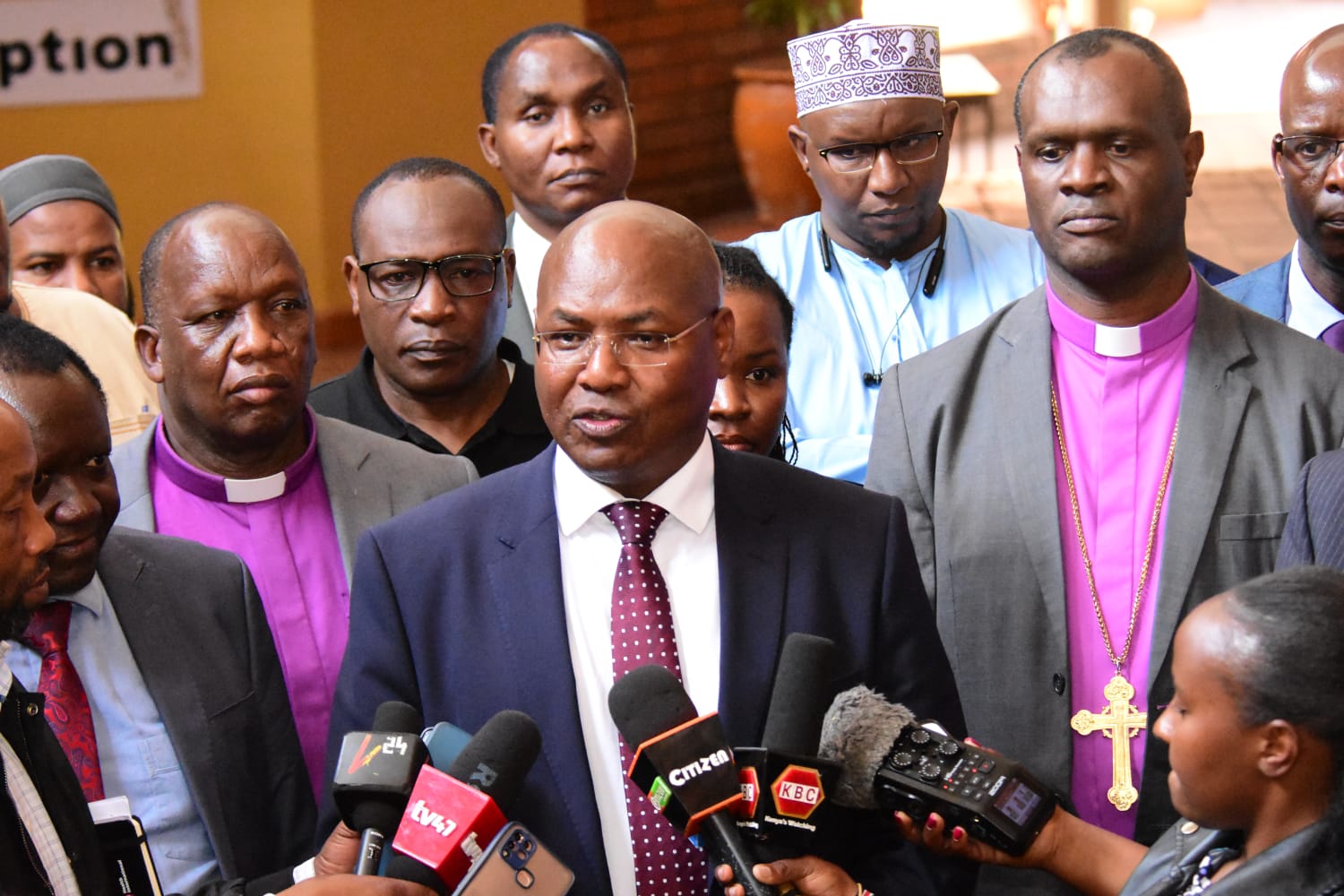
In a significant meeting held on Monday, Principal Secretary for the State Department of Medical Services, Harry Kimtai, outlined the government’s commitment to resolving the challenges faced by faith-based health institutions in Kenya.
The meeting, convened under the leadership of the Christian Health Association of Kenya (CHAK), Kenya Conference of Catholic Bishops (KCCB), and the Supreme Council of Kenya Muslims (SUPKEM), aimed to discuss the implementation of the Social Health Insurance Fund and the outstanding debts owed to these institutions.
Kimtai opened the session by recalling a previous discussion held on October 6, where he met with representatives from faith-based organizations and private hospitals to address issues related to Universal Health Coverage (UHC).
He emphasized the importance of these institutions in providing healthcare services and acknowledged their commitment to serving patients despite financial challenges.
“We have taken note of the teething problems faced by these facilities and are committed to addressing them,” Kimtai stated, highlighting that his team is already working on some of these issues. He thanked the faith-based hospitals for their dedication, noting that none of the patients returned from these facilities during the recent healthcare crisis.
A central concern raised during the meeting was the substantial outstanding debts owed by the National Hospital Insurance Fund (NHIF) to various healthcare facilities. Kimtai assured attendees that a committee, led by him, would continue to engage with the Treasury to expedite the payment of these debts. “This afternoon, the committee will sit to review our plans, having already secured 1.5 billion Kenyan shillings to start dispersing to healthcare facilities,” he announced.
Furthermore, Kimtai revealed that an additional three billion Kenyan shillings would be released starting next week, with clear formulas established to ensure transparency and equitable distribution of funds among all facilities.
He expressed the government’s resolve to prioritize claims from October 1, the date the new social health insurance system commenced, to prevent the accumulation of further debt.
To enhance collaboration, faith-based organizations will be integrated into technical teams formed with county representatives to address any systemic challenges faced by facilities on the ground. Kimtai acknowledged that some institutions lack proper credentials but reassured attendees that these would be addressed promptly to facilitate patient treatment.
The Principal Secretary also recognized a decline in patient visits to some facilities and proposed a joint campaign to encourage Kenyans to register and utilize healthcare services in their communities.
The new social health insurance system, according to Kimtai, aims to provide clear procedures and payment structures, alleviating previous concerns about authorization and payment delays. “For the first time, we are introducing mandatory timelines for claim payments, with all claims to be settled within 90 days,” he noted, aiming to eliminate uncertainty for healthcare providers.
Addressing concerns about the system’s implementation, Kimtai acknowledged the challenges of transitioning to a new system but emphasized that ongoing support and training would be provided to ensure healthcare workers adapt effectively. He pointed out the benefits of the new system, which allows for easier interaction and clearer payment structures.
Kimtai reaffirmed the government’s commitment to resolving outstanding debts and enhancing the healthcare landscape in Kenya, expressing gratitude to the faith-based health institutions for their ongoing efforts in patient care.