


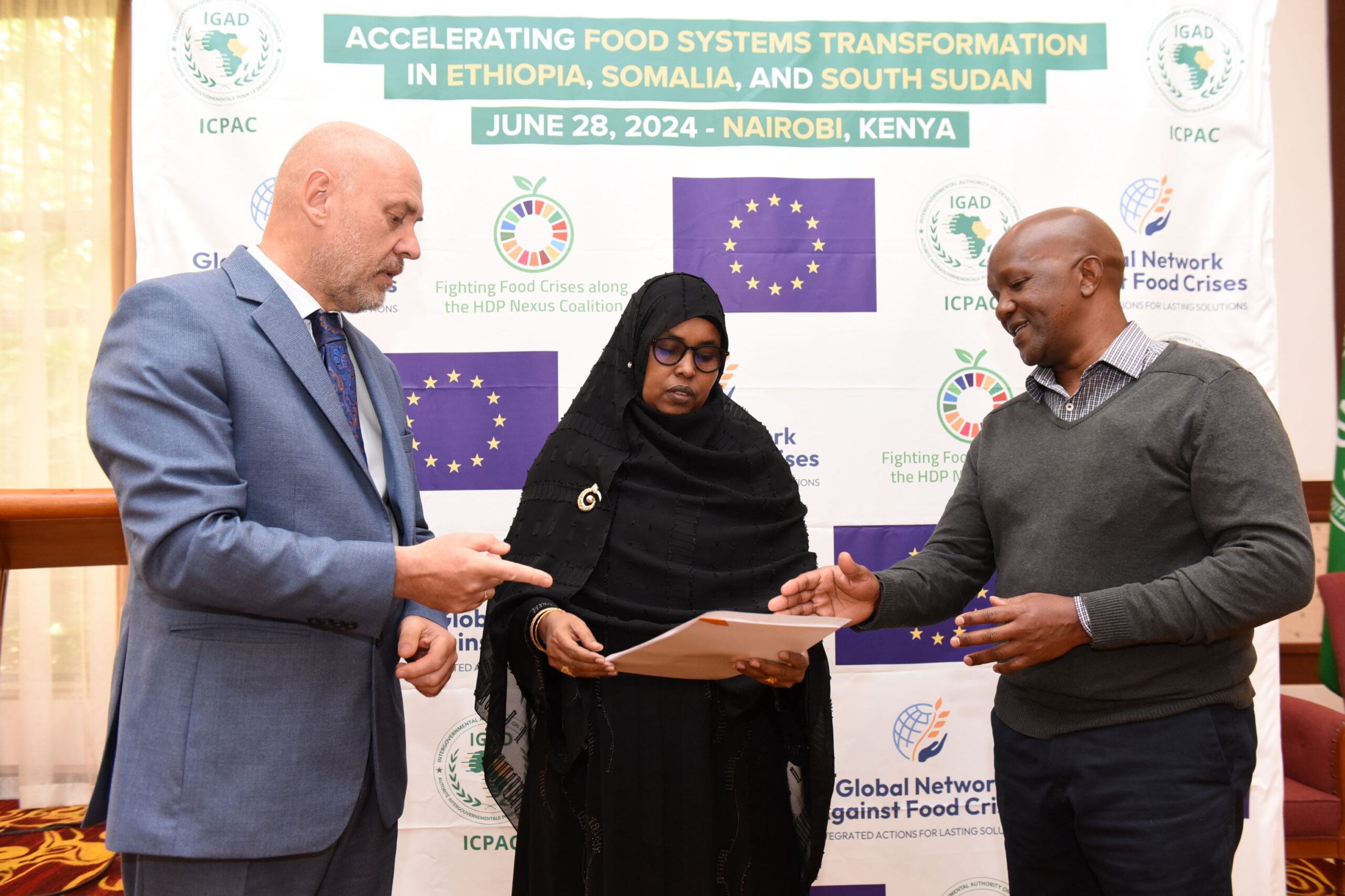
In a landmark declaration, regional leaders and stakeholders reaffirmed their commitment to transforming food systems across the Horn of Africa, focusing on the principles of the Humanitarian-Development-Peace (HDP) Nexus.
The declaration emphasizes inclusive multi-stakeholder engagement, national ownership, multi-sectoral coordination, and people-centered approaches to address food and nutrition crises effectively.
The leaders underscored the importance of regional and national capacity-building initiatives to translate strategic policy commitments into actionable results. These efforts aim to promote sustainable food systems and prevent food and nutrition crises. By focusing on capacity building, the region aims to strengthen its ability to implement policies and programs that support sustainable food production, distribution, and consumption.
Recognizing the need for localized solutions, the leaders encouraged extending national-level progress in food systems strengthening to sub-national levels. This inclusive approach prioritizes the needs of the most vulnerable populations affected by food and nutrition crises, ensuring that interventions are tailored to local contexts and challenges.

Reaffirming the importance of national leadership, the leaders pledged to support coordination and harmonize ministerial priorities. These priorities will be translated into national development planning frameworks, ensuring that food systems transformation is integrated into broader national development agendas.
The leaders urged the Intergovernmental Authority on Development (IGAD) and its partners to develop a regional food systems communications strategy. This strategy aims to sustain high-level political support at national, regional, and global levels, fostering a unified and coherent approach to food systems transformation across the region.
Commitments were made to further strengthen coordination mechanisms within governments and between government and key stakeholders. By prioritizing regional and national needs, the leaders aim to highlight the importance of long-term investment and resilience-building in addressing food and nutrition crises.
The declaration emphasized the need for robust data management solutions that reference accurate, updated data. Leaders committed to employing monitoring, evaluation, and learning (MEL) frameworks to consolidate relevant analysis. The development of food systems dashboards and research products accessible at global, regional, national, and local levels will enhance transparency and inform decision-making.
To support the transformation of food systems, the leaders recommended appropriate financing mechanisms. These mechanisms will draw on a full range of financing flows, including national budget allocations, development partners’ resourcing priorities, and private sector investments. By leveraging diverse funding sources, the region aims to ensure sustainable and impactful food systems initiatives.
The declaration highlighted the importance of striking a strategic balance between humanitarian and development priorities. Focusing on rehabilitation efforts, development, sustainable programming, and durable solutions, the leaders aim to incorporate humanitarian-development-peace approaches. This holistic approach addresses food crises at their roots, promoting long-term stability and resilience.
The joint declaration represents a significant step forward in the region’s efforts to transform food systems and address food and nutrition crises. By committing to inclusive multi-stakeholder engagement, national ownership, and coordinated action, the leaders aim to build sustainable, resilient food systems that prioritize the needs of vulnerable populations.
The development of a regional food systems communications strategy and robust data management solutions will further support these efforts, ensuring that the region can effectively respond to and prevent food and nutrition crises.