

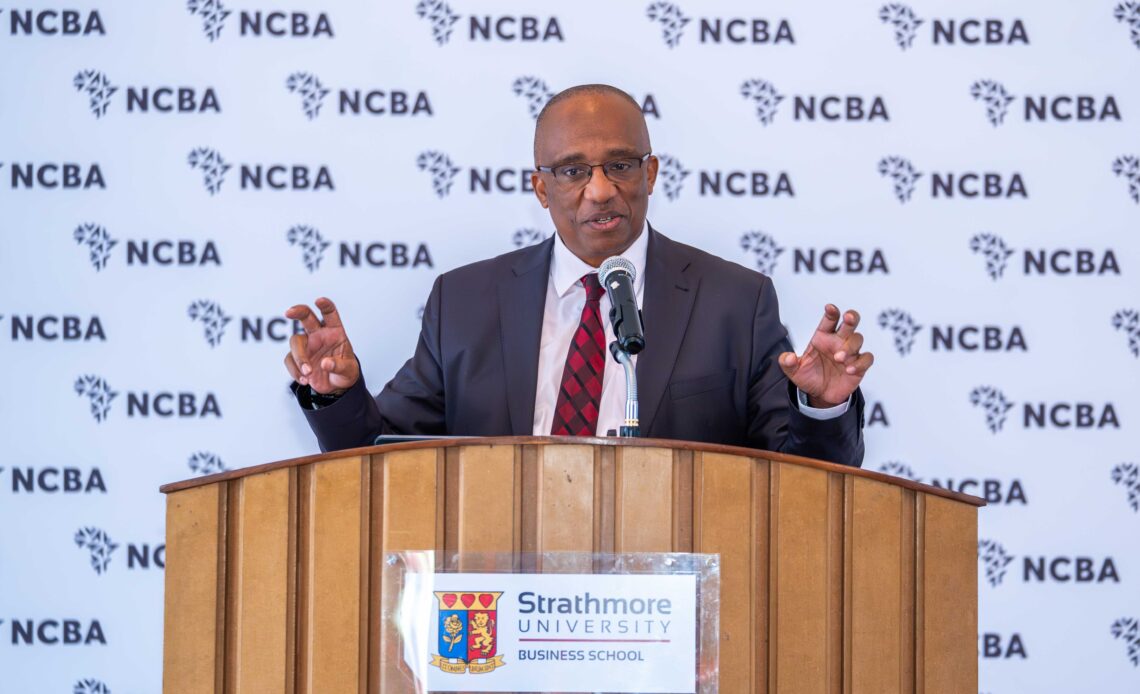
NCBA Bank, in partnership with Strathmore Business School, has graduated 17 entrepreneurs under the 2026 cohort of its Enterprise Development Programme (EDP), reinforcing its commitment to strengthening Kenya’s small and medium-sized enterprise (SME) sector through capacity building and sustainable business support.
The graduation marks the ninth cohort of the programme, which has supported a total of 354 NCBA SME banking customers since its launch in 2016.
Empowering SMEs Beyond Financing
The Enterprise Development Programme forms part of NCBA’s broader strategy to empower SMEs through a combination of financial solutions, advisory services, strategic partnerships, and enterprise development initiatives.
Speaking during the graduation ceremony, Robert Kiboti emphasised the importance of equipping entrepreneurs with skills and knowledge in addition to providing access to capital.
“At NCBA, we recognise that sustainable business growth requires more than access to capital. SMEs need the right knowledge, leadership capability, and ecosystem support to thrive in an increasingly dynamic business environment,” said Kiboti.
He noted that the programme is designed to provide entrepreneurs with practical skills and strategic insights that enable them to scale their businesses sustainably and create lasting impact within their communities.
SMEs Remain Key Drivers of Kenya’s Economy
According to NCBA, SMEs continue to play a critical role in Kenya’s economic development, contributing approximately 40 per cent of the country’s Gross Domestic Product (GDP) and accounting for more than 80 per cent of employment opportunities.
The sector remains a major source of innovation, job creation, and inclusive economic growth, making continued investment in entrepreneurial development essential for the country’s future prosperity.
Practical Training for Sustainable Growth
The 16-week Enterprise Development Programme is tailored to strengthen entrepreneurs’ leadership capacity, business management skills, and strategic decision-making abilities.
Participants undergo a comprehensive learning experience that combines academic instruction, practical coaching, peer-to-peer learning, and exposure to real-market business insights.
The programme serves entrepreneurs across diverse sectors, including agribusiness, manufacturing, retail, logistics, and professional services.
By the end of the course, participants are equipped to improve operational efficiency, strengthen financial management practices, and identify sustainable growth opportunities for their businesses.
Ubuntu Philosophy at the Core
Kiboti said the programme reflects NCBA’s Ubuntu philosophy, which is anchored on the belief that shared prosperity can only be achieved when businesses, communities, and individuals grow together.
“The Ubuntu philosophy reminds us that progress is strongest when it is shared. By empowering SMEs, we are not only supporting individual enterprises but also contributing to job creation, innovation, and economic transformation across the country,” he said.
Measurable Impact on Businesses
Since its inception, the Enterprise Development Programme has delivered tangible results for participating businesses. Entrepreneurs have reported improved business structures, enhanced leadership capabilities, stronger financial management systems, and increased confidence in scaling their enterprises.
The latest graduation ceremony marks another milestone in NCBA’s efforts to support SMEs beyond traditional banking services by providing the knowledge, networks, and tools needed to build resilient, future-ready businesses.
Strengthening Kenya’s Entrepreneurial Ecosystem
Through initiatives such as the Enterprise Development Programme, NCBA Group continues to position itself as a leading partner for SMEs, supporting entrepreneurs at every stage of their growth journey while contributing to inclusive and sustainable economic development in Kenya.
The bank says it remains committed to fostering a vibrant entrepreneurial ecosystem that empowers businesses to innovate, create jobs, and drive long-term economic transformation.