


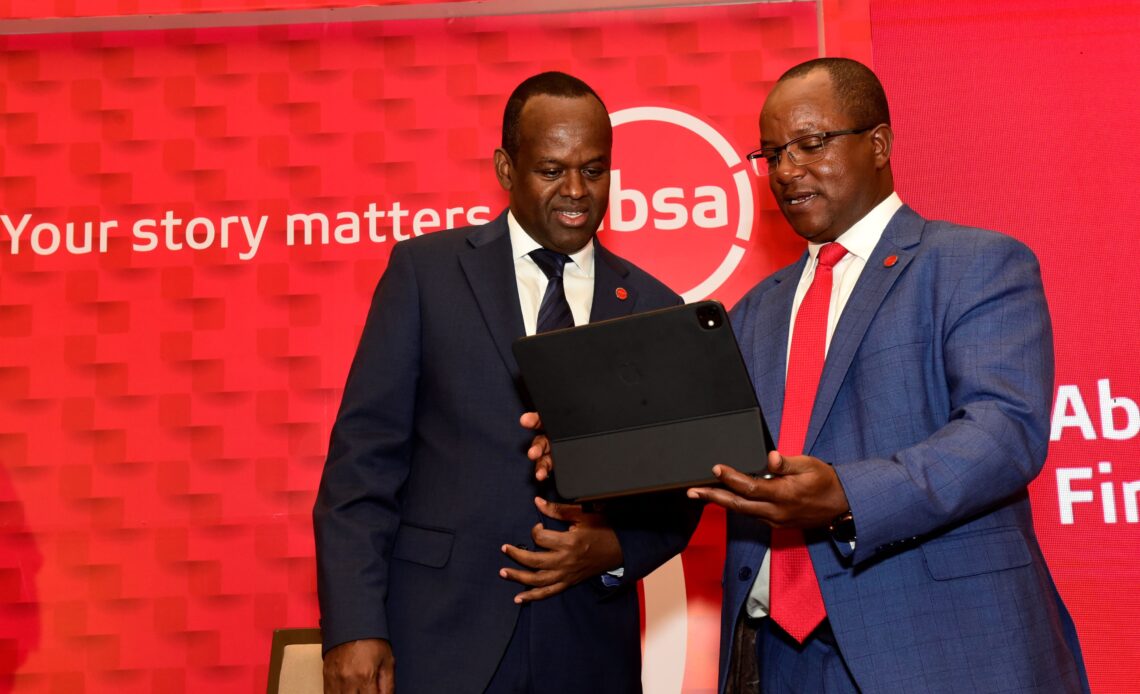
Absa Bank Kenya PLC has reported a profit after tax of KShs. 5.3 billion for the quarter ended March 31, 2026, supported by strong balance sheet growth, increased customer deposits, and sustained investment in customer-focused solutions.
The lender also posted a profit before tax of Kshs. 7.5 billion during the period, while maintaining a Return on Equity (ROE) of 20.3%, positioning it among the leading banks in the industry.
The bank’s total assets grew by 10% to Kshs. 571.3 billion, reflecting continued resilience despite a challenging economic environment. Customer deposits rose by 8% to Kshs. 399.1 billion, while customer loans and advances closed at Kshs. 303.8 billion.
Focus on Customers and Long-Term Growth
Speaking during the release of the financial results, Managing Director and CEO Abdi Mohamed said the bank remained focused on supporting customers while safeguarding the long-term strength of the business.
“It has been a demanding period for our customers and the broader economy, but our focus has been on standing alongside those we serve. While our performance reflects these pressures, our actions are guided by a long-term view, supporting our customers today while safeguarding the strength of our business for the future,” he said.
The bank’s capital and liquidity positions remained strong, with capital adequacy standing at 21% and liquidity reserves at 53.2%.
Revenue Growth and Diversification Strategy
During the quarter, Absa recorded total revenue of Kshs. 14.7 billion, supported by disciplined cost-of-funds management amid a lower interest rate environment.
Net interest income stood at Kshs. 10.4 billion, while non-interest income reached Kshs. 4.3 billion. The bank also accelerated its revenue diversification strategy, with income from subsidiaries increasing by 25% year-on-year.
According to Mohamed, the results demonstrate the bank’s deliberate execution of its strategy in a changing market environment.
“Underpinned by our purpose of empowering Africa’s tomorrow, together, one story at a time, this set of results illustrates the strength of our franchise and the deliberate execution of our strategy in a dynamic market,” he said.
Expansion Across Business Segments
In Private and Personal Banking, Absa expanded its wealth management offering, targeting high-net-worth clients and strengthened its platinum card proposition, contributing to its recognition as Best Retail Bank Kenya 2026.
The Business Banking segment continued to support MSMEs through the WEZESHA value-chain financing programme, “Lipa na Absa” digital merchant payment solutions, and business credit card products.
The lender also enhanced its Asset-Based Finance proposition, which was relaunched in April 2026 to improve financing solutions for businesses.
In Corporate Banking, the bank ranked first in East Africa for mergers and acquisitions by deal value, further strengthening its position in the regional market. Its Global Markets division also introduced new currency pairs while expanding non-funded income streams.
Sustainability and Community Impact
Beyond financial performance, Absa continued investing in sustainability and community-focused initiatives through the Absa Kenya Foundation.
The foundation launched the CirculaRising programme aimed at supporting more than 2,000 women- and youth-led MSMEs operating within the circular economy, with the potential to positively impact over 30,000 livelihoods.
The bank also maintained sponsorship of flagship sporting events, including the Magical Kenya Open, Absa Sirikwa Classic, and Absa Kip Keino Classic, as part of efforts to deepen customer engagement and strengthen community connections.
Outlook
Looking ahead, the bank says it will continue investing in digital capabilities, customer experience, and strategic partnerships to build a more agile and future-ready organisation.
“We continue to bring our purpose to life through the way we serve our customers and communities. As we look ahead, we are accelerating investments in digital capabilities, customer experience, and strategic partnerships to build a more agile, efficient, and future-ready organisation positioned to deliver sustainable growth,” added Mohamed.