



Abi Taylor, Innovation Lead at the Judith Neilson Foundation addressing participants at IDIA Summit
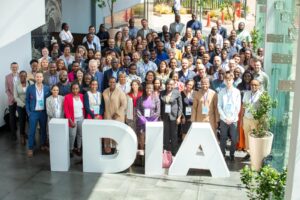
A new multi-million initiative aimed at accelerating collaborative, homegrown solutions for Africa’s rapidly growing cities has been launched at the International Development Innovation Alliance (IDIA) Global Summit in Nairobi.
The African Cities Innovation Fund (ACIF), a partnership between the Judith Neilson Foundation and the Million Lives Collective (MLC), will offer flexible grants of up to $75,000 to pairs of African innovators to design, test and scale new solutions that address the continent’s most pressing urban challenges. Applications will officially open in Spring 2026.
Speaking during the summit’s closing plenary, Abi Taylor, Innovation Lead at the Judith Neilson Foundation, highlighted the transformative potential of the new fund.
“African cities are growing at a dramatic pace, creating huge opportunity, challenge and change,” she said. “Ensuring that cities are places where people can thrive calls for imagination, ambition and collaboration. We’re delighted to partner with the MLC to help innovators experiment with new pathways and create meaningful impact.”
Beyond funding, selected innovators will receive tailored technical assistance, including coaching, partnership support, and access to global development leaders through IDIA’s Collaboration Lab, ‘Collaborative Scaling for Exponential Impact.’
The MLC is currently building a pipeline of scalable urban innovations and will issue a call for new members in January 2026. According to Jite Phido, Senior Program Manager at the MLC and Results for Development, African innovators are already leading the way in reshaping urban futures.
“Innovators, community organizations, entrepreneurs, artists and public sector actors are finding new ways to improve mobility, strengthen local economies, expand access to services, and build climate resilience,” Phido said. “Our upcoming call aims to amplify these efforts and identify new pathways for exponential impact through collaboration.”
The initiative builds on years of MLC research into collaborative grant-making, including previous programs in health and women’s economic empowerment supported by the Bayer Foundation and the Gates Foundation. ACIF aims to strengthen the evidence base for collaboration as a powerful tool in addressing complex development challenges amid declining global aid budgets.
4Life Solutions Kenya, a participant in the MLC’s women’s economic empowerment program, underscored the importance of partnership-driven innovation.
“The Fund promotes the kind of collaboration that urban impact in Africa demands,” said Edwin Muroki of 4Life Solutions Kenya. “Our experience shows that proven solutions scale faster when partnerships strengthen community trust, enable local logistics, and reinforce behaviour change.”
African organizations working in circular production, climate-resilient infrastructure, youth mobility, digital equity, and community wellbeing are encouraged to register their interest on the MLC website for updates ahead of the application window.
The ACIF launch marks a major step towards supporting smart, inclusive, and resilient African cities, as the continent races to meet global development targets under the UN’s 2030 agenda.