



By Anne Nyambura
Interview with Patrick Kiarie, Africa Region Representative – “We Don’t Have Time”, world media platform for climate action
The Second Africa Climate Summit (ACS2) that took place in Addis Ababa, Ethiopia, was a defining moment for the continent’s climate journey. Far from being just another routine policy meeting, it was a declaration of intent: Africa is ready to lead. To understand the implications of this summit, I talked with Patrick Kiarie, Africa Region Representative of We Don’t Have Time.
Q: Patrick, how would you describe the atmosphere and meaning of ACS2?
The summit, he says, was unlike anything Africa has seen before.
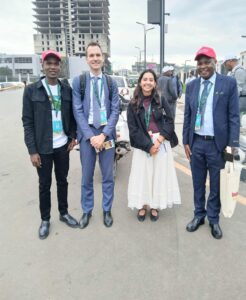
A: “This was not a typical policy event. ACS2 was a strong indication that Africa is moving from climate victimhood to climate leadership. The stage of Addis Ababa was where Africa made the global climate future its co-architect. The mood, the red caps calling to ‘Make Science Great Again,’ and the billions pledged all conveyed the same message: Africa is ready to lead.”
Q: What role did “We Don’t Have Time” play at the summit?
Patrick tells that while policymakers and financiers were engrossed with negotiations, We Don’t Have Time kept citizens and leaders connected.
A: “Through our 200 million audience, we transformed social media activism into digital diplomacy. Our campaign enabled real-time communication between citizens, innovators, and decision-makers. It was a reminder for all that this is not merely a race against emissions — it is a race for truth and justice.”
Q: What difference did this digital diplomacy make during the summit?
Here, Patrick’s enthusiasm is evident as he considers the effect.
A: “It ignited hope around the world. The promises for climate solutions in Africa were not mere figures — they were accompanied by the love for the climate from citizens all over the continent. We made sure that the solutions present in Africa, such as the resilient food systems and sustainable urban spaces, were more visible by turning up the volume on African voices more than ever. Also, at a time when false information was spreading quickly, our efforts guaranteed that the message of Africa’s leadership reached the world without distortion.”
Q: One of the summit’s highlights was the Addis Ababa Declaration. Why is it so significant?
Patrick sees the declaration not only as a document but as a change of direction.
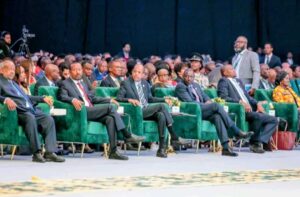
A: “The Addis Ababa Declaration was justice by design. It called for investments to replace aid, grants rather than debts, and fairness instead of taking advantage. It asked for the reform of global financial institutions as well as a fair distribution of climate resources. This was not charity — it was Africa telling the world that she has the right to a sustainable and self-determined future.”
Q: Billions were pledged. Which commitments stood out most to you?
For Patrick, one initiative best represented Africa’s ambitions.
A: “The most game-changing was the African Single Electricity Market (AfSEM). By integrating energy systems all over the continent, Africa can truly exploit solar, wind, and water resources. This will not only reduce the costs but also bring power to the 600 million Africans who are still without it. AfSEM is a turning point — the bold move that brings the $2.5 trillion climate financing gap for Africa down on the continent’s own terms.”

Q: Do you think this summit has changed Africa’s role in global climate action?
Without thinking twice, Patrick responds to the point.
A: “Totally. ACS2 announced that Africa is not a charity case anymore — we are co-architects of the global climate future. The leadership that Ethiopia has shown, the partnerships that have been sealed, and the commitments that have been made are all pointing to the fact that the continent is leading rather than following. This summit has redefined the story from loss to leadership.”
Q: Finally, Patrick, what are your expectations going forward — at the ongoing UNGA and looking ahead to COP30 in Brazil?
Patrick firmly shares his vision for the future with confidence.
A: “Consistency is what I expect. The promises and the declarations from ACS2 should be turned into actions at UNGA, and the momentum should be kept up for COP30. I expect that world leaders will acknowledge Africa’s leadership and that the partnerships that form will be fair, science-driven, and just. The memory of COP30 in Brazil should not be of more pledges but of the fulfillment of those pledges. That is the accountability that the world needs.”
Africa made history in Addis Ababa. However, as Patrick Kiarie points out, the fire that was ignited at ACS2 must continue burning — through the UNGA, COP30, and beyond.