


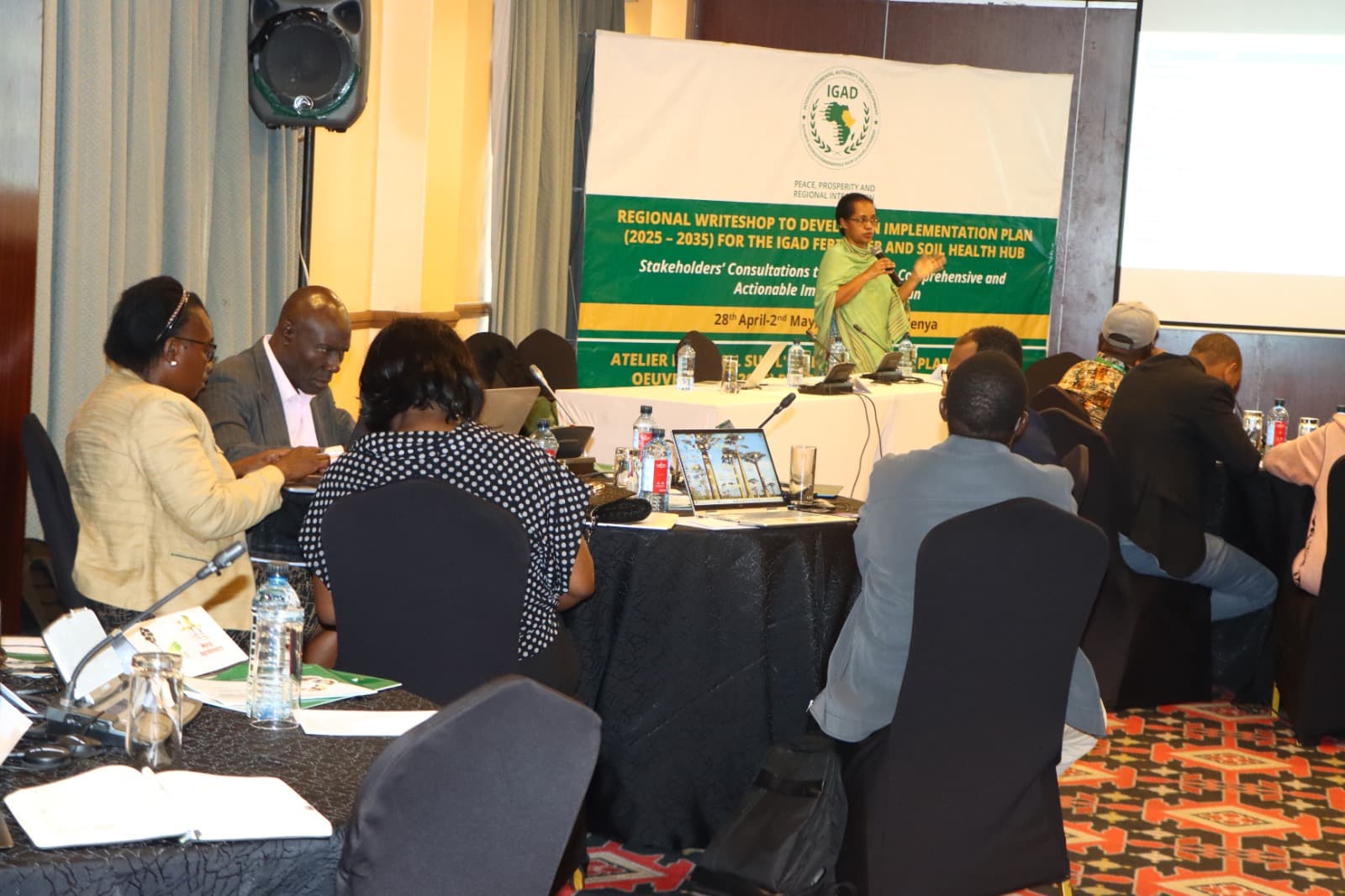
Kenyan farmers are being advised to adopt a balanced approach in using both organic and inorganic fertilisers as experts warn of long-term risks associated with the over-reliance on chemical inputs. This caution comes amid growing concerns over soil degradation and its implications for food security across the region.
Speaking during an Intergovernmental Authority on Development (IGAD) initiative aimed at promoting sustainable soil management practices, agricultural expert Khator emphasized that while the government’s subsidised fertiliser program has significantly boosted yields over the past three years, excessive and unchecked usage without proper guidance could undermine soil health and future productivity.
“While these fertilisers have played a role in boosting productivity, we have also witnessed the unintended consequences of relying on them exclusively. A focus on balanced nutrient management, which combines organic and inorganic fertilisers based on soil testing, is very crucial,” said Khator.
He noted that many farmers, driven by the pursuit of short-term gains, have been applying chemical fertilisers as a primary solution, often ignoring the long-term consequences. This trend, he warned, has led to increased soil acidification, nutrient imbalance, and a decline in essential soil organisms—issues that threaten Kenya’s food systems and those of other IGAD member states
Khator called for a shift towards informed soil management practices, including crop rotation, organic matter integration, and continuous monitoring of soil conditions. He stressed that sustainable agriculture must address not only the chemical but also the biological and physical aspects of soil health.
The call for change comes at a time when Kenya is making strides toward food security under the Kenya Kwanza government’s Bottom-up Economic Transformation Agenda (BETA), which positions agriculture as a central pillar of economic growth. The program includes the distribution of subsidised fertilisers and reallocation of resources to support farmers.
According to a Kenya National Bureau of Statistics report, agriculture contributed 4.2% to the country’s GDP in the fourth quarter of 2024, down slightly from 5.1%, but still a key sector cushioning the economy amid contractions in other industries.
IGAD policy and food security expert Sylvia Henga highlighted the broader economic implications of poor soil health, pointing out that excessive chemical fertiliser use can compromise food quality and contribute to malnutrition.
“When people lack access to sufficient and nutritious food, their physical and cognitive development is impaired, limiting their ability to contribute to the economy,” Henga explained.
She warned that over-reliance on food imports, driven by local production shortfalls, diverts scarce foreign exchange from vital sectors like health, education, and infrastructure. IGAD reports that the region imports nearly 50% of key staples such as rice, wheat, and edible oils—products that could be grown domestically if soil conditions improved.
To address this looming crisis, IGAD plans to invest close to Sh2 billion in promoting sustainable soil practices. The funds, expected to come from development partners and stakeholders through various roundtables, will support farmer training and the application of modern, tailored fertiliser techniques based on updated soil data.
Henga noted that outdated soil maps have hindered effective farming, and IGAD will work with researchers and local communities to bridge the gap between science and smallholder agriculture.
“We will be bridging research and the farmer so they can actually benefit from existing technologies,” she said.
Government representatives also underscored the importance of enabling policies that ensure affordable and accessible agricultural inputs, including fertilisers, to boost domestic production and reduce dependency on imports.
As Kenya charts a path towards sustainable agriculture, experts insist that improving soil health through balanced fertiliser use is key to achieving long-term food security, economic growth, and resilience against climate uncertainties.