


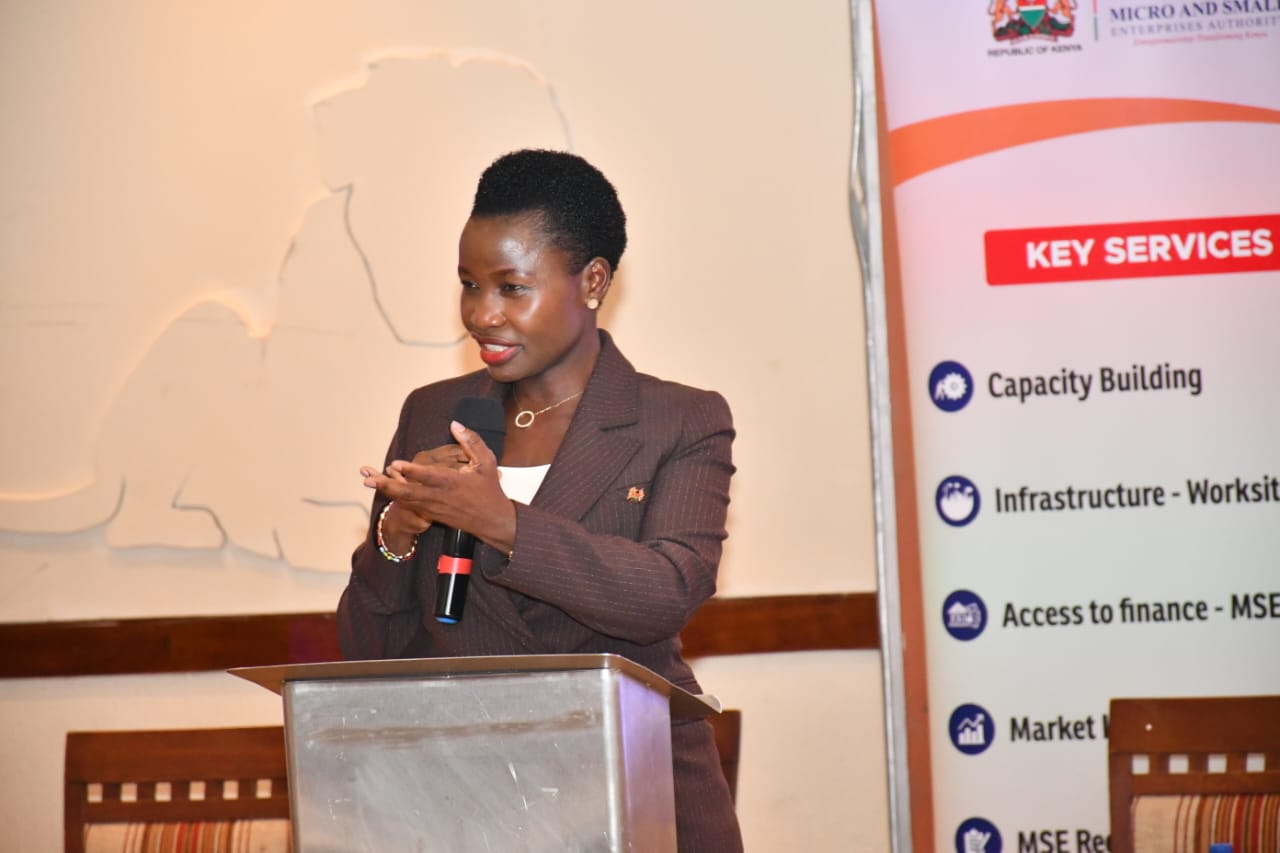
Susan Mang’eni, Principal Secretary State Department for MSMEs Development
The government has officially launched a nationwide public participation and stakeholder engagement forum aimed at validating the draft MSME Policy 2025 and the proposed amendments to the MSE Act 2012. The event, spearheaded by the State Department for Micro, Small, and Medium Enterprises (MSME) Development, kicked off in Nairobi and will be conducted across the country over the next two weeks.
Speaking during the launch, Principal Secretary for MSME Development, Susan Mang’eni, emphasized the government’s commitment to aligning the revised policy with the Bottom-Up Economic Transformation Agenda (BETA). The updated policy aims to address persistent challenges facing MSMEs, including access to finance, regulatory bottlenecks, limited market access, and inadequate infrastructure.
“MSMEs account for over 90 percent of enterprises in Kenya, contribute about 30 percent of GDP, and employ more than 15 million people. Yet, they still face enormous hurdles,” said PS Mang’eni. “This policy seeks to create a more enabling environment for their growth.”
Key Proposed Changes in the MSME Policy and MSE Act 2025
Decriminalization of work
The policy introduces frameworks to legitimize informal work, such as street vending and boda boda operations, and ensure traders have access to decent workspaces through partnerships with county governments.
Reduction of regulatory burden
The government is advocating for a unified business permit system, already implemented in Nairobi and being explored in other counties like Embu and Uasin Gishu. This aims to eliminate the burden of multiple costly licenses.
Enhanced access to finance
Leveraging digital platforms like Hustler Fund, MSMEs can now build credit histories. The Fund has led to the development of a behavioral credit rating system with a nine-band scale to help MSMEs access credit from commercial institutions.
Market access expansion
The government is positioning MSMEs to tap into global markets through agreements with the EU, US, UAE, and the African Continental Free Trade Area (AfCFTA). Focus is on improving product standards and strengthening market linkages.
Supportive infrastracture and manufacturing
The state is investing in common user manufacturing facilities to enable MSMEs, especially youth, to access high-end machinery and produce quality goods for both local and international markets.
Policy Inclusivity and Legal Alignment
The policy introduces medium enterprises into the legal framework—closing the gap in the micro-small-medium continuum that was absent in the MSE Act 2012. It also integrates devolved governance structures and value chain development.
PS Mang’eni expressed appreciation for the continued support from partners like GIZ, and the technical working group that helped shape the policy draft. She reiterated the importance of the ongoing validation forums as a way to incorporate feedback from all stakeholders in the MSME ecosystem.
“This policy is not just a document; it’s a roadmap for transforming Kenya’s MSME landscape. Together, we can shape a vibrant and competitive sector that drives inclusive economic growth,” she said.
The forums are expected to culminate in the submission of the final draft to Cabinet and subsequently to the National Assembly for legislative approval.