


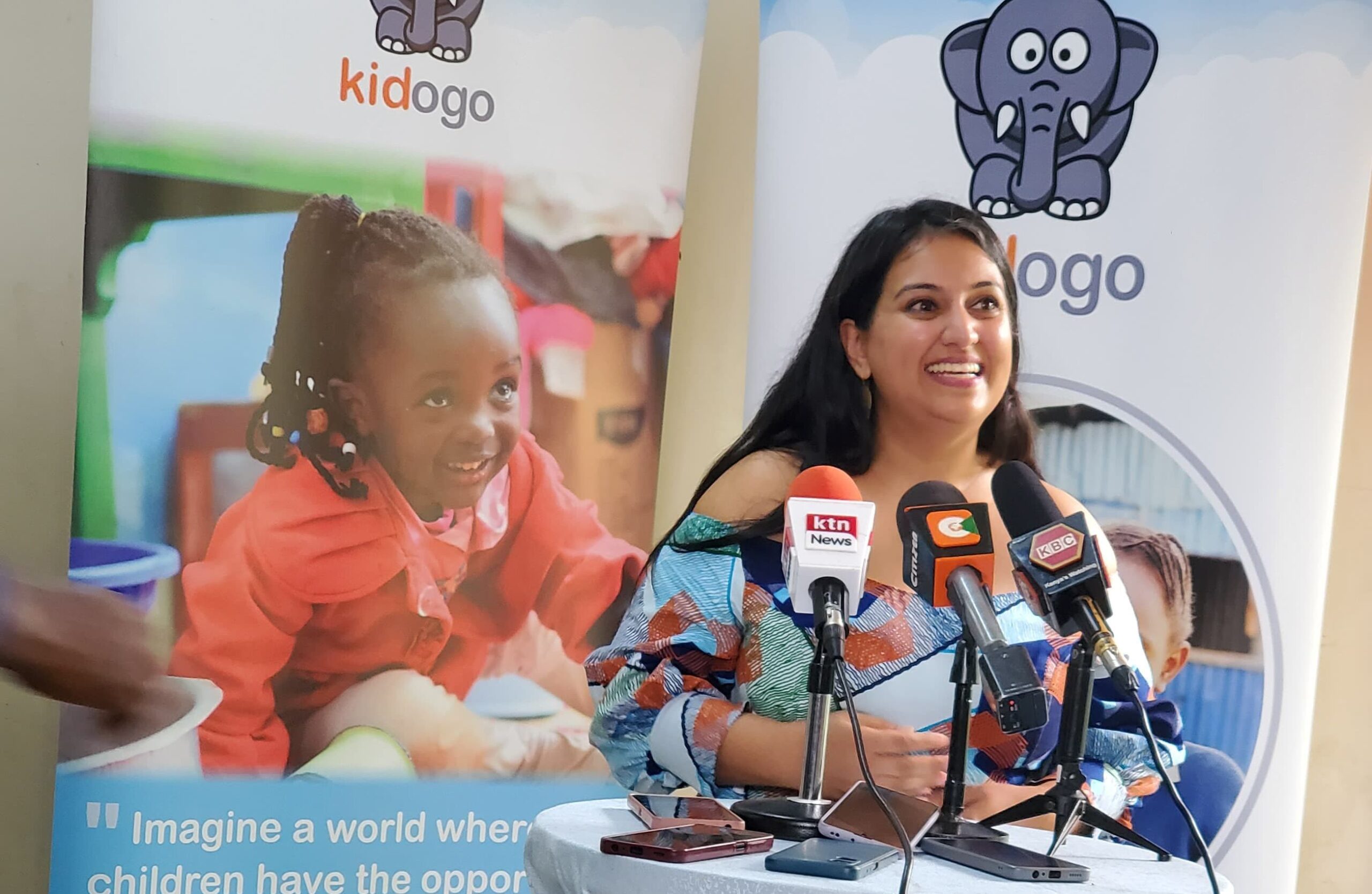
Sabrina Habib, co-founder and CEO of Kidogo
Kidogo, Kenya’s leading early childhood care and education network, celebrated its 10th anniversary with a special event attended by government officials, stakeholders, and the organization’s growing network of mamapreneurs and papapreneurs.
The organization, which began as a small pilot project in Nairobi, now supports over 2,000 community-based childcare providers, impacting the lives of more than 50,000 children across eight counties.
Florence Machio, from the Office of the Women’s Rights Advisor, highlighted the critical role of care work in Kenya, emphasizing the challenges faced by women who bear the brunt of unpaid domestic labor.
According to data from the Kenya National Bureau of Statistics, women in Kenya spend up to seven hours daily on unpaid care work. The government is in the process of developing a comprehensive care work policy to address these challenges, with the aim of creating a supportive framework for both informal and formal care providers.
Machio praised the work of Kidogo and its innovative approach to improving access to quality childcare. “Kidogo is making a real difference by professionalizing childcare and supporting families, particularly in urban informal settlements. The initiative provides a safe and stimulating environment for children, allowing mothers to work with peace of mind”. She noted
Sabrina Habib, co-founder and CEO of Kidogo, shared the organization’s journey and its mission to address the gaps in early childhood care. “All great things start small,” she said, referencing the proverb that inspired the name Kidogo. “If we want to build a thriving community and economy, we need to invest in our youngest generation — the children aged 0-3 years, who are often left in informal care settlement.
Habib recalled the moment that sparked the idea for Kidogo, describing her encounter with a neglected daycare in an informal settlement. “I found babies sitting in silence, neglected and even sedated to keep them quiet. This was a wake-up call for us to address the severe lack of quality early childhood care in these communities,” she said.
Today, Kidogo works by identifying existing childcare providers in informal settlements and upskilling them to become mamapreneurs, women who combine the nurturing qualities of a mother with the entrepreneurial skills needed to run a sustainable micro-business. The program offers training, mentorship, and quality assurance to ensure that every Kidogo center meets high standards of care.
Kidogo’s innovative model has already transformed the lives of thousands of children and families. The program’s impact was highlighted by one of the mamapreneurs from Kayole, who shared her experience. “Since joining Kidogo, we’ve seen great changes in our centers, especially in the nutrition and overall well-being of the children. The free porridge program and regular health checks have significantly improved child growth and development,” she said, encouraging other centers to join the network.
The organization’s achievements extend beyond individual families. “We’ve grown from two centers to over 2,000 mamapreneurs, directly reaching 50,000 children,” said Habib. “Our goal for the next five years is to expand to 50,000 mamapreneurs, impacting the lives of a million children. This will create a generation of young Kenyans who are ready to succeed in school and life.”
Elaine Washika, Director of Policy and Partnerships at Kidogo, emphasized the need for supportive government policies to unlock the full potential of the childcare sector. She noted the high licensing fees that hinder many informal childcare providers from operating legally. “The current cost of licensing, around 16,500 Kenyan shillings, is unaffordable for many. We encourage county governments to introduce fairer pricing, perhaps reducing it to 5,000 shillings, to enable more providers to operate legally without fear of harassment,” Washika suggested.
Kidogo has been working closely with county governments in Nairobi, Mombasa, and Nakuru to tailor solutions that fit local contexts. “Every county has different needs and challenges, and our approach is to co-design policies with local authorities, ensuring they reflect the realities on the ground,” Washika added.
Habib called for continued collaboration with the government. “We need to make childcare a national priority. Our dream is for childcare to become an election issue, where every candidate is asked, ‘What will you do for childcare?’ We need government support on licensing, quality standards, and financing to scale our impact and make quality childcare accessible for all.”
Nairobi City County has enhanced support for childcare by partnering with organizations to train community-based daycare providers and forming the Collaborative Action for Child Care.
“The county has provided free ECD capitation of KES 3,200 per child, and KES 3,300 for children with special needs, covering food and educational resources. Additionally, a multisectoral approach ensures comprehensive care, while upcoming regulations will clearly separate licensing for childcare facilities from schools to support affordable, quality services” said Rith Awor Nairobi City Director of Education.