


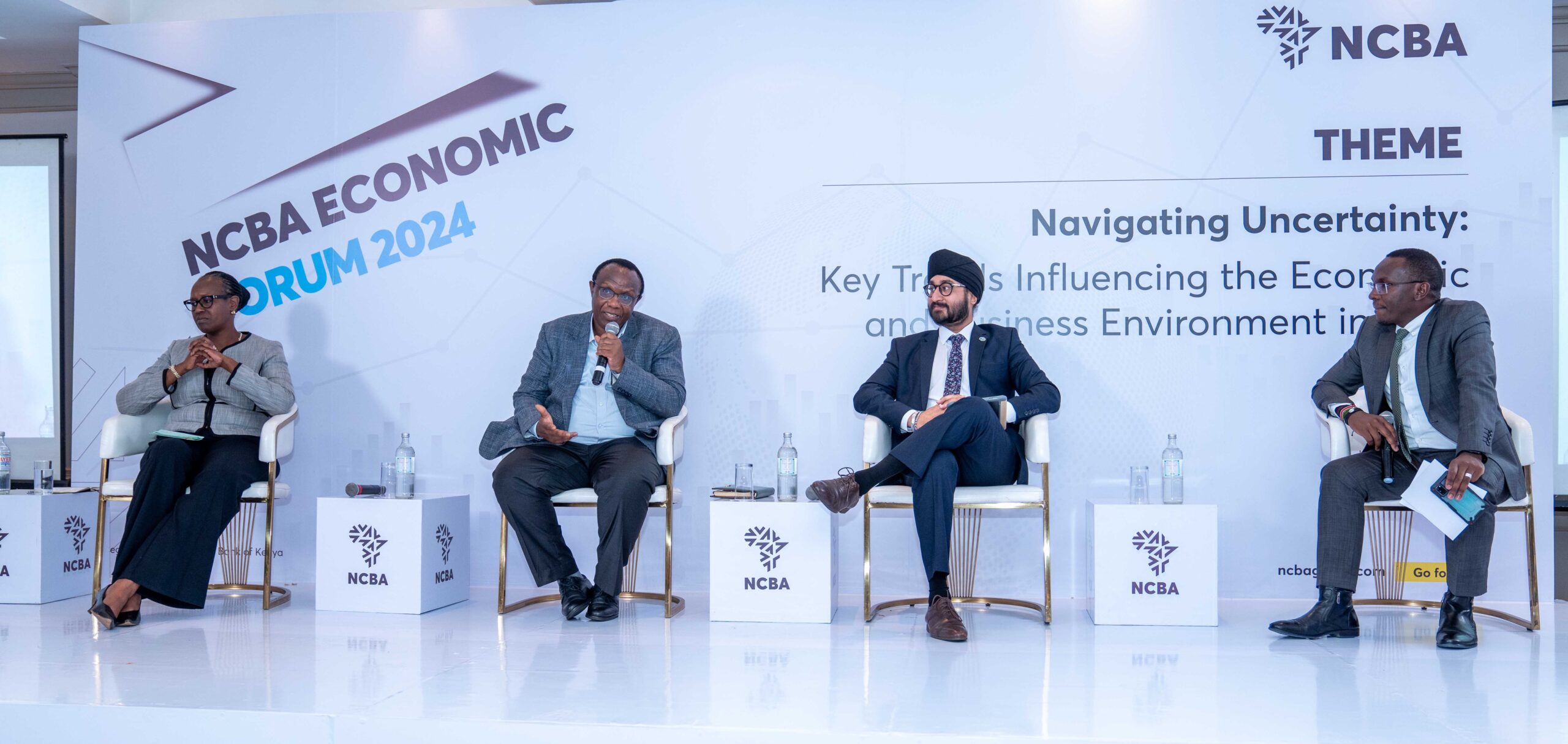
NCBA Bank has projected Kenya’s economy to grow by 4.8 percent in 2024, with a stable outlook anticipated for 2025. The announcement was made during the 9th edition of the NCBA Economic Forum, themed “Navigating Uncertainty – Key Trends Influencing the Economic and Business Environment in 2025.” The event, which brought together over 700 participants from diverse sectors, highlighted the key factors influencing the economic landscape, both globally and domestically.
Steady recovery following fiscal challenges
John Gachora, Group Managing Director of NCBA, emphasized Kenya’s resilience despite a turbulent financial period marked by fears of a sovereign debt default in early 2024. The country faced significant financial pressure due to the impending maturity of the June 2024 Eurobond amidst a severe currency crisis and an increasingly tight external environment. Gachora commended the government’s prompt response in addressing its financing needs ahead of schedule, which helped stabilize the financial markets.
“Kenya acted decisively, easing sovereign spreads and restoring confidence in the market. The currency crisis has since abated, bringing much-needed stability across the financial sector,” Gachora stated.
Global conditions favor local growth
The forum also touched on global economic trends that are likely to impact Kenya’s performance. Lower global inflation rates have improved the external environment, while the International Monetary Fund (IMF) projects global growth to increase from 3.1 percent in 2024 to 3.3 percent in 2025. The Global Composite PMI, which has stayed above the 50-point mark, indicates steady economic activity worldwide.
Sector Resilience and Fiscal Constraints Dominate Domestic Outlook
Domestically, the agricultural sector continues to be a key growth driver, buoyed by favorable weather conditions that have boosted export performance and eased food inflation pressures. The service sector is also expected to remain resilient, with most sub-sectors predicted to grow at near long-term averages.
 (L-R) James Gachora NCBA Bank Group Managing Director with David Ndii, Chairperson of the President’s Council of Economic Advisors. Photo courtesy
However, fiscal challenges loom large. Kenya’s public debt remains a significant burden, with debt interest payments consuming 38 percent of tax revenue in the 2024/25 fiscal year, slightly decreasing to 35 percent in 2025/26. Rising tax obligations and unpredictable statutory deductions have created cash flow issues for businesses, further exacerbated by high pending bills, which stand at KES 516 billion for the national government and KES 182 billion for county governments. These liquidity challenges have constrained private sector growth, impacting overall economic stability.
Optimism for 2025 growth drivers
David Ndii, Chairperson of the President’s Council of Economic Advisors, expressed optimism for Kenya’s growth trajectory in the coming year, citing a positive outlook on inflation supported by strong forex reserves and robust export performance. Improved capital flows, driven by a decline in global interest rates, have also played a part in stabilizing the economy.
Ndii outlined affordable housing, domestic energy production, the adoption of electric vehicles, and sustained agricultural productivity as key areas expected to drive growth in 2025. He underscored the importance of increasing national investment to 25 percent of GDP, fueled by higher savings rates, expanded private partnerships, and deeper financial sector engagement.
A Platform for Strategic Dialogue
The NCBA Economic Forum, launched in January 2018, aims to facilitate meaningful discussions between the government and industry stakeholders to stimulate economic growth. This year’s edition featured prominent speakers, including Mary-Ann Musangi, Chairperson of the Women in Manufacturing Committee at KAM and Managing Director of HACO Industries, and Sandeep Main, Partner for Tax and Regulatory Services at KPMG.