


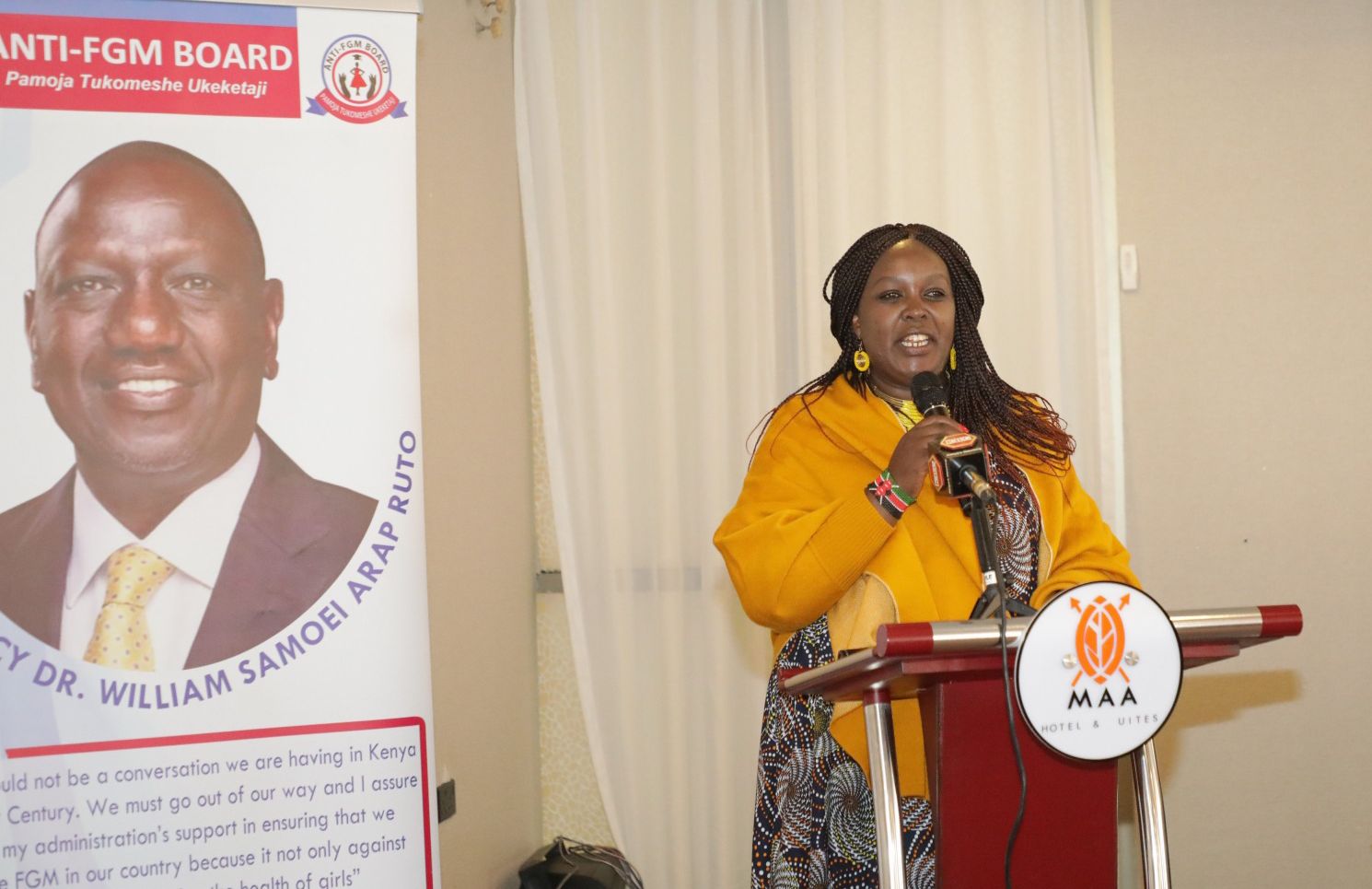
As Kenya approaches the International Day of the Girl Child on October 11, stakeholders convened in Nairobi to address the alarming persistence of Female Genital Mutilation (FGM) in the country.
During a media breakfast, Anti-FGM Board CEO Bernadette Loloju revealed that FGM remains prevalent in 22 counties, particularly in Wajir, Mandera, Marsabit, Garissa, and Kisii, where cultural practices continue to threaten the health and dignity of women and girls.
Loloju’s statements highlighted the grim reality that approximately 9 percent of girls aged 15 to 19 have undergone FGM, a figure that rises to 14.8 percent among women aged 40 to 49. Despite previous efforts aiming to eradicate the practice by 2022, the Anti-FGM Board has shifted its focus to combat all forms of gender-based violence by 2026, intensifying funding and resources in the five counties with the highest rates of FGM.
The board is implementing community-based interventions to protect vulnerable girls, especially during school holidays when cases of FGM tend to rise. This involves arresting and prosecuting offenders while simultaneously promoting awareness and education about the dangers of FGM.
During the event, Hon. Ipato Surum, Chairperson of the Anti-FGM Board, emphasized the importance of empowering girls to articulate their visions for a future free from FGM. “Today, we are not just talking about the future; we are giving girls the platform to shape it. We are here to amplify their voices and work collectively to realize their vision,” he stated.
Surum acknowledged the media’s crucial role in changing societal perceptions and promoting the rights of girls. He called on journalists to highlight the voices of young activists and community leaders working tirelessly against FGM, reinforcing the message that the practice has no place in Kenyan society.
The local theme for this year’s observance, “Girls’ Vision for a Future Free from FGM,” underscores the need for collective action among government, civil society, and community members. Surum pointed out that education is a powerful tool in this fight, urging stakeholders to ensure girls remain in school, as educated girls are better equipped to advocate for their rights.
She also stressed the necessity of robust legislation and enforcement, noting that strong legal mechanisms are essential to protect girls from FGM. “It will take all of us—government, civil society, religious leaders, and the media—to realize this vision,” he concluded.
As the International Day of the Girl approaches, the commitment to eradicating FGM in Kenya is stronger than ever, with renewed efforts to empower girls and create a society free from this harmful practice.
