


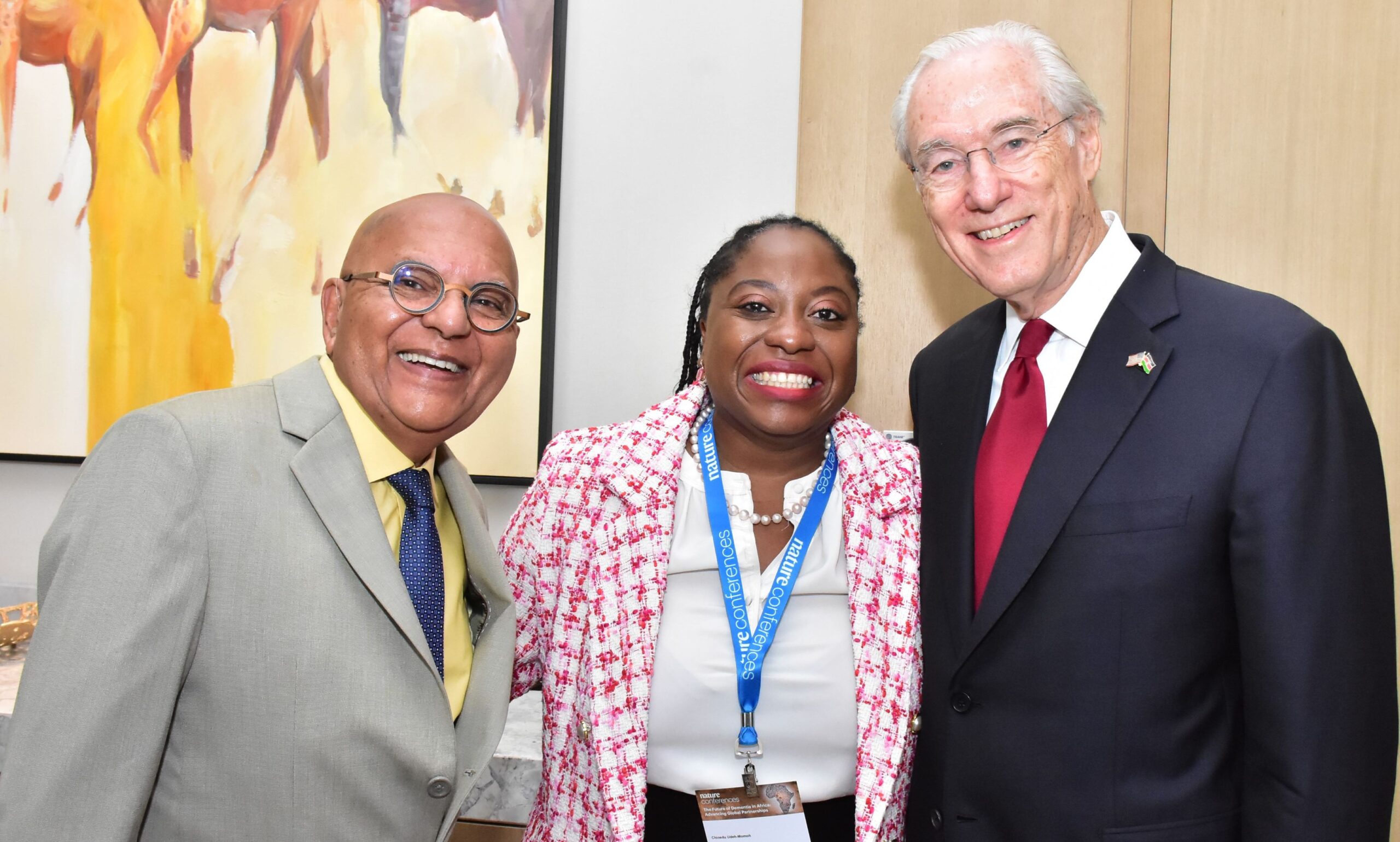
Aga Khan University Brain and Mind Institute Director Zul Merali, Neuroscientist & Principal Investigator Brain Resilience Kenya Study Chi Udeh-Momoh and Davos Alzheimer’s Collaborative (DAC) Founding Chairman of the Board George Vradenburg during the inaugural conference addressing brain health, challenges and the future of dementia in Africa.
The inaugural conference on brain health and dementia, themed “The Future of Dementia in Africa: Advancing Global Partnerships,” kicked off at Aga Khan University’s Brain & Mind Institute on Monday.
The event, organized in collaboration with The Davos Alzheimer’s Collaborative (DAC) and Nature Conferences, has drawn a diverse array of experts from across Africa and around the globe to address the pressing issues surrounding dementia, with a particular focus on the African context.
The conference comes at a crucial time, given the projected surge in Africa’s older population, which is expected to triple by 2050. Dementia, already a growing global health challenge, poses an increasing threat in sub-Saharan Africa, where the number of people living with the disease is anticipated to rise from 2.13 million in 2015 to 7.62 million by 2050.
George Vradenburg, Founding Chairman of the Davos Alzheimer’s Collaborative, underscored the significance of the conference. “These studies exemplify why we champion diverse genetic research in dementia. Each insight brings us closer to revolutionizing Alzheimer’s prevention and treatment globally. This conference marks a pivotal step towards inclusive, effective solutions for brain health across all populations,” he stated.
A key focus of the conference is the disparity in dementia research and treatment across different populations. Studies will explore genetic variations in African and underrepresented populations compared to Caucasian groups, highlighting the lack of diversity in genomic research which limits the efficacy of targeted therapies for diverse populations.
The conference aims to address these gaps by presenting new research on the genetics of dementia, contributing risk factors, clinical trials, early detection, and diagnosis.
Prof. Zul Merali, Director of the Brain & Mind Institute at Aga Khan University, emphasized the importance of a comprehensive approach to dementia care in Africa. “As we look at the unique challenges faced in addressing dementia in Africa, we must recognize the need for capacity building in the global south to enable early detection of the disease. Additionally, promoting lifestyle changes is crucial in altering the trajectory of dementia, and this is something we must continuously communicate to the public,” Prof. Merali remarked.
The conference also aims to forge new collaborations between African researchers and international partners, capitalizing on Africa’s evolving healthcare landscape to advance brain health solutions. By fostering these global partnerships, the conference seeks to address the urgent need for greater awareness, education, and resource allocation in combating dementia across the continent.
As the world faces the growing challenge of dementia, with an estimated 150 million people expected to be affected by 2050, the discussions and collaborations initiated at this conference will play a critical role in shaping effective, inclusive strategies for managing and preventing the disease.
